
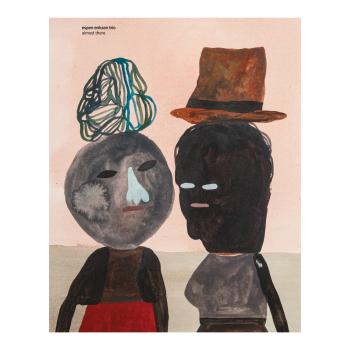


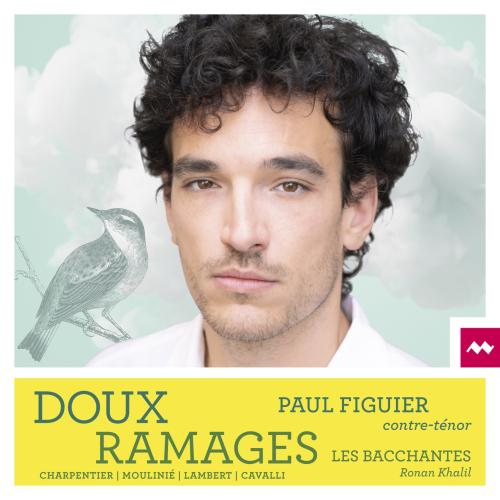
Doux Ramages Paul Figuier, Les Bacchantes & Ronan Khalil
Album Info
Album Veröffentlichung:
2025
HRA-Veröffentlichung:
12.12.2025
Label: La Musica
Genre: Classical
Subgenre: Vocal
Interpret: Paul Figuier, Les Bacchantes & Ronan Khalil
Komponist: Anthoine Boesset (1586-1643), Marin Marais (1656-1728), Etienne Moulinie (1600-1669), Marc-Antoine Charpentier (1643-1704), Michel Lambert (1610-1696), Pierre Dancian Philidor (1681-1731), Honore d' Ambruys (1650-1700), Pier Francesco Cavalli (1602-1676)
Das Album enthält Albumcover Booklet (PDF)
- Anonymous: Nos esprits libres et contents:
- 1 Anonymous: Nos esprits libres et contents 02:56
- Antoine Boësset (1587 - 1643): A la fin cette bergère:
- 2 Boësset: A la fin cette bergère 01:13
- Marin Marais (1656 - 1728): Suite en sol mineur:
- 3 Marais: Suite en sol mineur: I. Prélude 02:21
- Etienne Moulinié (1599 - 1676): Concert de différents oyseaux:
- 4 Moulinié: Concert de différents oyseaux 05:25
- O Stelle Omicide:
- 5 Moulinié: O Stelle Omicide 03:17
- Dove ne vai, crudele:
- 6 Moulinié: Dove ne vai, crudele 03:03
- Marc-Antoine Charpentier (1643 - 1704): Sonate à huit H.548:
- 7 Charpentier: Sonate à huit H.548: Grave 03:30
- Airs sur les stances du Cid:
- 8 Charpentier: Airs sur les stances du Cid: I. Percé jusques au fond du cœur H.457 01:41
- 9 Charpentier: Airs sur les stances du Cid: II. Que je sens de rudes combats H.459 01:53
- 10 Charpentier: Airs sur les stances du Cid: III. Père, maîtresse, honneur, amour H.458 02:22
- Rendez-moi mes plaisirs H.463:
- 11 Charpentier: Rendez-moi mes plaisirs H.463 02:09
- Sonate à huit H. 548:
- 12 Charpentier: Sonate à huit H. 548: Pasacaille 03:17
- Oiseaux de ces bocages H.456:
- 13 Charpentier: Oiseaux de ces bocages H.456 01:54
- Michel Lambert (1610 - 1696): Le repos, l'ombre:
- 14 Lambert: Le repos, l'ombre 04:19
- Vos mespris chaque jour:
- 15 Lambert: Vos mespris chaque jour 04:12
- Pierre Danican Philidor (1681 - 1731): Six suites à deux flutes traversières seules:
- 16 Philidor: Six suites à deux flutes traversières seules: Troisième suite, Lentement 02:49
- Honoré d'Ambruis (1660 - 1702): Le doux silence de nos bois:
- 17 d'Ambruis: Le doux silence de nos bois 03:03
- Francesco Cavalli (1602 - 1676): Gli amori di Apollo e di Dafne, Acte 3, Scène 3:
- 18 Cavalli: Gli amori di Apollo e di Dafne, Acte 3, Scène 3: Aria, Lamento di Apollo 05:17
Info zu Doux Ramages
On first encounter, airs de cour may seem dull and superficial – thin gruel for the mere amusement of a certain elite. When they come across as too rustic or too pretentious, too light or too strict, they may even verge on the ridiculous. For some listeners, the genre epitomises all the clichés we have assimilated about French society during the Ancien Régime. However, closer acquaintance with the unique world of the air de cour dispels such misgivings.
French voices and passions: from air de cour to sung tragedy: The art of singing in 17th-century France, subtle, elegant and expressive, embraced eloquence and emotion, public display and intimacy. At court and in town, in fashionable salons and the theatre, the French art of voice was renowned for clear diction, noble tone and the delicate expression of emotions. The criteria that shaped vocal writing at the time included sung poetry, musical rhetoric, refined ornamentation and the ability to move the listener. However, French style had not emerged in isolation: it drew on a fruitful tension between French and Italian traditions, combining rigour with virtuosity, that percolated through the entire musical output of the century and shaped the arts of both singing and composition. Forms ranging from ballets de cour to airs sérieux, from delicate pastorales to Charpentier’s tragic verses, bear witness to an art capable of fusing refinement and expressive intensity.
Paul Figuier, countertenor
Les Bacchantes
Ronan Khalil, conductor
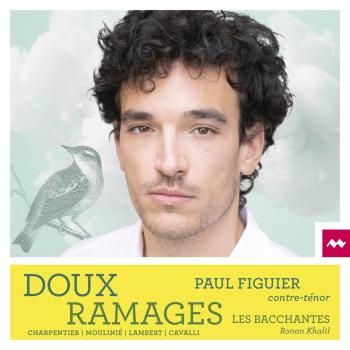
Paul Figuier
In the world of countertenors, which is rich in talent, Paul Figuier is establishing himself more and more each season as a name to watch: in addition to his impressive vocal range and dynamic resources, he has an undeniably refined singing style.
After studying at the Centre de Musique Baroque de Versailles, Paul Figuier joined the CRR in Paris and then the CNSM in the same city. During his studies, he had the privilege of singing under leading conductors such as Christophe Rousset, Hervé Niquet, Jérémie Rhorer, Masaaki Suzuki, Laurence Equilbey, Paul Agnew, Alain Altinoglu, Philip Von Steinaecker and Leonardo García Alarcón.
During masterclasses, he received advice from Karine Deshayes, Barbara Hannigan and Magreet Honig. In 2019, he recorded the alto solos for Philippe Hersant's Cantique des trois enfants dans la fournaise with the CMBV and the Maîtrise de Radio France.
His career quickly took off with the most prominent ensembles: Correspondances, Le Caravansérail, Amarillis, La Capella Mediterranea and the Atelier Lyrique de Tourcoing, not to mention Bach with Raphaël Pichon and Pygmalion. In April 2019, he made his true debut on the opera stage with Cavalli's Erismena (Capella Mediterranea and Leonardo García Alarcón, directed by Jean Bellorini), then sang Oreste in La Belle Hélène (Pierre Dumoussaud, Michel Fau) at the Opéra de Lausanne. In 2022, he made his debut at the Opéra d'Avignon in Händel's Rinaldo in the title role (Bertrand Cuiller, Claire Dancoisne), a production that was revived in August 2025 at the Festival de Saint-Céré and the Opéra de Rennes. In the summer of 2021, he sang the title role in Stradella's San Giovanni Baptista with Damien Guillon's Le Banquet Céleste. Under the direction of Philippe Jaroussky and at the Opéra de Montpellier, he was successively Nireno in Giulio Cesare (2022, directed by Damiano Michielletto) and Achille in Sartorio's Orfeo (2023, Benjamin Lazar).
A notable home base, the Festival de Beaune has invited him to sing Bach's Saint John Passion with Les Surprises (2022) and Monteverdi's L'Orfeo (2024) with Stéphane Fuget's Les Épopées. For the 2025 edition, he sang La Voce di Dio from Scarlatti's Il Primo Omicidio with Les Accents and Narciso in Händel's Agrippina with Les Épopées.
Opera has played a prominent role in recent seasons. Of particular note is Monteverdi's L'incoronazione di Poppea, which he has performed several times in Ted Huffmann's production (at the Opéra de Rennes in the roles of Arnalta and Nutrice and at the Opéra de Toulon, this time in the role of Ottone). At the prestigious Erl Festival, he recently played the roles of The Lover 2 and the Composer's Assistant in Benjamin's Picture a day like this (Corinna Niemeyer, Daniel Jeanneteau).
In November 2024, Paul premiered works written for him by composers Bruno Coulais and Jean-Philippe Goude at the Salle Gaveau (La Música recording). He sang Saint John Passion with the hr-Sinfonieorchester Frankfurt and Alain Altinoglu, Vivaldi's Nisi Dominus with Insula Orchestra and Laurence Equilbey, Bach cantatas with Les Talens Lyriques and Christophe Rousset, not to mention the role of Disinganno in Händel's Il Trionfo del Tempo with B'Rock and René Jacobs (Dortmund, tour in Asia).
Noteworthy is his ongoing collaboration with Les Accents and Thibault Noally: alongside them, in addition to Scarlatti in Beaune, he sings Pergolesi's Stabat Mater with soprano Bruno de Sá (Rocamadour Festival, Avignon Opera) and records Scarlatti's Stabat Mater and the motet Infirmata vulnerata (album to be released by Alpha Classics).
For 2025/2026, opera remains more central than ever, with major stage productions: Medoro in Händel's Orlando in Lausanne (Christopher Moulds, Mariame Clément), Satirino and Furia in Cavalli's La Calisto (Sébastien Daucé, Jetske Mijnssen) at the Théâtre des Champs-Élysées, and Narciso in Handel's Agrippina (David Bates, Robert Carsen) at the Opéra de Rouen.
Booklet für Doux Ramages