







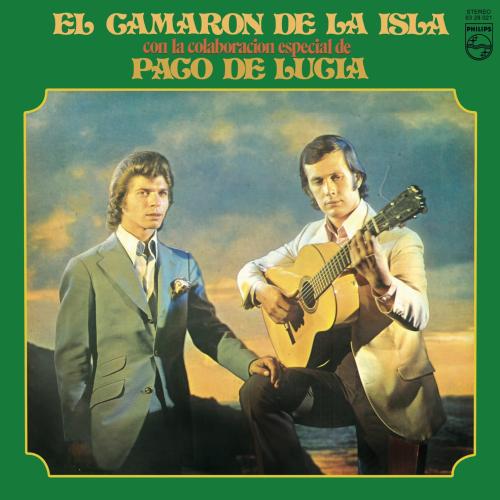
Son Tus Ojos Dos Estrellas (Remastered) Camarón De La Isla, Paco de Lucía
Album Info
Album Veröffentlichung:
2018
HRA-Veröffentlichung:
28.10.2026
Label: Universal Music Spain S.L.
Genre: World Music
Subgenre: Flamenco
Interpret: Camarón De La Isla, Paco de Lucía
Das Album enthält Albumcover
Entschuldigen Sie bitte!
Sehr geehrter HIGHRESAUDIO Besucher,
leider kann das Album zurzeit aufgrund von Länder- und Lizenzbeschränkungen nicht gekauft werden oder uns liegt der offizielle Veröffentlichungstermin für Ihr Land noch nicht vor. Wir aktualisieren unsere Veröffentlichungstermine ein- bis zweimal die Woche. Bitte schauen Sie ab und zu mal wieder rein.
Wir empfehlen Ihnen das Album auf Ihre Merkliste zu setzen.
Wir bedanken uns für Ihr Verständnis und Ihre Geduld.
Ihr, HIGHRESAUDIO
- 1 Son Tus Ojos Dos Estrellas 03:30
- 2 La Mujer Con Ser Mujer (Malagueña De Chacón) 02:00
- 3 Por Mala Lengua Que Tienes (Soleá De Alcalá) 04:13
- 4 Sin Motivos Ni Razón (Fandangos De Gabriel Macandé) 02:46
- 5 En La Provincia De Cádiz (Peteneras) 03:04
- 6 De Una Mina De La Unión (Minera) 02:34
- 7 El Espejo En Que Te Miras (Soleá Apola) 03:07
- 8 Me La Tienes Controlá 02:40
- 9 Al Padre Santo De Roma (Tangos) 03:21
- 10 Estoy Cumpliendo Condena (Polo) 04:28
- 11 Se Murió Mi Madre (Seguiriyas De Triana) 03:13
- 12 Me Voy Por La Calle Abajo 02:35
Info zu Son Tus Ojos Dos Estrellas (Remastered)
"Son tus ojos dos estrellas" (credited to El Camarón de la Isla, with a special guest appearance by Paco de Lucía) is the third album by the Spanish flamenco singer Camarón de la Isla. It was recorded and released in 1971. It features Paco de Lucía on guitar, with Antonio Sánchez—Paco’s father—serving as a co-composer alongside his son.
The official title of the album is "El Camarón de la Isla con la colaboración especial de Paco de Lucía", but it is known as "Son tus ojos dos estrellas" because fans developed the habit of referring to it by the title of its first track—a phenomenon that had also occurred with the first and second albums.
Camarón's third full-length album for Philips, featuring the always special collaboration of his "brother" Paco de Lucía. This third release marks the end of the first stage of their recording career together. The album contains twelve tracks and, like the previous two, is intended as an anthology. A variety of styles was the norm for commercial success at the time, and Camarón didn't stray from that approach. Here, we hear the singer's uniquely personal voice and witness his unstoppable evolution, paralleling the revolutionary approach of Paco de Lucía, who by 1971 already had five solo albums under his belt. The remaining tracks that Fosforito prepared for Camarón, which weren't included on the previous album, are included here—four songs in total. The rest are written by Antonio Sánchez Pecino, Paco's father, with music by Paco de Lucía. Paco Cepero also participates in this recording, who was Camarón's regular guitarist in his performances at the Torres Bermejas flamenco venue in Madrid and recitals throughout Spain and abroad, as well as in radio and television studios.
As is typical of Paco's recordings with Camarón, many of the falsetas heard on this album are also found on Paco's earlier recordings. Ramón de Algeciras is again featured on this recording, backing his brother Paco. Included here are the peteneras—both short and long—a song considered unlucky for Gypsies, and one of Antonio Chacón's malagueñas. They also perform a prodigious version of the classic polo song and guitar playing. Camarón revives the fandango by Gabriel Macandé from Cádiz, a mining fandango which Paco accompanies in the style of a miner, along with seguidillas from Triana, tangos with Paco Cepero's falsetas and rhythm, and the soleá apolá, a very difficult song to perform, which Camarón masterfully modulates with sweet courage.
Camarón dispels any lingering doubts about his stature and unsettles even the most die-hard flamenco scholars, who struggle to find fault with his arguments. This is an album brimming with nuance and power, yet serene and grounded. José and Paco have chosen a path and know exactly where they want to go. At the end of the summer, Camarón wins First Prize at the Antonio Mairena Flamenco Singing Competition.
Camarón de la Isla, vocals
Paco de Lucía, guitar
Ramón de Algeciras, guitar
Paco Cepero, guitar
Digitally remastered
Keine Biografie vorhanden.
Dieses Album enthält kein Booklet