

Album info
Album-Release:
2026
HRA-Release:
23.10.2026
Label: Deutsche Grammophon (DG)
Genre: Classical
Subgenre: Orchestral
Artist: Hildur Guðnadóttir, Deutsches Symphonie-Orchester Berlin & Robert Ames
Composer: Hildur Guðnadóttir (1982)
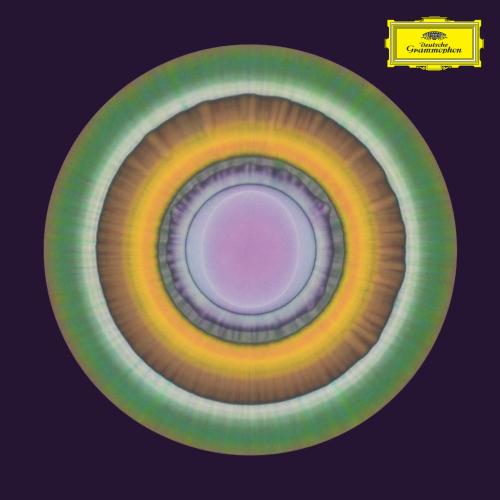
Album including Album cover
I`m sorry!
Dear HIGHRESAUDIO Visitor,
due to territorial constraints and also different releases dates in each country you currently can`t purchase this album. We are updating our release dates twice a week. So, please feel free to check from time-to-time, if the album is available for your country.
We suggest, that you bookmark the album and use our Short List function.
Thank you for your understanding and patience.
Yours sincerely, HIGHRESAUDIO
- Hildur Guðnadóttir (b. 1982):
- 1 Guðnadóttir: Overcast (Version for Orchestra) 03:26
- 2 Guðnadóttir: Birting (Version for Orchestra) 02:58
- 3 Guðnadóttir: Bær (Version for Orchestra) 03:40
- 4 Guðnadóttir: Opaque (Version for Orchestra) 03:51
- 5 Guðnadóttir: In Gray (Version for Orchestra) 03:17
- 6 Guðnadóttir: The Song That Never Was 05:03
- 7 Guðnadóttir: Blind Sarabande 04:40
- 8 Guðnadóttir: Ascent (Version for Orchestra) 04:35
- 9 Guðnadóttir: Erupting Light (Version for Orchestra) 03:13
- 10 Guðnadóttir: Unveiled (Version for Orchestra) 08:40
Info for This Will Be Us
Revered today for her multi-award-winning scores for film and TV (Chernobyl, Joker, Tár), Hildur Guðnadóttir released her debut album, Mount A, in September 2006. Twenty years on, the Icelandic composer is celebrating this anniversary by reimagining some of her earlier music. For her latest Deutsche Grammophon album, This Will Be Us, she has recorded orchestral versions of eight tracks that first appeared on Mount A, Without Sinking (2009) or Saman (2014), as well as two newly written pieces. Guðnadóttir herself plays solo cello, performing with the Deutsches Symphonie-Orchester Berlin and conductor Robert Ames. She also produced the album, which was recorded, mixed and mastered by her long-time collaborator Francesco Donadello.
Hildur Guðnadóttir grew up making music with others, in choirs, bands and orchestras. “That world meant everything to me,” she recalls. “But I felt I needed some space to hear my own thoughts.” She recorded what became Mount A alone with her cello, but had to be persuaded by her friend Skúli Sverrisson to share her work with the outside world. The album was released under the pseudonym “Lost in Hildurness”, a nickname friends had given her because she was so often lost in her own world.
She was then joined by Sverrisson, fellow composer Jóhann Jóhannsson, and her father Guðni Franzson and others on her subsequent albums, Without Sinking, Leyfðu Ljósinu and Saman. “Even though the music on these records is deeply personal,” she says, “my closest friends and family have always been essential to my having the courage to keep playing and to share the music at all.”
That courage has helped Guðnadóttir establish herself as one of the leading composers of our age, notably in the soundtrack world. Her many accolades include two Grammy Awards® (Chernobyl, Joker), an Academy Award (Joker), an Emmy Award (Chernobyl) and a Golden Globe (Joker). In the last few years she has also written acclaimed scores for films as varied as Todd Field’s Tár, Sarah Polley’s Women Talking, Kenneth Branagh’s A Haunting in Venice, Nia DaCosta’s Hedda and 28 Years Later: The Bone Temple and Maggie Gyllenhaal’s The Bride!, while The Fact of the Matter, for choir and orchestra, was premiered at the 2022 BBC Proms.
Mount A’s 20th anniversary was an opportunity to take stock. “Seeing that number on the horizon felt like a good moment to pause,” says Guðnadóttir. “When I was trying to be a one-person string orchestra, I always dreamed of having more people playing with me. I decided to give that young person the anniversary gift of hearing her music played by an orchestra.”
On This Will Be Us, she does just that, recording beautifully reinvented versions of “In Gray” (Mount A), “Ascent”, “Erupting Light”, “Opaque”, “Overcast” and “Unveiled” (Without Sinking) and “Bær” and “Birting” (Saman), together with new tracks “Blind Sarabande” and “The Song That Never Was”, with Ames and the full forces of the DSO Berlin.
As her friend and colleague Sarah Polley writes in her notes for the album, Guðnadóttir’s fans will recognise many of these tracks, “but here they take on a new life, an expansive scope, and a sense of being in fellowship with others. [They are] the work of someone who listens long enough to hear and who understands the movement of seeking and finding connection in both the light and the dark.”
Deutsches Symphonie-Orchester Berlin
Robert Ames, conductor
The Deutsches Symphonie-Orchester Berlin (DSO)
was highlighted by the renowned national newspaper Süddeutsche Zeitung as the “orchestral think tank” among the capital city’s orchestras. It is characterized by the rich dramaturgy of its concert programmes, its commitment to contemporary music and regular discoveries of repertoire, as well as the courage to pursue unusual music presentation formats. The DSO has set innovative impulses with electro projects, the production of extraordinary music films, interdisciplinary cooperation and collaboration with ensembles on the independent scene. With its moderated casual concerts including lounge and live act, it has been successfully building a bridge between club and classical music for over 15 years, reaching a broad and diverse audience. Since 2014, it has been bringing amateur musicians together with professionals to form Berlin’s largest spontaneous orchestra, the ‘Symphonic Mob’ – a concept that is now also licensed throughout Europe.
In the 2023/2024 season, the DSO attracted worldwide attention with a feminist music policy initiative under the motto ‘No Concert Without a Female Composer!’; in 2024/2025 it underlined the positioning for an open society and the advocacy for marginalized groups in various concert programmes with the campaign ‘Orchestra for Democracy’. The DSO remained true to this self-image in the 2025/2026 season: under the title ‘Afrodiaspora – Composing While Black’, it became the first orchestra worldwide to place the music of Black composers at the centre of its programming, commissioned new works, and presented cellist Abel Selaocoe as “Artist in Focus”.
With its many guest performances, the DSO is present on the national and international music scene. The orchestra has performed in recent years in Brazil and Argentina, in Japan, China, Malaysia, Abu Dhabi and Eastern Europe, as well as at major festivals such as the Salzburg Festival or BBC Proms. The DSO also has a global presence with numerous award-winning CD recordings. In 2011, it received the Grammy Award for the world premiere recording of Kaija Saariaho’s opera ‘L’amour de loin’ conducted by Kent Nagano.
Founded as the RIAS Symphony Orchestra in 1946, it was renamed the Radio Symphony Orchestra Berlin in 1956 and has borne its current name since 1993. Since its inception, the DSO has been able to retain outstanding artist personalities. As the first Music Director, Ferenc Fricsay defined the standards in terms of repertoire, acoustic ideal and media presence. In 1964, the young Lorin Maazel assumed artistic responsibility. In 1982, he was followed by Riccardo Chailly and in 1989 by Vladimir Ashkenazy. Kent Nagano was appointed Music Director in 2000. Since his departure in 2006, he has been associated with the orchestra as a Conductor Laureate. From 2007 to 2010, Ingo Metzmacher, from 2012 to 2016, Tugan Sokhiev, and from 2017 to 2024, Robin Ticciati set decisive accents in the musical life of the capital. They will be succeeded by the Japanese Kazuki Yamada, who will lead the DSO as Music Director from the start of the 2026/2027 season.
The Deutsches Symphonie-Orchester Berlin is an ensemble of the Radio Orchestra and Choirs gGmbH (ROC Berlin). The shareholders are Deutschlandradio, the Federal Republic of Germany, the State of Berlin and Radio Berlin-Brandenburg.
Robert Ames
is a conductor, composer, curator and co-founder of the London Contemporary Orchestra.
Over the last 15 years, Ames has pioneered a genre-fluid approach to collaboration, blurring the lines between electronic production and the classical tradition, opening new horizons for instrumental music in the process.
With two solo albums to his name and extensive soundtrack experience from indie films to mainstream Oscar-winners, Ames’ work is as comfortable at the BBC Proms as it is at Sydney Opera House, or on a Boiler Room broadcast.
Helping shape a now-established ambient and neo-classical landscape unshackled from the constraints previously applied to orchestral music, Ames’ experience marks him as one of the most exciting and influential artists working in the world today.
This album contains no booklet.