





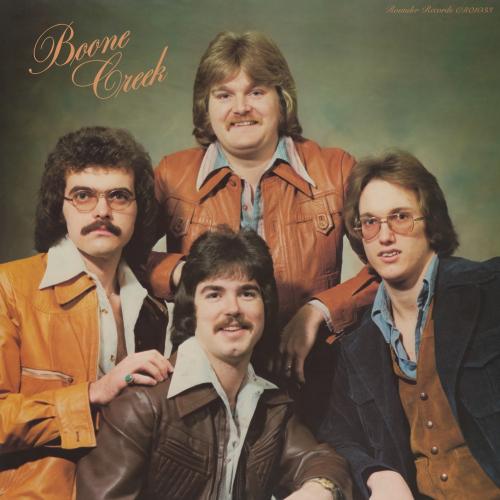
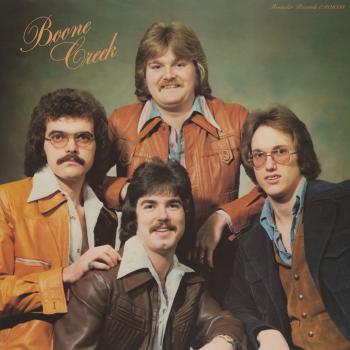
Boone Creek (Remastered) Boone Creek
Album info
Album-Release:
2026
HRA-Release:
26.06.2026
Album including Album cover
I`m sorry!
Dear HIGHRESAUDIO Visitor,
due to territorial constraints and also different releases dates in each country you currently can`t purchase this album. We are updating our release dates twice a week. So, please feel free to check from time-to-time, if the album is available for your country.
We suggest, that you bookmark the album and use our Short List function.
Thank you for your understanding and patience.
Yours sincerely, HIGHRESAUDIO
- 1 Dixieland (Remastered) 02:49
- 2 Dark As The Night Blue As The Day (Remastered) 03:06
- 3 Walkin' In Jerusalem (Remastered) 02:43
- 4 I'm Gonna Settle Down (Remastered) 03:02
- 5 Drifting Too Far From The Shore (Remastered) 03:53
- 6 White House Blues (Remastered) 01:41
- 7 Boone Creek (Remastered) 02:23
- 8 The Memory Of Your Smile (Remastered) 02:29
- 9 Intro (Remastered) 02:25
- 10 Satisfy My Mind (Remastered) 02:58
- 11 Sugar Daddy (Remastered) 02:26
- 12 There Ain't Nobody Gonna Miss Me (Remastered) 02:15
- 13 Hitchhiking To California (Remastered) (48kHz) 02:30
- 14 Misty Wind (Remastered) (48kHz) 03:18
- 15 Georgia Sunrise (Remastered) (48kHz) 03:04
- 16 Dream Song (Remastered) 03:12
Info for Boone Creek (Remastered)
Craft Recordings and HighTone Records proudly announce the long-awaited return of Boone Creek—the self-titled 1977 debut from the boundary-pushing supergroup featuring future bluegrass luminaries Ricky Skaggs, Jerry Douglas, Wes Golding, and Terry Baucom. Long out of print and previously unavailable outside its original release. In addition to the original album tracklist, this reissue includes four recently unearthed bonus tracks salvaged from the long-lost session tapes—startling, left-field performances that show Boone Creek pushing the form into truly uncharted territory.
In 1976, Skaggs (mandolin, fiddle, guitar, lead and harmony vocals) and Douglas (Dobro, harmony vocals), fresh off of their tenure with bluegrass powerhouse J.D. Crowe & the New South, joined forces with songwriter Golding (guitar) and Baucom (banjo) to create a daring new sound that honored bluegrass tradition while boldly expanding its possibilities. As they pulled from jam-band looseness, timeless pop craft, and even the sleek, sunlit soft-rock textures of the 1970s, Boone Creek incorporated electric guitar, drums, piano, horns, and even synthesizers into their finely detailed arrangements. What set their material apart from other 1970s country-rock songs were their tight bluegrass-inspired vocal harmonies, which remained a constant.
At the time, the results proved divisive. When Boone Creek first presented their debut to Rounder, the label deemed portions of the material “too commercial,” prompting the band to return to the studio and record more material in a more traditional bluegrass vein. The resulting album combined songs from these two sets of sessions for a diverse and eclectic experience that extends far beyond the then-accepted boundaries of bluegrass music.
In the years following the album’s release, the master tapes of the unreleased songs disappeared. “When it came time to collect the tapes,” Jerry Douglas explains, “it was found that the engineer had absconded with them.” Then, nearly five decades after the album’s release, the tapes were tracked down, but they were moldy and badly damaged. Through intense restoration efforts, four session recordings that never made the original LP were rescued —revealing an even bolder, more experimental side of Boone Creek that feels decades ahead of its time.
“It’s been over 50 years since Boone Creek made these recordings and it’s great to hear them remastered,” says Ricky Skaggs. “They sound better than ever, and I never thought the previously unreleased cuts would see the light of day. A big thanks to my bandmate, brother Jerry Douglas, for assisting in the remastering process—great job!”
“We hope you again enjoy Boone Creek’s freshman effort along with a glimpse back into the ’70s, where the personalities and young dreams of a band gone on safari were never to be completed,” adds Douglas. “This effort formed who we are individually today, unfortunately losing Terry in December of 2023. We thank everyone involved for their tenacity and forward thinking in bringing this remastered lost treasure back into the light.”
“The recovery of the four new tracks was a years-long research and restoration project,” explains reissue producer, Scott Billington, GRAMMY®-winning producer and musician. “The end result was worth it, because we get a glimpse into the creative minds of these four outstanding musicians that will surprise and delight many listeners. It’s one of the best ‘what if?’ musical stories of the year.”
Across its tracklist, Boone Creek captures a band moving with virtuosic ease between intricate instrumentals and tightly woven harmonies, balancing technical precision with unbridled emotionality. On “I’m Gonna Settle Down,” for instance, Boone Creek fully inhabit the wistful mood of the timeless tune, offering up a lonesome meditation on return and redemption. Whether delivering an original number like the LP’s bittersweet title track or whirlwind renditions of canonical bluegrass songs like “White House Blues,” Boone Creek embody a warmth and discipline that echo their instinct to stretch tradition without abandoning it altogether.
Through meticulous restoration, four unreleased songs from the Boone Creek sessions will finally find their audience. Those tracks include the freewheeling “Hitchhiking to California” and horn-laced “Dream Song”—which drifts into a subtly psychedelic haze—two standouts on a landmark album that feels strikingly modern even decades later, less a relic of its era than a lost cornerstone of the progressive bluegrass movement.
Prior to disbanding, Boone Creek put out just one more album: One Way Track, a 1978 LP that marked the first release from the then-newly launched Sugar Hill Records. During their brief lifespan, the band cycled through a number of bass players, including country legend Vince Gill (who contributes a harmony vocal part on “Misty Wind,” one of the newly recovered tracks).
Just 23 years old at the time of Boone Creek’s formation (and already hailed as a master of bluegrass), Skaggs next joined Emmylou Harris’ Hot Band and soon forged a formidable career at the forefront of American roots music, eventually earning 15 GRAMMY Awards and playing a vital role in multiple waves of roots revival. Another towering figure in bluegrass and beyond, Douglas has garnered 16 GRAMMY Awards and gained widespread recognition as one of the most influential and pioneering instrumentalists of his generation, currently as a featured member of Alison Krauss and Union Station. Golding would later perform with beloved bands like Shenandoah Cut-Ups and co-found Wes Golding & Sure Fire. Baucom was a founding member of Doyle Lawson & Quicksilver and IIIrd Tyme Out, before ultimately passing away in 2023 and earning a Distinguished Achievement Award at that year’s IBMA Bluegrass Music Awards.
Today, Boone Creek stands as both a time capsule and a revelation: a snapshot of four extraordinary musicians at the start of their journeys, unafraid to test the limits of their chosen form. With this newly restored edition, listeners are invited to step back into that moment and experience just how far ahead of its time Boone Creek truly were.
Ricky Skaggs, tenor vocals, mandolin, fiddle
Jerry Douglas, baritone vocals, Dobro
Terry Baucom, baritone vocals, banjo
Wes Golding, vocals, guitar
Joel DeGregorio, piano
Earl Grigsby, bass
Tommy Hough, bass
Karl Himmel, drums
Digitally remastered
Please Note: This album consists of different sampling rates. See track list - behind each track you'll find the sampling rate.
Ricky Skaggs
began his career as a bluegrass “phenom,” taking up the mandolin at the age of five. Anxious to continue learning before his father could teach him more than a few chords, the kindergartener taught himself how to play chord progressions and sing at the same time. By the end of the year, he had performed “Ruby, Are You Mad at Your Man” on-stage with Bill Monroe, to great local acclaim.
After a well-received performance on Flatt & Scruggs’ television show the following year, little Ricky took up the violin and guitar. As a teenager, he befriended like-minded prodigy Keith Whitley and the two began learning old Stanley Brothers songs. In 1970, they were at a bar in West Virginia, waiting to hear Ralph Stanley perform. When the bluegrass legend called to say he’d be late, the bar owner put the boys on stage to keep the crowd happy. Stanley arrived shortly thereafter —and was floored by the teenagers’ note-perfect renditions. He invited them to join the Clinch Mountain Boys, officially.
In 1972, Skaggs left Stanley and – after a brief break from performing – joined influential progressive bluegrass bands the Country Gentlemen and the New South, then started his own, Boone Creek. Seeking an education in classic country, he joined Emmylou Harris’s Hot Band in 1977. Shortly thereafter, Skaggs recorded his first solo album, which quickly became a major bluegrass hit and resulted in a contract with Epic. By the end of 1981, Ricky had become a country star and – in the process – had brought traditional, roots music back to into mainstream country.
Over the next five years, Skaggs was a major artistic and commercial force within country music, with a string of Top 10 singles, CMA awards, and GRAMMY Award-winning albums. Between 1982 and early 1983 he had five straight No. 1 singles. His phenomenal success helped spark the New Traditionalist movement, opening doors for performers like George Strait and Randy Travis.
In the mid-1990s, Skaggs made the decision to return to traditional bluegrass, taking his band Kentucky Thunder on the road starting in 1997.
There is a tension always between how big can you make your audience and how pure you can keep your heart.
I can go on one bus now, instead of two busses and a tractor-trailer, and I can take these acoustic instruments. I don’t have to have microphones. I don’t have to have amps. If we want to pull off the road and go to a little schoolhouse, we could go play and entertain the kids. That’s just where I wanted to take it. I wanted to take it back to the front porch, you know? And so that’s what I did.
Skaggs continues to record—on Atlantic, Lyric Street, and his own Skaggs Family label, to win awards, and to perform to capacity crowds at concerts and festivals. In 2018, he was inducted into both the Country Music and Bluegrass Halls of Fame.
This album contains no booklet.