

Red Cardell
Biography Red Cardell
Red Cardell
The idea of blending Anglo-Saxon rock, Breton music, and Eastern European folk led two men from Locquirec—Jean-Michel Moal and Jean-Pierre Riou—to found the band Red Cardell. This was officially established in 1992 in Quimper, with the addition of Ian Proërer and Patrick Goyat. Red Cardell quickly built a solid reputation throughout southern Brittany. Riding the wave of the "Celtic craze," the group headed to Brussels in 1993 to record their debut album, *Rouge*. In 1994, the quartet became a trio following the departure of Patrick Goyat. It was not until 1996 that their second album, *Douleur*—also recorded in Belgium—was released. By this time, they were performing alongside major acts at numerous festivals across the region, as well as throughout France, Switzerland, and Finland. *Douleur* was even voted Album of the Year by a Finnish radio station! Meanwhile, in Poland, the artist Renata Przemik covered three of the band's songs—an album that went double platinum!
Buoyed by this success in Eastern Europe, the group traveled to Slovakia to record their third album, *Trois*. Red Cardell moved further away from both traditional Breton music and conventional rock, forging a unique style infused with French chanson and European folk traditions. By their fourth album in 2000, the band had shifted toward singing primarily in French. *Rock’n’Roll Comédie* was, for the first time, distributed in France by a major label: Sony. Critics, however, remained skeptical about the musical direction taken by the Quimper-based group. A year later, Ian Proërer left Red Cardell and was replaced by Manu Masco, from Niort. After some 1,200 concerts, the band decided to record a live album. It was produced entirely in Brittany and resulted in the live album *La Scène*, recorded in Brest on January 17, 18, and 19, 2002. More than twenty songs were recorded, but only 11 were selected for the album. The remaining tracks served as the foundation for an experimental record: the band composed original pieces using the 16 songs that hadn’t made it onto the live album. The result was the highly modern *Cardelectro*. This was merely a brief interlude for the trio, who soon returned to the studio to produce their seventh album, *Sans Fard*, in 2003. A series of tours followed, leading to another live album, *Bal à l’Ouest*. In 2005, Red Cardell settled in southern Finistère and worked on a production titled *La Danse et le Sens* (Dance and Meaning), in collaboration with the Théâtre de Cornouaille in Quimper. In 2006, following a year spent performing on stages across Europe, the band released *Naître*. This ninth album embraced a fusion of cultures, incorporating Breton, Kabyle, Ukrainian, and Poitevin musical influences—though with very little traditional folklore, as the focus remained firmly on rap, electronic music, and contemporary song. It marked yet another journey for these seasoned Breton musicians.
In 2008, the band’s 15th anniversary was marked by the release of *Le Banquet de Cristal*. This new work featured a wealth of guest artists—friends met along the way—including Thomas Fersen, Dr. DAS, Yann Tiersen, Miossec, AL K Traxx, Jimme O’Neil, Gérard Blanchard, and Dan Ar Bras.
In 2010, the band released *Soleil Blanc*, their 12th album. Produced by Stef Mellico, the record was engineered and mixed by English producer Clive Martin (known for his work with Les Négresses Vertes, Stereophonics, David Byrne, and others). In 2012, the Quimper-based band invited the Bagad Kemper to feature on their album *Falling in Love*. Their contribution to six tracks allowed the group to blend Breton music with blues, electro, dub, ragga, and more—a display of remarkable mastery, boldness, and modernity!
The year 2013 was defined by live performance, with an album released in April, followed by a second project with the Bagad Kemper in June. It wasn’t entirely a "live" year, however; the band also composed music for a fashion show by designer and embroiderer Pascal Jaouen and published a book chronicling their 20 years of dedicated service to the rock scene in Brittany—all while finding time to tour and write material for their next studio album.
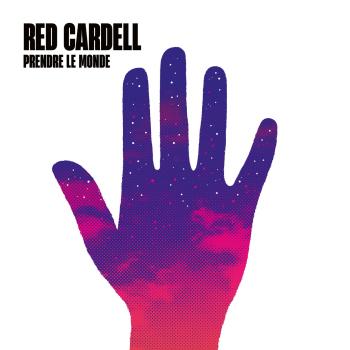
In 2026, with their twelfth studio album, the band reaffirms its identity—a fusion of high-octane rock, pop, and world music—while introducing a fresh sound, shaped by the production and artistic direction of Léopold Riou (guitarist for Matmatah and son of Jean-Pierre Riou).