








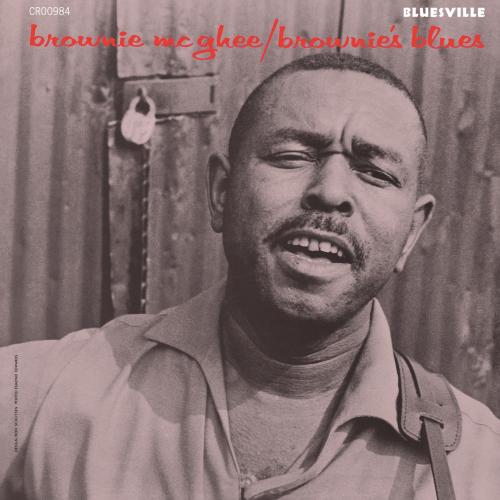
Brownie's Blues (Remastered 2026) Brownie McGhee
Album info
Album-Release:
1959
HRA-Release:
20.11.2026
Album including Album cover
I`m sorry!
Dear HIGHRESAUDIO Visitor,
due to territorial constraints and also different releases dates in each country you currently can`t purchase this album. We are updating our release dates twice a week. So, please feel free to check from time-to-time, if the album is available for your country.
We suggest, that you bookmark the album and use our Short List function.
Thank you for your understanding and patience.
Yours sincerely, HIGHRESAUDIO
- 1 Jump, Little Children (Remastered 2026) 04:35
- 2 Lonesome Day (Remastered 2026) 05:23
- 3 One Thing For Sure (Remastered 2026) 03:17
- 4 The Killin' Floor (Remastered 2026) 03:38
- 5 Little Black Engine (Remastered 2026) 03:40
- 6 I Don't Know The Reason (Remastered 2026) 04:01
- 7 Trouble In Mind (Remastered 2026) 04:53
- 8 Every Day I Have The Blues (Remastered 2026) 05:13
- 9 Door To Success (Remastered 2026) 04:10
Info for Brownie's Blues (Remastered 2026)
Brownie’s Blues was originally recorded in 1960 and released in 1962 on Presitge’s Bluesville Records. Renowned harmonica player and longtime collaborator, Sonny Terry, compliments McGhee’s guitar mastery on this album. Combining his jump-blues roots with his signature folk-blues sound, McGhee makes his virtuosity sound easy.
Of Brownie McGhee’s expressive thumb-and-forefinger guitar style Charles Edward Smith writes, "[it] sings and rings and whangs and talks to you." Indeed it does, and his versatile voice molds each melody and verse to tell tales of the ups and downs of everyday life, from songs of friendship to a blues about pawning his guitar.
Brownie McGhee, guitar, vocals
Sonny Terry, harmonica
Bennie Foster, guitar
Recorded October 6, 1960 at Van Gelder Studio, Englewood Cliffs, NJ
Digitally remastered
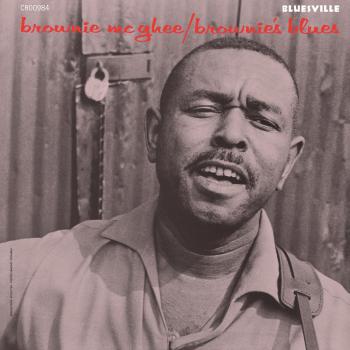
Walter Brown ("Brownie") McGhee
(November 30, 1915 - February 16, 1996) was a Piedmont blues singer and guitarist, best known for his collaborations with the harmonica player Sonny Terry.Brownie McGhee was born in Knoxville, Tennessee and grew up in Kingsport, Tennessee. As a child he had polio, which incapacitated his leg. His brother Granville "Sticks" or "Stick" McGhee was nicknamed for pushing young Brownie around in a cart. His father, George McGhee, was a factory worker known around University Avenue for playing guitar and singing. Brownie's uncle made him a guitar from a tin marshmallow box and a piece of board. McGhee spent much of his youth immersed in music, singing with local harmony group the Golden Voices Gospel Quartet and teaching himself to play guitar. A March of Dimes-funded leg operation enabled McGhee to walk. At age 22, Brownie McGhee became a traveling musician, working in the Rabbit Foot Minstrels and befriending Blind Boy Fuller, whose guitar playing influenced him greatly. After Fuller's death in 1941, J. B. Long of Columbia Records had McGhee adopt his mentor's name, branding him "Blind Boy Fuller No. 2." By that time, McGhee was recording for Columbia's subsidiary Okeh Records in Chicago, but his real success came after he moved to New York in 1942, when he teamed up with Sonny Terry, whom he had known since 1939 when Sonny was Blind Boy Fuller's harmonica player. The pairing was an overnight success; as well as recording, they toured together until around 1980. As a duo, Sonny Terry and Brownie McGhee did most of their work from 1958 until 1980, spending 11 months of each year touring, and recording dozens of albums. Despite their later fame as "pure" folk artists playing for white audiences, in the 1940s Terry and McGhee also attempted to be successful black recording performers, fronting a jump blues combo with honking saxophone and rolling piano, variously calling themselves "Brownie McGhee and his Jook House Rockers" or "Sonny Terry and his Buckshot Five," often with Champion Jack Dupree and Big Chief Ellis. They also appeared in the original Broadway productions of Finian's Rainbow and Cat on a Hot Tin Roof. During the blues revival of the 1960s, Terry and McGhee were very popular on the concert and music festival circuits, occasionally adding new material but usually remaining faithful to their roots and their audience. With Sonny Terry, he appeared in the 1979 Steve Martin comedy The Jerk. In 1987, McGhee gave a small but memorable performance as ill-fated blues singer Toots Sweet in the supernatural thriller movie, Angel Heart. He appeared in a 1988 episode of "Family Ties" titled "The Blues Brother" in which he played fictional blues musician Eddie Dupre, as well as a 1989 episode of Matlock entitled "The Blues Singer." Happy Traum, a former guitar student of Brownie's, edited a blues guitar instruction guide and songbook for him. Using a tape recorder, Traum had McGhee instruct and, between lessons, talk about his life and the blues. Guitar Styles of Brownie McGhee was published in New York in 1971. The autobiographical section features Brownie talking about growing up, his musical beginnings, and a history of the early blues period (1930s onward). One of McGhee's final concert appearances was at the 1995 Chicago Blues Festival. McGhee died from stomach cancer in February 1996 in Oakland, California at age 80; he missed his planned return trip to Australia.
This album contains no booklet.