



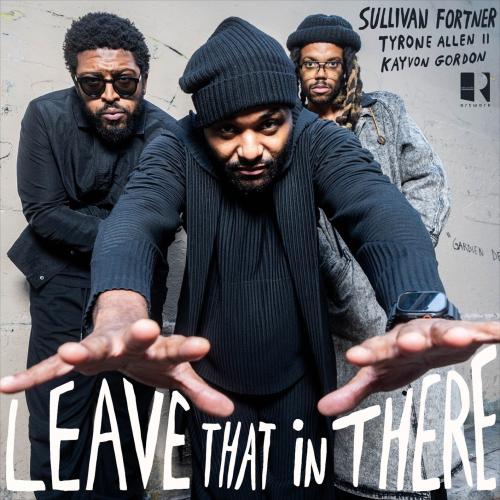
Leave That In There Sullivan Fortner
Album info
Album-Release:
2026
HRA-Release:
28.08.2026
Album including Album cover
- 1 Sugarcane 03:36
- 2 Que Diablos 02:56
- 3 A Poignant Time 01:29
- 4 Aerobatics Pt. 1 01:39
- 5 Aerobatics Pt. 2 04:53
- 6 Sorcerer's Stick 02:21
- 7 Swirl 03:21
- 8 T295 01:51
- 9 Number 3 06:00
- 10 12 Gallons 01:42
- 11 Aria II 03:47
- 12 A Hymn for Linda 03:17
- 13 Another Poignant Time 02:15
Info for Leave That In There
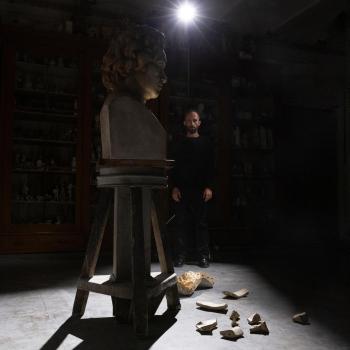
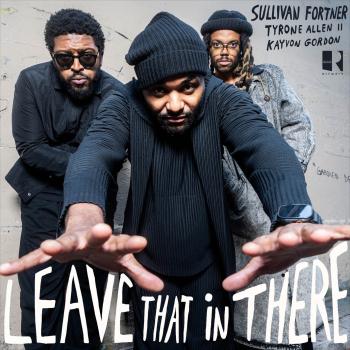
Artwork Records is thrilled to announce the release of Leave That In There, the sixth album by GRAMMY Award-winning pianist, composer, and bandleader Sullivan Fortner. Co-produced by Derrick Hodge and Jack DeBoe, Leave That In There presents Fortner’s most personal and self-referential statement to date. Across a dozen original compositions and one cover, the New Orleans native threads together musical references, memories pulled from family history, spiritual traditions, and sonic callbacks to earlier works throughout his catalog. The album moves fluidly between acoustic trio interplay, Hammond B3 organ, synthesizers, marimba, Bàtá drumming, and fully improvised passages while maintaining the connective language that has defined Fortner’s music since his debut over a decade ago. This is the first studio recording featuring his working trio comprising bassist Tyrone Allen II and drummer Kayvon Gordon.
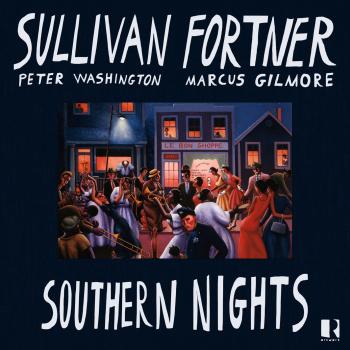
Fortner recently earned the GRAMMY Award for Best Jazz Instrumental Album for his previous album Southern Nights, adding to a career that has established him as one of the defining pianists of his generation. He previously received a GRAMMY for his work with vocalist Samara Joy and has performed and recorded alongside artists including Cécile McLorin Salvant, Wynton Marsalis, Paul Simon, Dianne Reeves, and John Scofield, and has received countless accolades and recognition, including the The Gilmore's inaugural 2026 Larry J. Bell Jazz Artist Award. Fred Kaplan of Slate referred to Fortner as “simply one of the best jazz pianists playing.”
The album title comes from a line in When the Levees Broke: A Requiem in Four Acts, Spike Lee’s 2006 documentary chronicling the devastation following Hurricane Katrina. In the liner notes, writer Courtney-Savali L. Andrews recounts Fortner’s deep connection to the phrase and the layered meanings it carries within the record’s broader themes of memory, survival, humor, grief, ancestry, and resilience. Andrews describes the album as “his most self-referential work to date,” noting that Fortner sought to create “a catalogue of music that is connected.”
Raised in New Orleans, Fortner draws heavily throughout the album from the Gulf South, its landscapes cultural, musical, and historical. Opening track “Sugarcane” serves as an entry point into many of the album’s broader themes, drawing from both Fortner’s personal history and the deeper historical landscape of southern Louisiana, where he was raised. Built around Kayvon Gordon’s Bàtá drumming and layered rhythmic interplay between the trio, the composition reflects Fortner’s ongoing engagement with Black diasporic musical traditions while also referencing the histories of labor, migration, and resistance tied to Louisiana’s sugarcane industry. In the liner notes, Andrews connects the piece to the history of the 1811 German Coast uprising, the largest revolt led by enslaved Africans in American history, which took place near LaPlace, the town where Fortner grew up.
The composition also draws from Fortner’s own childhood memories. “Everybody knows what sugarcane is,” he recalls in the liner notes. “My grandmother used to come over with stalks of sugarcane. You would cut it, we would sit there, eat it and spit it out on the ground. That’s how I learned how to sweep as a kid.” Andrews describes the track as reflecting both the responsibilities and musical values Fortner inherited growing up, while the arrangement itself moves between acoustic piano, marimba, synthesizer textures, and layered percussion that subtly reference artists including Stevie Wonder, George Duke, and Bernie Worrell. The musical material introduced in “Sugarcane” later reappears elsewhere on the album, reinforcing the interconnected structure that runs throughout Leave That In There.
The trio of Fortner, Allen, and Gordon has steadily developed into one of the pianist’s most cohesive ensembles in recent years. Andrews writes that the album documents “the first [record] as the frontman to this consistent lineup,” capturing a band shaped through ongoing performance rather than a one-time studio session. Their interplay across the album balances precision with spontaneity, allowing Fortner’s compositional structures and improvisational instincts to coexist naturally within the same musical language.
Leave That In There features a dozen originals, composed by Sulivan or fully improvised in the studio with the trio. Among the album’s other highlights are “Swirl,” a new original composition inspired by Thelonious Monk, the meditative tribute to the late Mama Payne, “A Hymn for Linda,” “Aria II,” which revisits material from Fortner’s 2015 debut album Aria, and the contemplative lead single “Que Diablos”, The sole cover is “Number 3”, which is a fast waltz written by Detroit’s own drummer-composer Lawrence Willians. A staple in Marcus Belgrave's repertoire - who Sullivan met while at Oberlin - the track is a tribute to him.
Throughout the project, Fortner revisits earlier musical ideas not as nostalgia, but as part of an evolving continuum. As Andrews writes Leave That In There serves as “another sound collage” that lays bare Fortner’s “histories, logics, desires, priorities, and concerns.”
With Leave That In There, Sullivan Fortner expands the scope of the piano trio format while deepening the personal and musical threads that have run through his work from the beginning.
Sullivan Fortner, Steinway D piano, synthesizer, Hammond B3, vocals
Tyrone Allen II, double bass, Moog Sub 37
Kayvon Gordon, drums, percussion
Jack DeBoe, percussion, background vocals
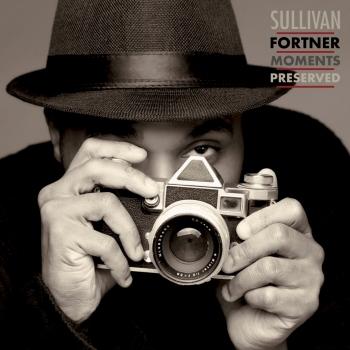
Sullivan Joseph Fortner Jr.
is a native New Orleanian who has already made a significant foray into the jazz world that belies his young age. While touring with Stefon Harris & Blackout, Christian Scott Quintet, and the Roy Hargrove Quintet, Sullivan completed his Master’s degree in Jazz Performance at Manhattan School of Music under the tutorage of Jason Moran, and Phil Markowitz. He holds a Bachelor’s degree in Jazz Performance from Oberlin Conservatory of Music. Sullivan began playing music by ear at the age of seven. Two years later, he was playing for church choirs throughout New Orleans. By the time he was 11 years old, Sullivan had won a Cox Cable “Amazing Kids Award”. At the age of 13, Sullivan furthered his formal education in piano by attending the New Orleans Center for Creative Arts (NOCCA) and earned scholarships to several prestigious summer jazz programs, including the Vail Jazz Institute and the Skidmore Jazz Studies Summer Program. A standout on the stage and in the classroom, Sullivan was Valedictorian of his high school class while simultaneously graduating from NOCCA. He has studied and performed with many great musicians, including The Marsalis Family, Donald Harrison, Nicholas Payton, Billy Hart, Gary Bartz, Marcus Belgrave, The Jordan Family, Irvin Mayfield, Peter Martin, Dave Liebman, and a host of others.
This album contains no booklet.