


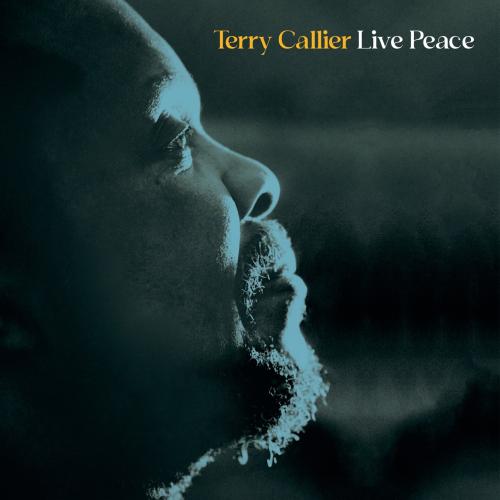
Live Peace (Live) (Remastered) Terry Callier
Album info
Album-Release:
2026
HRA-Release:
26.06.2026
Album including Album cover
- 1 What About Me (What You Gonna Do About Me) (Live) 06:24
- 2 Interlude (Live) 01:38
- 3 Fix The Blame (Live) 08:35
- 4 If I Could Make You (Change Your Mind) (Live) 07:10
- 5 Band Intro (Live) 02:10
- 6 What Colour Is Love (Live) 05:51
- 7 Jazz My Rhythm & Blues (Live) 05:18
- 8 Nobody But Yourself To Blame (Live) 06:42
- 9 Lazarus Man (Live) 08:30
- 10 Love Theme From Spartacus (Live) 02:22
- 11 When My Lady Danced (Live) 06:24
- 12 Keep Your Heart Right (Live) 06:55
- 13 Midnite Mile (Live) 04:39
Info for Live Peace (Live) (Remastered)
There was no one quite like Terry Callier, and Live Peace captures the rare magic of his live performances in their most intimate and spiritual form. Recorded live in Leeds in the late 1990s and early 2000s at shows run by Lubi Jovanovich & Gip Dammone of The DIG! Family, this release documents an artist whose music transcended genre, era, and expectation, offering truth, compassion, and deep emotional connection rather than spectacle.
Recorded live by renowned sound engineer Martin Dixon at The Yardbird Suite / The Underground in Leeds in 1998 and 2001, these performances feature Terry alongside his hand-picked ‘Family Band’; which included legendary guitarist Jim Mullen, Chris Kibble on keys and famed percussionist Bosco D’Oliveira. Painstakingly restored from the only surviving source using modern AI-assisted audio tools, the aim was never to polish away the grain, but to let Terry’s voice, message, and band shine once more.
Sparse, soulful, and profoundly human, the recordings preserve the immediacy of nights where packed rooms fell into pin-drop silence, hanging on every word and note. From the aching beauty of “What Colour Is Love” to the cinematic power of “Lazarus Man,” this album reminds us what a master storyteller and spiritual presence Terry Callier was.
Live Peace stands as a powerful reminder of why Terry Callier remains one of music’s most revered and influential voices, whose songs of love, justice, and humanity resonate as strongly now as ever. This project is fully endorsed by Terry’s daughter Sunny Callier – and the cover photo and sleeve images are all suitably also previously unseen visual treasures.
Terry Callier, vocals, guitar
Jim Mullen, guitar
Chris Kibble, keyboards
Bosco D’Oliveira, percussion
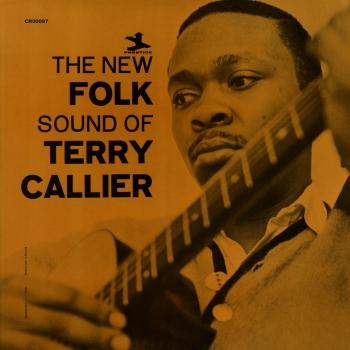


Terrence Orlando "Terry" Callier
was an American soul, folk and jazz guitarist and singer-songwriter.
Callier was born in the North Side of Chicago, Illinois, and was a childhood friend of Curtis Mayfield, Major Lance and Jerry Butler, and began singing in doo-wop groups in his teens. At the same time as attending college, he then began performing in folk clubs and coffee houses in Chicago, becoming strongly influenced by the music of John Coltrane. During this period, he briefly performed in a duo with David Crosby in Chicago and New York City.
He continued to perform in Chicago, and in 1970 joined the Chicago Songwriters Workshop set up by Jerry Butler. He and partner Larry Wade wrote material for Chess and its subsidiary Cadet label, including The Dells' 1972 hit "The Love We Had Stays on My Mind", as a result of which he was awarded his own recording contract with Cadet as a singer-songwriter. Three critically acclaimed but commercially unsuccessful albums followed, produced by Charles Stepney: Occasional Rain (1972), What Color Is Love (1972), and I Just Can't Help Myself (1973). These demonstrated that Callier's influences included soul, jazz, funk, psychedelia, and classical music.
Callier continued to perform and tour until 1983, when he gained custody of his daughter and retired from music to take classes in computer programming, landing a job at the University of Chicago and returning to college during the evenings to pursue a degree in sociology. He re-emerged from obscurity in the late 1980s, when British DJs discovered his old recordings and began to play his songs in clubs. Acid Jazz Records head Eddie Piller reissued a little-known Callier recording from 1983, "I Don't Want to See Myself (Without You)", and brought him to play clubs in Britain. From 1991 he began to make regular trips to play gigs during his vacation time from work.
In the late 1990s Callier began his comeback to recorded music, collaborating with Urban Species on their 1997 EP Religion and Politics and contributed to Beth Orton's Best Bit EP in 1997 before releasing the album Timepeace in 1998, which won the United Nations' Time For Peace award for outstanding artistic achievement contributing to world peace. His colleagues at the University of Chicago did not know of Callier's life as a musician, but after the award the news of his work as a musician became widely known and subsequently led to his dismissal by the University.
As well as touring internationally, Callier continued his recording career, releasing five albums after Timepeace, including Lifetime (1999), Alive (2001), Speak Your Peace (2002), featuring Paul Weller on the single "Brother to Brother", Golden Apples of the Sun (2003) and Lookin' Out (2004). May 2009 saw his album Hidden Conversations featuring Massive Attack released on Mr Bongo records.
He died from cancer on October 27, 2012, aged 67.
This album contains no booklet.