





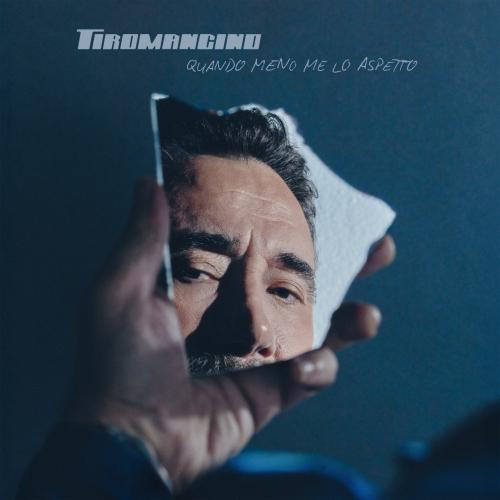
Quando meno me lo aspetto Tiromancino
Album info
Album-Release:
2026
HRA-Release:
02.10.2026
Album including Album cover
I`m sorry!
Dear HIGHRESAUDIO Visitor,
due to territorial constraints and also different releases dates in each country you currently can`t purchase this album. We are updating our release dates twice a week. So, please feel free to check from time-to-time, if the album is available for your country.
We suggest, that you bookmark the album and use our Short List function.
Thank you for your understanding and patience.
Yours sincerely, HIGHRESAUDIO
- 1 Scomparire nel blues 03:25
- 2 Sto da Dio 03:12
- 3 Quando meno me lo aspetto 03:46
- 4 Mi rituffo nella notte 02:55
- 5 Una vita 03:32
- 6 Gennaio 2016 03:36
- 7 Gli alieni siamo noi 03:00
- 8 Tizzo 03:57
- 9 Il cielo 03:16
- 10 Nuvole 02:49
- 11 Un amore così 03:10
- 12 Nuvole - Bossa in blu 02:49
Info for Quando meno me lo aspetto
"Quando meno me lo aspetto" is the 14th studio album by Tiromancino, marking the recording comeback of the band led by Federico Zampaglione—one of the Italian music scene’s most distinctive and acclaimed songwriters. The project is preceded by the single “Gennaio 2016,” an intense, radio-friendly ballad rooted in the singer-songwriter tradition; the track reaffirms the group’s ability to connect with a broad, diverse audience through emotional, contemporary songwriting.
The release was preceded by the single “Gennaio 2016,” an intense, deeply personal singer-songwriter ballad that immediately resonated with both the public and critics, earning a prominent spot among the most-played songs on the radio. Then, at the end of January, came “Sto da Dio”—released digitally on January 30th—an explicit homage to the blues and to a concept of personal and creative freedom that runs through the entire album. “Quando meno me lo aspetto” comprises eleven original tracks that move effortlessly across diverse genres—from blues to rock, country to electronica, and even reggae and the sounds of 1970s singer-songwriter music. It is an album that blends lyrical depth with sonic experimentation, weaving a cohesive narrative of intimacy, fears, rebirth, and late-summer nostalgia, alongside a critical look at a society increasingly obsessed with appearances rather than authentic passions. In this context, Zampaglione asserts an almost “alien” stance, feeling out of place in a system that rapidly burns through new stars; he seeks a different kind of existence in music, dreaming of disappearing into the blues as a form of salvation. The tracks “Una vita” and “Gli alieni siamo noi” also mark a renewed collaboration with his father, Domenico Zampaglione, who co-wrote the lyrics with him. Discussing the album’s origins, Federico Zampaglione recounted how it all began with an internal struggle, at a time when he thought he was done releasing new records and intended to focus solely on live performances and cinema. Instead, it was life that once again reshuffled the deck, prompting him to lock himself in the studio—almost on a whim—with Leo Pari and Simone Guzzino to give shape to songs written over time. Recorded in total freedom, without pressure or deadlines, the album brings together all the music Zampaglione loves, featuring contributions from special friends like Simona Molinari, Mario Donatone, and Fabrizio Mandolini. Only at a certain point—almost suddenly—did it become clear that the material already constituted a complete album, thereby giving full meaning to a title that could not be more fitting.
The songs making up the tracklist—from “Scomparire nel blues” to “Un amore così,” via “Mi rituffo nella notte,” “Il cielo,” and “Nuvole”—are self-contained little stories that converse with one another. The blues emerges as a refuge and an antidote to an oppressive reality, while nocturnal images of Rome, domestic irony, memories that drift in and out like mist, and reflections on time and essential bonds come to the fore. Some tracks bear a strong cinematic stamp, while others operate on a more explicitly emotional level, yet all share a sense of sincerity and expressive urgency.
Tiromancino
Tiromancino
Founded by Federico Zampaglione, Tiromancino emerged in 1989 and released four albums during the 1990s: *Tiromancino* (1992), *Insisto* (1994), *Alone alieno* (1995), and *Rosa spinto* (1997). These records were characterized by a blend of traditional song structures and a quest for unconventional sounds.
In March 2000, Tiromancino made their debut on the Virgin label with their fifth album, *La descrizione di un attimo*. Thanks to unstoppable word-of-mouth among fans and industry insiders, combined with an intense schedule of live performances, the band saw an exponential rise in both their audience and critical acclaim. From "Strade"—the single presented at the 2000 Sanremo Festival, where it took second place in the "Newcomers" category—to the title track "La descrizione di un attimo" (a captivating fusion of melody, rhythm, and lyrical intensity) and the breakthrough success of "Due destini" (later featured on the soundtrack of Ferzan Ozpetek’s film *Le fate ignoranti*), Tiromancino saw many of their commercial and artistic goals come to fruition. They earned significant accolades, such as an invitation from Morcheeba to open their tour in Spain and Portugal, and won major awards, including Best Group at the Italian Music Awards; their music videos featured special guest appearances (by Valerio Mastandrea, Paola Cortellesi, and Ozpetek himself) and were recognized for their inventiveness and quality.
In October 2002, Tiromancino—now centered around the core trio of Federico Zampaglione, Andrea Pesce, and Luigi Pulcinelli—released a new album, *In continuo movimento*. On their sixth album, the group once again seeks to blend traditional acoustic instrumentation with electronic sounds, placing greater emphasis on guitars and dedicating significant effort to experimentation—ranging from "electro" rhythms to more psychedelic tones. *In continuo movimento* was preceded by the single "Per me è importante," which hit number one on the charts and remained one of the most successful singles throughout the winter of 2002, aided by an innovative music video that highlighted the song's intimate atmosphere and delicate lyrics. The album soon revealed its wealth of ideas and evocative qualities, climbing to the top of the sales charts and eventually achieving double-platinum certification. ... (tiromancino.net)
This album contains no booklet.