




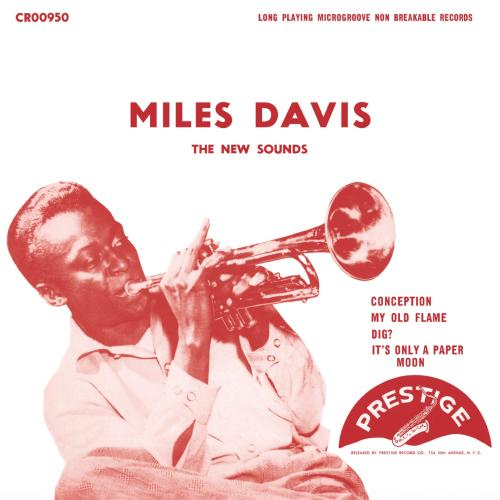
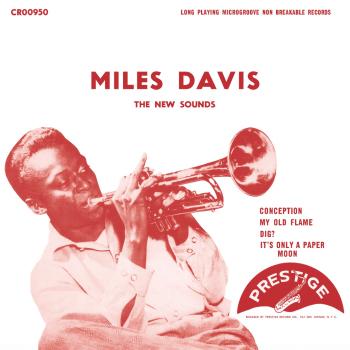
The New Sounds (Mono Remastered 2026) Miles Davis
Album info
Album-Release:
1951
HRA-Release:
13.02.2026
Album including Album cover
I`m sorry!
Dear HIGHRESAUDIO Visitor,
due to territorial constraints and also different releases dates in each country you currently can`t purchase this album. We are updating our release dates twice a week. So, please feel free to check from time-to-time, if the album is available for your country.
We suggest, that you bookmark the album and use our Short List function.
Thank you for your understanding and patience.
Yours sincerely, HIGHRESAUDIO
- 1 Conception (Remastered 2026) 04:01
- 2 My Old Flame (Remastered 2026) 06:34
- 3 Dig? (Remastered 2026) 07:37
- 4 It's Only A Paper Moon (Remastered 2026) 05:26
Info for The New Sounds (Mono Remastered 2026)
This 75th anniversary reissue of Davis' first album as a bandleader was originally released on Prestige Records in 1951.
The New Sounds is the debut solo studio album by Miles Davis. The New Sounds, recorded in October of 1951, was Miles first true album session of his career. It delivered a heated and confident version of pianist George Shearing’s “Conception,” simmering in the bebop/cool overlap, as well as an unhurried, extended take on “My Old Flame,” and an upbeat “It’s Only A Paper Moon.” “Dig”—a Miles original based on the changes of “Sweet George Brown”—was the standout, still deep in bebop territory but recognizably individual. “I like what I played on Dig, because my sound was really becoming my own thing,” Miles later wrote.
Miles Davis (1926-1991) is one of the world’s most iconic, influential and acclaimed figures in the history of jazz, 20th century music and beyond. During his five-decade career as trumpeter, bandleader and composer, he was a prime mover and trendsetter in the evolution of jazz as an art form. Davis recorded a number of classic albums on Prestige Records between 1951 and 1961, including his debut as a bandleader, The New Sounds (1951), which also introduced Miles as composer of future bebop jazz standard “Dig”, a composition that has been recorded by numerous other jazz artists including Sonny Rollins, Archie Shepp and Donald Byrd. Miles’ next album Blue Period (1953) featured “Out Of The Blue” and “Bluing”, both of which were recorded during the making of The New Sounds album and reappeared on the 1956 album Dig along with the title track itself. In 1954 came the Miles Davis Quartet album, which featured “Tune Up”, “Smooch”, “Miles Ahead” and jazz standards “Four” and “Blue Haze”. The Musings Of Miles album (1955) featured yet another Davis standard “Green Haze”. What followed in 1956 for Davis was a busy year of recordings and releases including Miles Davis And Horns, which featured the composition “Down”, and Collectors’ Items, which featured the “The Serpent’s Tooth” and “Compulsion”. It was on the 1957 album Walkin’ that one of Davis’ greatest compositions, modern jazz standard “Solar” first appeared. Covered by dozens of jazz greats including Bill Evans, Dave Holland and Jack DeJohnette, the first two bars of “Solar” adorn Davis’ tombstone. Always an explorer of unknown musical paths, Davis the composer was a creature of innate intellect, primal instinct and improvisational perfection.
Miles Davis, trumpet
Jackie McLean, alto saxophone, (tracks 1, 2)
Sonny Rollins, tenor saxophone
Walter Bishop, Jr., piano
Tommy Potter, double bass
Art Blakey, drums
Digitally remastered
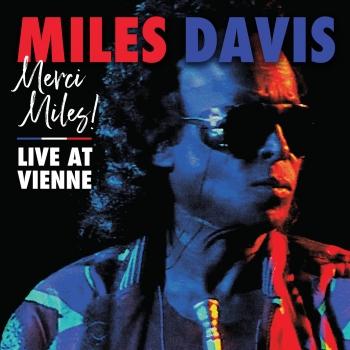
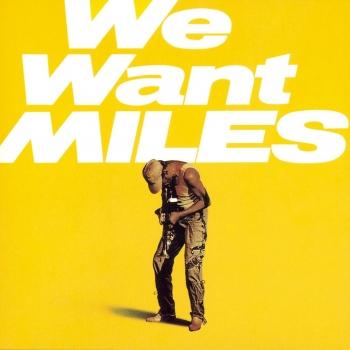
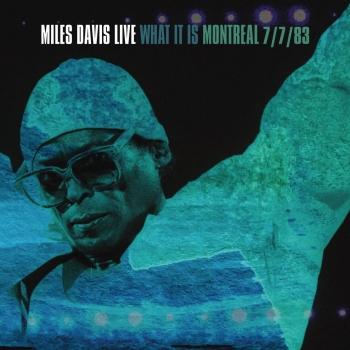
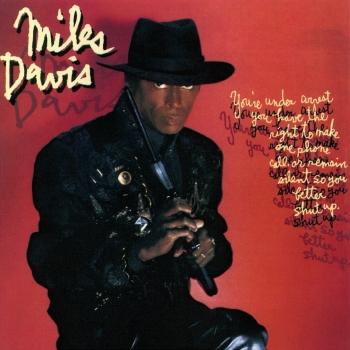
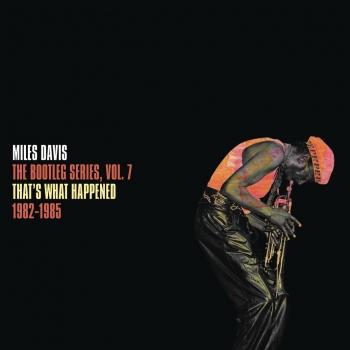
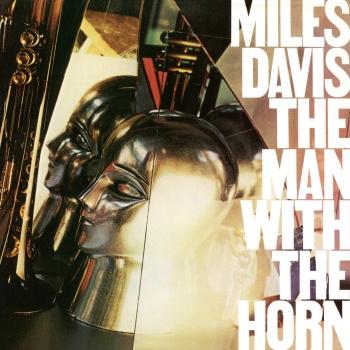
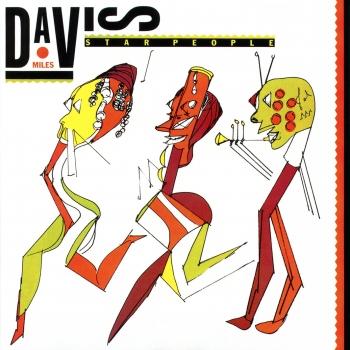
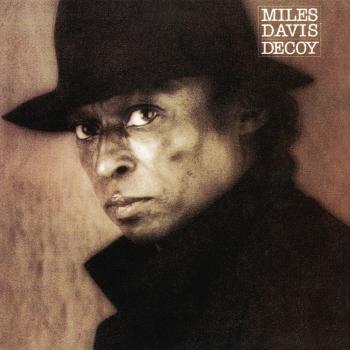
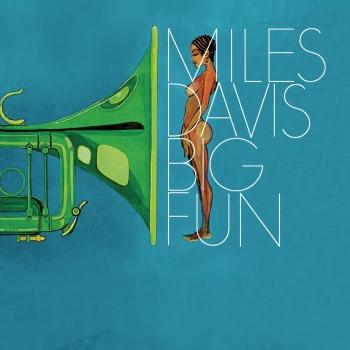
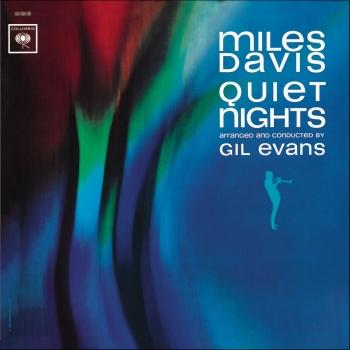
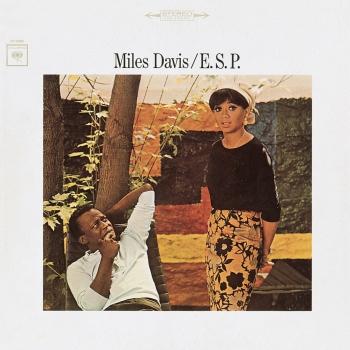
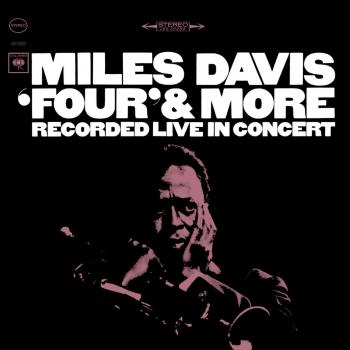
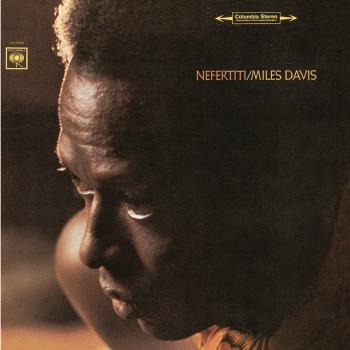
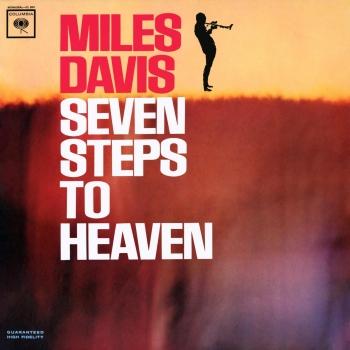
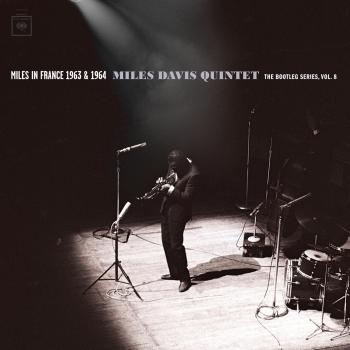
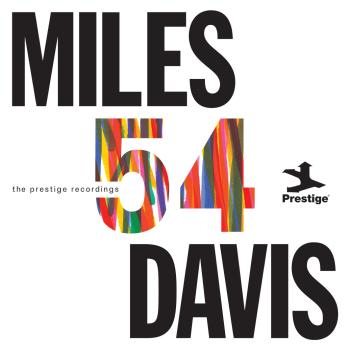

Trumpeter Miles Davis grew up in East St. Louis, Illinois, just across the river from St. Louis, Missouri. His parents were affluent, and had the means to support his musical studies as a boy. He began playing the cornet at age nine, and received his first trumpet at around twelve or thirteen. He studied classical technique, and focused mainly on using a rich, clear tone, something that helped define his sound in later years.
As a teenager, he played in various bands in St. Louis, which was rich with jazz, as big bands often stopped there on tours throughout the Midwest and southern states. The most important experience he had was when he was asked to play in the Billy Eckstine band for a week as a substitute. The group included Charlie Parker, Dizzy Gillespie, and Sara Vaughan. After playing with these stars, Davis knew he had to move to New York to be at the heart of the jazz scene.
In Pursuit of Parker:
In 1944 Davis moved to New York City where he had earned a scholarship to study trumpet at the Juilliard School of Music. Upon arriving however, he sought after Charlie Parker, and meanwhile spent all of his time in jazz clubs listening to bebop. He was transfixed on the music, and grew utterly bored with his classical studies. After less than a year at Juilliard, he dropped out and tried his hand at performing jazz.
Although not particularly stunning, his playing was good enough to finally attract Charlie Parker, and Davis joined his quintet in 1945. He was often criticized for sounding inexperienced, and was compared unfavorably to Dizzy Gillespie and Fats Navarro, who were the leading trumpeters at the time. Both boasted stellar technique and range, neither of which Davis possessed. In spite of this, he made a lasting impression on those who heard him, and his career was soon set aloft.
Cool Jazz and a Rise to Fame:
Encouraged by composer and arranger Gil Evans, Davis formed a group in 1949 that consisted of nine musicians, including Lee Konitz and Gerry Mulligan. The group was larger than most bebop ensembles, and featured more detailed arrangements. The music was characterized by a more subdued mood than earlier styles, and came to be known as cool jazz. In 1949 Davis released the album Birth of the Cool (Captiol Records).
Change of artistic direction became central to Davis’ long and increasingly influential career. After dabbling in hard bop as a leader on four Prestige recordings featuring John Coltrane, he signed with Columbia records and made albums that featured Gil Evans’ arrangements for 19-piece orchestra. These were Miles Ahead, Porgy and Bess, Sketches of Spain, and Quiet Nights. He rose in popularity with these recordings, in part due to his signature sound, which he often enhanced by using a Harmon mute.
Kind of Blue and Beyond:
In 1959 Davis made his pivotal recording, Kind of Blue. It was a departure from all of his previous projects, abandoning complicated melodies for tunes that were sometimes only composed of two chords. This style became known as modal jazz, and it allows the soloist expressive freedom since he does not have to negotiate complex harmonies. Kind of Blue also featured John Coltrane, Cannonball Adderley, and Bill Evans. The album is one of the most influential in jazz, and is Columbia Records’ best-selling jazz record of all time.
In the mid 1960s Davis changed directions again, forming a group with Herbie Hancock, Wayne Shorter, Tony Williams, and Ron Carter. This group was known for the excellence of each individual member, and also for its unique performance approach. Each night the tunes would sound different, as the musicians would sometimes only loosely adhere to the song structures, and often transition from one right into the next. Each player was given the chance to develop his solos extensively. Like all of Davis’ previous groups, this quintet was highly influential.
Late Career:
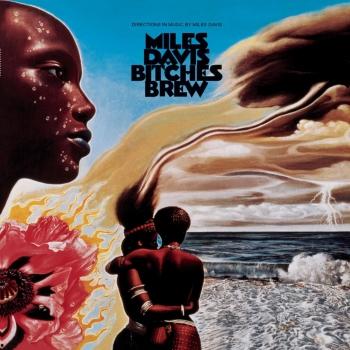
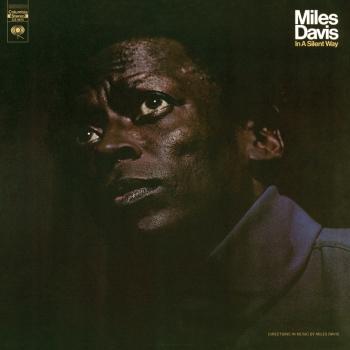
Despite health problems, drug addiction, and strained personal relationships, Davis continued to play, changing his approach with each new project. In the late 60s and 70s, he began to experiment with electronic instruments, and grooves that were tinged with rock and funk music. Two famous recordings from this period are In a Silent Way and Bitches Brew. By the time the 1980s rolled around, Davis was not only a jazz legacy, but a pop icon, whose music, persona, and fashion style were legendary.
Davis died in 1991, as perhaps the most influential jazz artist ever. His vast body of work continues to be a source of inspiration for today’s musicians. (Jacob Teichroew, About.com Guide)
This album contains no booklet.