






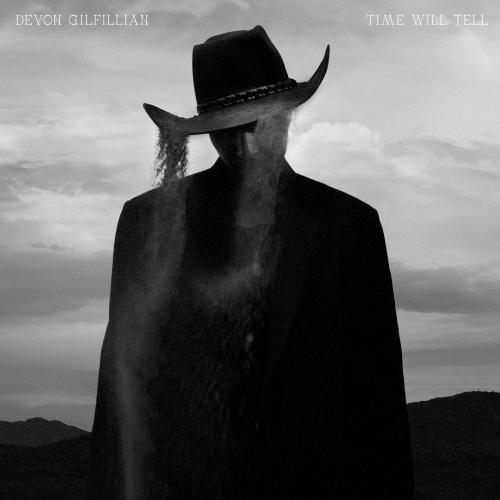
Time Will Tell Devon Gilfillian
Album info
Album-Release:
2026
HRA-Release:
26.06.2026
Album including Album cover
I`m sorry!
Dear HIGHRESAUDIO Visitor,
due to territorial constraints and also different releases dates in each country you currently can`t purchase this album. We are updating our release dates twice a week. So, please feel free to check from time-to-time, if the album is available for your country.
We suggest, that you bookmark the album and use our Short List function.
Thank you for your understanding and patience.
Yours sincerely, HIGHRESAUDIO
- 1 Time 03:19
- 2 Moonflower 04:38
- 3 Hold On (Hourglass) 04:08
- 4 IRL 03:31
- 5 Black Dog Rabbit Hole 03:20
- 6 Glad To Be Here 04:59
- 7 Shines In You 04:44
- 8 Let's Stop Fucking Around 03:12
- 9 Keep On Movin' 05:23
- 10 Some Days 03:28
- 11 You Can Hate Me Now 03:46
- 12 Time (Reprise) 00:38
Info for Time Will Tell
Forged through the extreme highs and lows that come with living, Time Will Tell is the album that Devon Gilfillian has been preparing to make his entire life. His third studio album was formed in Nashville’s legendary RCA Studio A and recorded live to tape on varispeed with mostly single vocal takes. Gilfillian wrote and produced with a mighty team including longtime drummer and friend Jonathan Smalt and Neal H Pogue (Tyler the Creator, OutKast) as executive producer.
Gilfillian carries soul track to track through a sonic journey of rock, funk, and country elements, magnetically vulnerable about his own failure and frailty. No end is ever easy, and what else is there in life than to go through? To get to where we’re going, we’ve got to suffer a little. Time Will Tell is the sound of Gilfillian doing just that while realizing what a blessing it is to be here at all.
Time Will Tell is the album that Devon Gilfillian has been preparing to make his entire life. But some things needed to happen first—namely, he needed his life to change, for the road to wind through a few curves and over a few bumps before the classically modern and magnetic soul singer could write these songs. He needed to confront his family’s mortality. He needed to endure a relationship whose cracks nearly broke him. He needed to take control of the way he made his records, to believe that he and his closest confidants had what it took to shape the record of his life. Here’s how they did just that.
You should first know that Devon’s father, Nelson Gilfillian, likes to keep it clean. A father of three now at the edge of 70, he hits the gym five times a week and generally watches what he eats. Though he raised his kids just west of Philadelphia, he lives now just east of Nashville, in the rural outskirts of Lebanon. A lifelong musician and wedding singer, Nelson’s one indulgence these days might be his Wednesday night trips into the city, where he plays congas in a weekly R&B and jazz jam at the Flamingo Cocktail Club.
Devon, then, was stunned and confused when his mom called in September 2023 to say that Nelson, then 67, had suffered a heart attack. His own father had died at that age, but the prognosis for Nelson seemed much better—a few stints, then back home to Lebanon. Nelson is the reason Devon is a musician, having taken the kid to guitar lessons and fed him the great records. So the son did what he assumed the father would want: He walked onstage in Portsmouth, New Hampshire, played his show, and flew home the next morning.
In a matter of weeks, Gilfillian wrote “Glad to Be Here,” a bittersweet and beautiful ode to existence – to slowing down long enough to remember what a gift it is to be alive at all. Like the sun slipping through closed curtains on a cold day, “Glad to Be Here” is the aching and grateful country-soul centerpiece of Time Will Tell, his third album and honest account of the extreme highs and lows that come with living. Nelson’s health scare coincided with the protracted and painful end of a long relationship that Gilfillian steadily realized was making him worse in almost every way that counted. The dozen songs of Time Will Tell first document the work it took for him to reach the end of that road—and, then, the sense of liberation and burgeoning joy he has found at the start of a new one. Time Will Tell does what classic soul and country records often do best: share the troubled state of someone’s heart in exquisite detail and look for a way forward.
Not long after Gilfillian moved to Nashville a dozen years ago, he wrote a song for his parents—his mom, Ginny, specifically. They were still up north, and he missed them. It was called “Home,” the first tune he’d written that he felt like he could share without qualms. It was a breakthrough for Gilfillian, who suddenly understood that writing and singing could function as therapy, that his talents were a ready-made outlet for his troubles and maybe his triumphs. That sensibility was clear on Gilfillian’s first three albums, especially the ecstatic eruptions of 2023’s Love You Anyway. Even his full-length, friend-studded cover of Marvin Gaye’s What’s Going On, released amid the turmoil of 2020, felt personal in that way, like he was looking for a sanctuary of his own in song.
But that idea became something of a life raft for Gilfillian in the intervening years. As he struggled to save a relationship into which he’d put so much time and love, he found himself writing about differences that he slowly recognized as irreconcilable. Gilfillian, for instance, is a morning person; as he realized his partner truly blossomed at night, he mourned the distance that lifestyle discrepancy created between them with “Moonflower,” a neo-soul wonder about respecting but regretting what makes someone themselves. And on “Black Dog Rabbit Hole,” he took frank stock of the impact the tension was having on his own wellbeing, how he was using his own depression and addiction as an escape hatch for an increasingly bad situation.
Gilfillian and his longtime drummer and friend Jonathan Smalt intuitively understood that the best way to capture the feelings in these songs was to cut them as quickly as possible. Gilfillian and Smalt have worked with several ace producers in the past, including Shawn Everett and Jeremy Lutito, but they felt like they finally knew enough to try it themselves. They asked Dave Cobb if they could borrow Nashville’s legendary RCA Studio A, then recruited a few ace engineers and producers—Reid Leslie, Michael Harris, Ran Jackson—to help man the varispeed tape machines and make a few key calls. They built a band of session aces and strong sets of string and horn players, then tracked most of the vocals with single takes. Neal H Pogue, the producer legendary for his work with the likes of OutKast and Tyler the Creator, was so passionate about Gilfillian’s demos that he enlisted as executive producer, eventually mixing the album himself. Everyone wanted the songs to feel like the epiphanies that had shaped them, for the recordings to reflect the realness of Gilfillian’s circumstances when he wrote them.
It absolutely worked. “Black Dog Rabbit Hole” is a riveting hard rock snapshot of mania, Gilfillian’s voice switching between falsetto frailty and a tormented bellow as he tries to find his way out of a spiral. Gilfillian has never made anything quite so raw, quite so cutting. With its gospel surges, ringing bells, and jittery guitars, “Hold On (Hourglass)” races like a nervous heart, a sleepless and agitated Gilfillian wondering if his commitment to holding on is just a way of fooling himself. On “IRL,” where a boom-bap beat undergirds an organ’s psychedelic whirr before the whole thing snaps into a funk strut, Gilfillian gets stuck in the conflict between leaving and staying, between indulging what his body wants and his mind needs. The song is so unmitigated it feels like you’re listening to a real-time argument he’s having with himself about his future. These aren’t breakup songs so much as exacting maps of Gilfillian’s relatable inner conflicts as he tries to find ways to be happy—ways of being, like his father, simply glad to be here at all.
Gilfillian ends Time Will Tell not with an apology but with a permission slip. As magnetic as a Cat Stevens staple but as warm as a Sam Cooke ballad, “You Can Hate Me Now” acknowledges that no end is ever easy, that all the effort in the world still won’t make a split feel smooth. “There’s no other way underneath the pain,” he sings, his voice trying not to break beneath the strain. Given the song title, it is staggering how likable Gilfillian seems in this moment, how vulnerable he is being about his own failure and frailty. “We just gotta go through,” he continues. What else is there in life or on an album like Time Will Tell than to go through? To get to where we’re going, we’ve got to suffer a little. Time Will Tell is the sound of Gilfillian doing exactly that but realizing what a blessing it is to be here at all, with the chance to hurt and learn and ultimately move on.
Devon Gilfillian
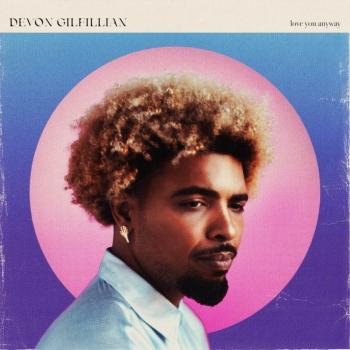
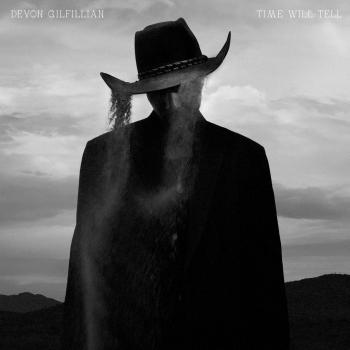
Devon Gilfillian
fires twin barrels of gospel-blues and southern soul on his debut EP. Fueled by groove, guitar, and the powerful punch of Gilfillian's voice, the songs shine a light on a young songwriter who grew up outside of Philadelphia, absorbing everything from the R&B swagger of Al Green and Ray Charles to the rock & roll heroics of Jimi Hendrix. Now based in Nashville, Gilfillian puts a personalized stamp on those childhood influences, rolling them into five original songs that showcase not only his songwriting and singing, but also his talent as an instrumentalist.
Raised by a musical family, Gilfillian grew up singing. He took up the electric guitar at 14 years old, kickstarting a fascination with classic rock and other sounds from an older generation. By the time college rolled around, Gilfillian was playing three-hour shows in a local cover band, performing songs by the Meters one minute and the Beatles the next. The gigs allowed him to explore the full range of his influences, but Gilfillian wanted to play his own music, too. With that in mind, he moved to Nashville, eager to chase down his own muse.
Released in May 2016, the self-titled Devon Gilfillian finds him stepping into the spotlight as a solo artist. He recorded the songs with a small group of friends and collaborators, tapping drummer Jonathan Smalt and slide guitarist Jesse Thompson as co-producers. Equal parts swampy, funky, and enthralling, the record finds Gilfillian planting one foot in the classic sound of his influences, with the other foot pointing somewhere new and uncharted. After all, he's no revivalist. No nostalgia act. No retro wannabe. Instead, Gilfillian is a classic artist for the modern age, discovering new life in soulful sounds that have been making people dance for decades.
This album contains no booklet.