


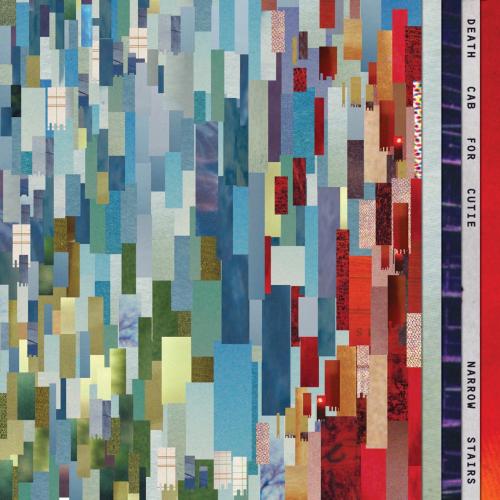
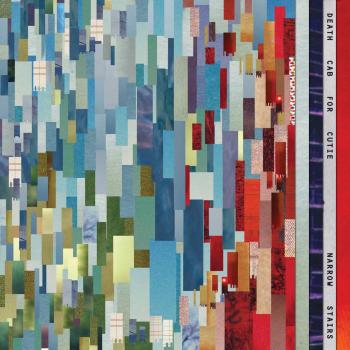
Narrow Stairs Death Cab for Cutie
Album info
Album-Release:
2008
HRA-Release:
06.07.2026
Album including Album cover
I`m sorry!
Dear HIGHRESAUDIO Visitor,
due to territorial constraints and also different releases dates in each country you currently can`t purchase this album. We are updating our release dates twice a week. So, please feel free to check from time-to-time, if the album is available for your country.
We suggest, that you bookmark the album and use our Short List function.
Thank you for your understanding and patience.
Yours sincerely, HIGHRESAUDIO
- 1 Bixby Canyon Bridge 05:15
- 2 I Will Possess Your Heart 08:25
- 3 No Sunlight 02:40
- 4 Cath... 03:49
- 5 Talking Bird 03:23
- 6 You Can Do Better Than Me 01:59
- 7 Grapevine Fires 04:09
- 8 Your New Twin Sized Bed 03:05
- 9 Long Division 03:49
- 10 Pity and Fear 04:21
- 11 The Ice Is Getting Thinner 03:45
- 12 I Will Possess Your Heart (Radio Edit) 04:08
Info for Narrow Stairs
Narrow Stairs marked a bold shift in the band's sound — darker and more experimental. Featuring standout tracks like "I Will Possess Your Heart" and "Cath..."
The atmosphere begins immediately with “Bixby Canyon Bridge,” featuring Gibbard’s voice, almost alone, crawling from silence and steadily inviting guitars, drums, and bass along for the build. Guitarist Chris Walla’s production here is in top form, a feat no doubt helped by his accomplished work producing past Death Cab albums and others (notably, Tegan and Sara’s The Con). Walla gives each song a little room to breathe, but also plenty of space to scream. Death Cab for Cutie even manages to eclipse the seeming inevitability of pompousness with the nearly nine minute length of first single “I Will Possess Your Heart” by simply pulling it off without question, a confidence few bands allow for themselves.
There are really no missteps here at all, but something hidden underneath the songwriting keeps Narrow Stairs from being an inarguably great album. Ben Gibbard is a confident lyricist in a band confidently embracing the future of their sound, but he seems to get a bit lost in the “Death Cab-ness” of his songs, never fully graduating from “very, very good” to great. Perhaps Seattle’s response to my theoretical love letter will come in the form of Death Cab for Cutie’s first truly great album. Naturally, I hope it’s raining that day.
Ben Gibbard, vocals, rhythm guitar, piano, keyboard, drums, drum machine
Nick Harmer, bass, backing vocals
Jason McGerr,drums, percussion
Chris Walla, lead guitar, audio sequencer, backing vocals, piano, keyboard

Death Cab for Cutie
Death Cab for Cutie's rise from small-time solo project to Grammy-nominated rock band is one of indie rock's greatest success stories. Launched in the bayside college town of Bellingham, Washington, the group was originally a side project for singer/guitarist Ben Gibbard, an engineering student at Western Washington University who split his time between school and music. Taking a break from his local power pop band, Pinwheel, Gibbard began recording an album's worth of solo material during the summer of 1997. Producer Chris Walla lent his help to the sessions, which resulted in an eight-song cassette entitled You Can Play These Songs with Chords. When the tape became a local hit, Gibbard reached into his circle of friends to form a band, hoping to play the new songs live. Bassist Nick Harmer (Gibbard's roommate) and drummer Nathan Good climbed aboard, and Walla enlisted as the band's primary guitarist (he would also go on to produce most of the band's future releases). With a lineup now in place, Gibbard's group rechristened itself Death Cab for Cutie (named after a song by the Bonzo Dog Doo Dah Band) and signed a contract with the Seattle-based Barsuk Records within a year's time.
The quartet made its studio debut with 1998's Something About Airplanes, an album that featured several re-recorded tracks from the You Can Play These Songs with Chords cassette as well as a dreamy, pop-oriented sound reminiscent of Built to Spill. Gibbard and Walla both continued to pursue their own projects (including Gibbard's successful stint with the Postal Service), but that didn't keep Death Cab for Cutie from returning to the studio for a second album, We Have the Facts and We're Voting Yes, which appeared in 2000. Nathan Good left the group just prior to the album's completion, and We Have the Facts introduced Michael Schorr as Death Cab's new drummer. The Forbidden Love EP arrived that same year, while a third full-length effort, The Photo Album, was released in 2001. By this time, a sizable audience had gathered around the band's emotional music, and Barsuk re-released You Can Play These Songs with Chords in 2002 with ten additional songs.
The polished, hook-laden Transatlanticism arrived in 2003 and announced the arrival of drummer Jason McGerr, who had previously played in a band with Nick Harmer before Death Cab's formation. The album also proved to be a very important step in the band's career, gathering positive attention from consumers and industry execs (including television producer Josh Schwartz, who prominently featured the band's music throughout several seasons of The O.C.). With their popularity at an all-time high, the bandmates issued a live disc, The John Byrd E.P., and later signed a worldwide major-label deal with Atlantic Records in November 2004.
Plans was released the following summer and debuted at number four, remaining on the Billboard charts for nearly one year and achieving platinum status on the strength of three singles (including the acoustic ballad "I Will Follow You into the Dark"). Death Cab for Cutie graced the cover of Spin magazine, appeared on an episode of Saturday Night Live, and earned a Grammy nomination for their major-label debut. Work on a follow-up album coincided with the release of Chris Walla's solo effort, Field Manual, and Death Cab returned in May 2008 with Narrow Stairs, a darker effort that debuted at the top of the Billboard 200. The band proceeded to tour throughout the remainder of the year, while a deluxe version of Something About Airplanes (which was packaged with a recording of their very first show in Seattle) was released in November to introduce newer fans to Death Cab's early material.
The band continued touring throughout the first half of 2009, hitting Japan and Australia as well as an additional slew of American venues. The Open Door EP arrived that spring, featuring several scrapped songs from the Narrow Stairs sessions and a demo version of "Talking Bird." The guys incorporated some of those songs into their live sets, all the while preparing to return to the studio after the tour's completion. After a short hiatus, they reconvened for 2011's Codes and Keys, which found the band relying less on the electric guitar and more on moody, Cure-inspired song textures. The single "You Are a Tourist" performed well on the rock and alternative charts, and the album peaked at number three in the U.S. Later in 2011, Death Cab released an EP of remixes of songs from the album titled Keys and Codes Remix EP.
Touring consumed much of 2012, although Gibbard found time to record and release Former Lives, his first official solo album. The band began recording in earnest for their eighth studio album in October 2013; in the summer of the following year, however, Walla announced that it would be his last with the group. Eventually set for release in March 2015, it was named Kintsugi after the Japanese art of repairing broken pottery. Recorded for the first time with an outside producer (Rich Costey), it also marked a return to their core guitar-driven sound after the keyboard-led experiments of its predecessor.
This album contains no booklet.