




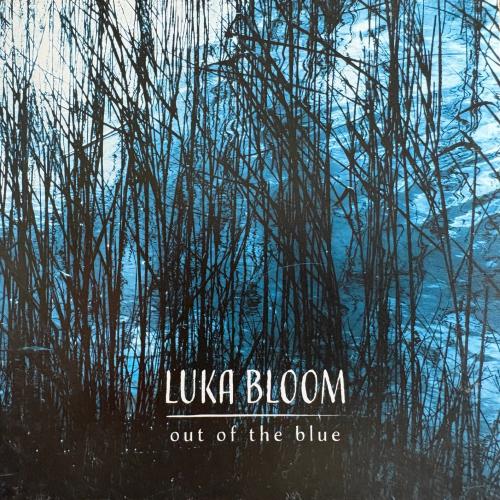
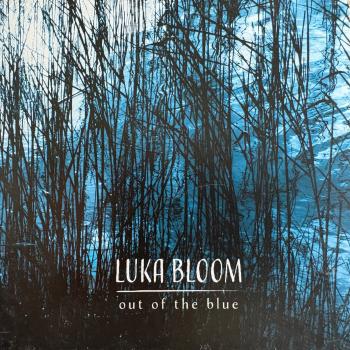
Out of the Blue Luka Bloom
Album info
Album-Release:
2021
HRA-Release:
13.02.2026
Album including Album cover
- 1 I Hear You 04:03
- 2 Bridget Cruise 03:16
- 3 Aisling Gheal | Spórt 05:27
- 4 Out Of The Blue 03:17
- 5 Inside Out 04:20
- 6 Mountains Of Pomeroy 02:23
- 7 Peace On Earth 02:52
- 8 Texas Bay 03:36
- 9 Lament For Limerick | Kerfunten Jig 04:57
- 10 Harbour Bell 03:13
- 11 Eleanor Plunkett 02:38
Info for Out of the Blue
When the lockdowns began, I thought about trying the online gigs. But I just missed the true feeling of a room full of people too much. And so the virus gave me a precious gift; time. Time to be still, time to dream, and time to create. LIVE AT DE ROMA is a recording from my favourite venue, De Roma in Antwerp, November 2019. Then BITTERSWEET CRIMSON, recorded in Windmill Lane in February 2020, just before lockdown number 1. And finally, the stillness, and the solitude of this Corona year, brought me right into the bosom of my old friend the guitar. This led to OUT OF THE BLUE, my first record with no voice or lyric, just the guitar.
If anyone was going to offer a unique take on the Covid era, surely it would be Luka Bloom, right? After all, he’s long been one of Ireland’s most forthright singer-songwriters, creating deeply felt meditations about human experience and interaction – tragic, comic, glorious – on the personal scale or across history and populations, and delivered in his incomparable voice, sometimes as a song, sometimes as an invocation, always with a heartening sincerity.
Well, Bloom has indeed produced his state-of-the-Covid album – just not the one you necessarily might’ve expected. It’s an all-instrumental production, putting his guitar playing at center stage with a mix of traditional Irish tunes and his own compositions. Much of the 11 tracks are solo, while others include backing with various combinations of fiddle (Adam Shapiro), trumpet (Susan O’Neill) and double bass, mandola, synthesizer and electric guitar (Jon O’Connell, who also served as producer), some of the arrangements and tonal quality reminiscent of Mike Oldfield’s 1970s folk/progressive-rock longform pieces, or the cross-genre stuff that (guitarist, not composer) John Williams has done.
Technically, this is the second Bloom album since the pandemic arrived, “Bittersweet Crimson” having come out the summer of last year; but that one was largely recorded before the spring 2020 lockdown, while “Out of the Blue” took shape as the crisis deepened. Early on in the lockdown, Bloom explained in an interview with The Irish Times this past spring, he discovered that singing without an audience – whether in a virtual performance or for practice – was unsatisfying, even saddening. So every day, over a period of nine months, he sat and played guitar (“No songs. No words,” he writes in the album liner notes), taking inspiration from recordings of assorted traditional tunes interpreted by Steve Cooney, Iarla O’Lionaird, Peadar O’Riada, and the duo of Martin Hayes and Denis Cahill, then crafting his own pieces.
Bloom’s guitar musicianship does warrant attention, in no small part because he’s changed it out of necessity over the years due to recurring tendinitis. Early in his career, he employed a fluid, bluesy fingerpicking approach, but around the late 1980s began using a plectrum and developed a percussive strumming style that brought an ebullient energy to albums like “Riverside,” “Turf,” and “The Acoustic Motorbike” that helped him build a wide audience. Then early in the 21st century, he switched from steel-string acoustic to classical guitar, favoring a resonant, plucked sound which is at the core of “Out of the Blue”: gentle, slow or moderately paced, and introspective.
Among the tracks featuring tunes from or inspired by tradition, a clear highlight is the combination of the incomparably lovely slow air “Aisling Gheal,” said to derive from Irish vision-poem folklore that depicted Ireland as a beautiful woman, and the three-part O’Riada jig “Sport” – here, Bloom plays it more like a slow march, and the results are hard to argue with (including his idiosyncratic turn at the beginning of the third part). Along similar lines
is “The Lament for Limerick” paired with “Kerfunten Jig,” as Bloom really delves into the air’s intricacies and emotional content. Elsewhere, O’Neill’s mellow trumpet provides a regal shading to “Mountains of Pomeroy” and Shapiro switches unobtrusively from duet to long notes on “Bridget Cruise.”
As for the Bloom originals, “I Hear You” is a study in contrasts, a serene, mostly solo first part and a second part built on a motif of subtle anticipation, with Shapiro’s fiddle and electronics by O’Connell filling out the spectrum. O’Connell’s jangly electric guitar is a fine seasoning for “Texas Bay,” while his electronics infuse “Inside Out” with a shimmery incandescence. The winsome “Harbour Bell” seems tinged with a certain sadness – after all, a harbor bell can ring out a departure as well as an arrival – and Shapiro and O’Neill conjure up a placid seascape through which the melody slowly glides.
Admittedly, the first – even the second – time through “Out of the Blue,” there may be a part of you expecting that matchless voice to make its presence felt. In that sense, the album really is a Covid-inspired creation because it invites you to consider the ways we’ve been compelled to cope with the pandemic’s numerous impacts, even on a highly individualized level. Perhaps the trick here is to envision that aspect of Bloom missing here, to supply in your own mind the emotionality, the passion his voice and his words bring – if “I Hear You” or “Harbour Bell” had lyrics, what would he be singing about?
OK, so that might be more effort than you want to expend listening to an album. In any event, with “Out of the Blue,” and without Bloom’s voice, we now – paradoxically – have a more complete appreciation of him as an artist. (Sean Smith, BostonIrish)
Luka Bloom
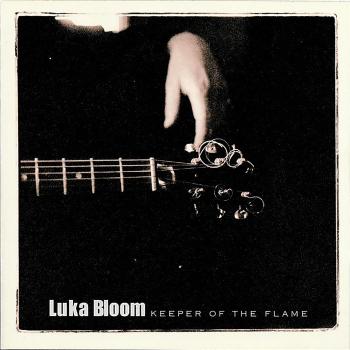
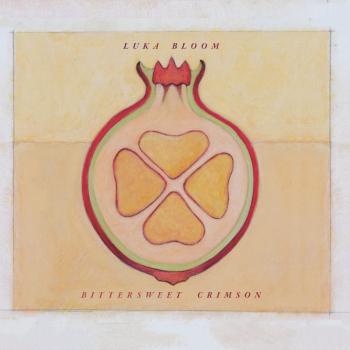
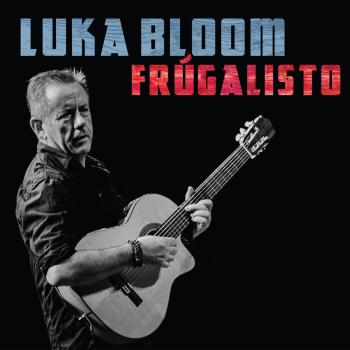
Luka Bloom
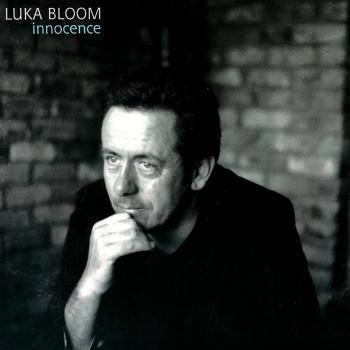
In 1972 Barry Moore wrote a song called WAVE UP TO THE SHORE. Not his first song, but it had something. He did some gigs, wrote some songs; and in 1987 he boarded a plane for New York, and Luka Bloom was born. Riverside was released in 1990 on REPRISE Records and it was followed by THE ACOUSTIC MOTORBIKE, AND TURF.
During the early 1990s the life of writing, recording and touring took off. The US, Australia, Germany, Holland, Belgium, Switzerland, and The UK are frequent destinations for Luka’s songs. As well as his own touring, he has performed at some of the great festivals: Pinkpop (Holland); Roskilde (Denmark), Torhout\Werchter (Belgium), Newport Folk Festival (US) Byron Blues Festival(Australia), Glastonbury and Cambridge, (UK). And most of all, he regularly sings all over the island of Ireland, where he lives in County Clare.
This album contains no booklet.