


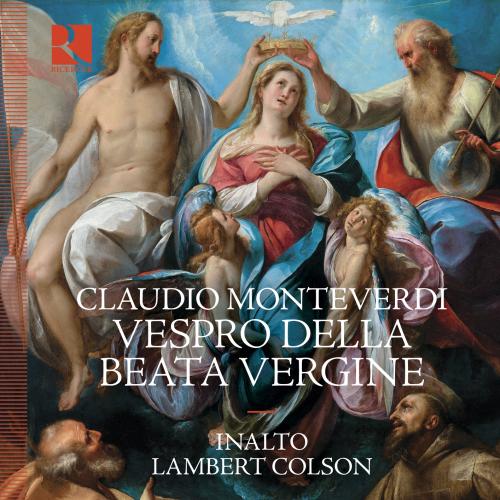
Monteverdi: Vespro della beata Vergine InAlto & Lambert Colson
Album info
Album-Release:
2026
HRA-Release:
18.09.2026
Label: Ricercar
Genre: Classical
Subgenre: Vocal
Artist: InAlto & Lambert Colson
Composer: Claudio Monteverdi (1567-1643)
Album including Album cover Booklet (PDF)
- Claudio Merulo (1533 - 1604): Toccata seconda del primo tuono:
- 1 Merulo: Toccata seconda del primo tuono 02:59
- Claudio Monteverdi (1567 -9 1643): Vespro della Beata Vergine, SV 206:
- 2 Monteverdi: Vespro della Beata Vergine, SV 206: I. Deus in adiutorium 01:58
- Anonymous: Antifona:
- 3 Anonymous: Antifona: Assumpta est Maria in Coelum 00:45
- Claudio Monteverdi: Vespro della Beata Vergine, SV 206:
- 4 Monteverdi: Vespro della Beata Vergine, SV 206: II. Dixit Dominus 07:44
- 5 Monteverdi: Vespro della Beata Vergine, SV 206: III. Nigra sum 03:50
- Anonymous: Antifona:
- 6 Anonymous: Antifona: Maria Virgo 00:52
- Claudio Monteverdi: Vespro della Beata Vergine, SV 206:
- 7 Monteverdi: Vespro della Beata Vergine, SV 206: IV. Laudate pueri Dominum 06:10
- 8 Monteverdi: Vespro della Beata Vergine, SV 206: V. Pulchra es 03:45
- Anonymous: Antifona:
- 9 Anonymous: Antifona: Exaltata est 00:44
- Claudio Monteverdi: Vespro della Beata Vergine, SV 206:
- 10 Monteverdi: Vespro della Beata Vergine, SV 206: VI. Laetatus sum 06:54
- 11 Monteverdi: Vespro della Beata Vergine, SV 206: VII. Duo Seraphim 05:40
- Anonymous: Antifona:
- 12 Anonymous: Antifona: Post partum 00:54
- Claudio Monteverdi: Vespro della Beata Vergine, SV 206:
- 13 Monteverdi: Vespro della Beata Vergine, SV 206: VIII. Nisi Dominus 04:21
- 14 Monteverdi: Vespro della Beata Vergine, SV 206: IX. Audi coelum 08:24
- Anonymous: Antifona:
- 15 Anonymous: Antifona: Paradisi portae 00:53
- Claudio Monteverdi: Vespro della Beata Vergine, SV 206:
- 16 Monteverdi: Vespro della Beata Vergine, SV 206: X. Lauda Ierusalem 03:58
- 17 Monteverdi: Vespro della Beata Vergine, SV 206: XI. Sonata sopra Sancta Maria 06:45
- Anonymous: Capitulum:
- 18 Anonymous: Capitulum: In omnibus requiem quaesivi 00:28
- Claudio Monteverdi: Vespro della Beata Vergine, SV 206:
- 19 Monteverdi: Vespro della Beata Vergine, SV 206: XII. Ave maris stella, SV 206:12 07:48
- Anonymous: Antifona al Magnificat:
- 20 Anonymous: Antifona al Magnificat: Hodie Maria Virgo 00:58
- Claudio Monteverdi: Vespro della Beata Vergine, SV 206a:
- 21 Monteverdi: Vespro della beata Vergine, Magnificat, SV 206a:12: Magnificat anima mea Dominum 00:43
- 22 Monteverdi: Vespro della beata Vergine, Magnificat, SV 206a:12: Et exultavit 01:14
- 23 Monteverdi: Vespro della beata Vergine, Magnificat, SV 206a:12: Quia respexit 01:56
- 24 Monteverdi: Vespro della beata Vergine, Magnificat, SV 206a:12: Quia fecit 01:10
- 25 Monteverdi: Vespro della beata Vergine, Magnificat, SV 206a:12: Et misericordia 02:19
- 26 Monteverdi: Vespro della beata Vergine, Magnificat, SV 206a:12: Fecit potentiam 00:59
- 27 Monteverdi: Vespro della beata Vergine, Magnificat, SV 206a:12: Deposuit potentes 02:22
- 28 Monteverdi: Vespro della beata Vergine, Magnificat, SV 206a:12: Essurientes 01:28
- 29 Monteverdi: Vespro della beata Vergine, Magnificat, SV 206a:12: Suscepit Israel 01:21
- 30 Monteverdi: Vespro della beata Vergine, Magnificat, SV 206a:12: Sicut locutus est 01:01
- 31 Monteverdi: Vespro della beata Vergine, Magnificat, SV 206a:12: Gloria Patri 02:12
- 32 Monteverdi: Vespro della beata Vergine, Magnificat, SV 206a:12: Sicut erat 01:51
- Anonymous: Oratio:
- 33 Anonymous: Oratio: Famulorum tuorum 00:52
- Giovanni Gabrieli (1557 - 1612): Canzon septimi et octavi toni à 12:
- 34 Gabrieli: Canzon septimi et octavi toni à 12 02:55
- Giovanni Pierluigi da Palestrina (1525 - 1594): Salve Regina à 5, PdPWV Mot173:
- 35 Palestrina: Salve Regina à 5, PdPWV Mot173 05:52
Info for Monteverdi: Vespro della beata Vergine
The 1610 Vespers, composed at a pivotal moment in Claudio Monteverdi’s life when he sought not only to establish his new musical language but also to obtain high-placed employment, take on new significance here. Based on a renewed philological approach and the most recent musicological research, this version recreates the Vespers in accordance with the Mantuan customs of the time, featuring an order of service and plainchant drawn from local sources. Recorded in the Palatine Basilica of Santa Barbara in Mantua and using only the instruments mentioned in the score, this interpretation favours a chamber aesthetic, as suggested by Monteverdi’s remark ad Sacella sive Principum Cubicula accomodata — a work conceived for chapels and the princes’ chambers — and reveals the Vespers in their original intimacy and far removed from monumental display. Now restored to its architectural, spiritual and sonic setting, the work displays a unique emotional power: the proximity of the voices and instruments establishes an almost intimate connection with the listener.
InAlto
Lambert Colson, director
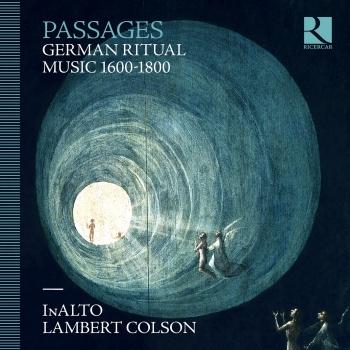
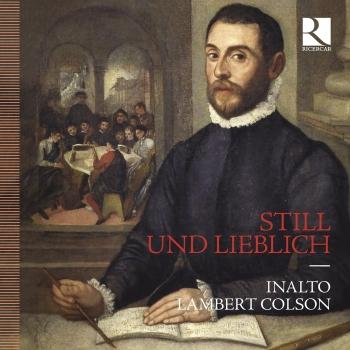

InAlto
This Italian expression applies the same adjective to sea and mountain; it evokes at the same time their physical remoteness and the risks involved when exploring them.
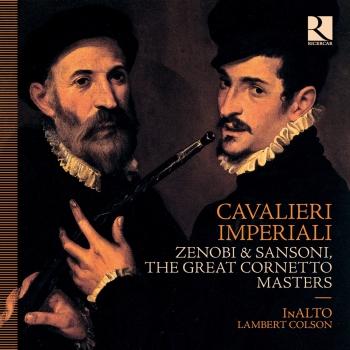
The cornetto is definitely one of the most important musical instruments of the 16th and 17th century. It is made of wood and covered with leather or parchment and was considered the instrument most capable of imitating the human voice. And, just like the voice, it likes to explore the higher regions. Mersenne’s encyclopedia describes the cornetto as a “ray of light going through the clouds”.
InAlto aims to explore both vocal and instrumental music, bringing them to a sort of dialogue.
Famous composers of the baroque in Europe such as Monteverdi, Schütz or Praetorius left us magnificent music cultivating this taste for risk taking, this worship of the high register.
Nowadays, a real danger exists of failing to convince with music that does not feel like ours anymore. By a thorough study of the available sources and by selecting the best “historically informed” partners and collaborators, InAlto seeks to bring out the best in the repertoire they play. Eventually, historical musical intruments are musical instruments as well, InAlto considers them as modern tools of expression.
Lambert Colson
received his musical training at the Royal Conservatory of Brussels under Françoise Defours, Pedro Memelsdorff, Bart Coen, Marleen Leicher, Bruce Dickey and Gebhard David. He also studied in Bremen (University of the Arts), Basel (Schola Cantorum Basiliensis), and Barcelona (ESMUC). He has worked with ensembles and conductors of the calibre of Les Talens lyriques (Christophe Rousset), Le Parlement de Musique (Martin Gester), Scherzi Musicali (Nicolas Achten), Les Paladins (Jérôme Correas), L’Echelle and Oltremontano. As a musician and researcher, he has contributed to journals including La pensée de midi (Editions Actes Sud), and is involved with the Royaumont Foundation, where he teaches on Lutheran music in the Holy Roman Empire and assists the composer Zad Moultaka.
Several contemporary composers, including Zad Moultaka, Fabrice Fitch und Bernard Foccroulle, have been inspired by Lambert’s boundless enthusiasm for learning more about his instrument to dedicate pieces to him. His interest in innovative joint projects led Lambert to discover hypnosis while working with the choreographer Catherine Contour.
In cooperation with artists such as Liesa van der Aa and Shara Worden, BOX allows him to explore the range of possibilities open to his instruments in popular music.
This fervent commitment to being a musician in tune with his time clearly motivates the search for musical and emotional cross-fertilisations Lambert and InAlto have embarked on.
Booklet for Monteverdi: Vespro della beata Vergine