



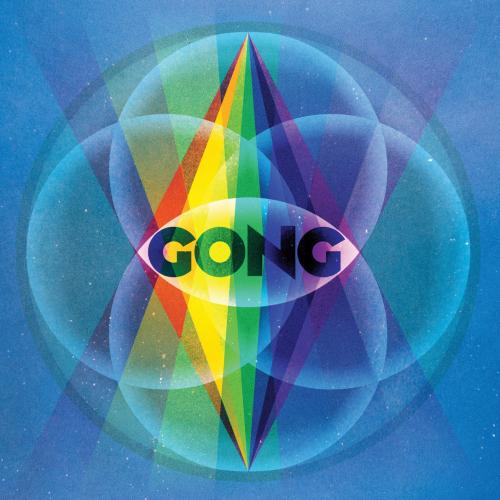
Bright Spirit Gong
Album info
Album-Release:
2026
HRA-Release:
13.03.2026
Album including Album cover
- 1 Dream Of Mine 10:32
- 2 Mantivule 06:22
- 3 The Wonderment 05:11
- 4 Stars In Heaven 04:01
- 5 Fragrance Of Paradise 07:39
- 6 Relish The Possibility 03:09
- 7 Eternal Hand 06:48
Info for Bright Spirit
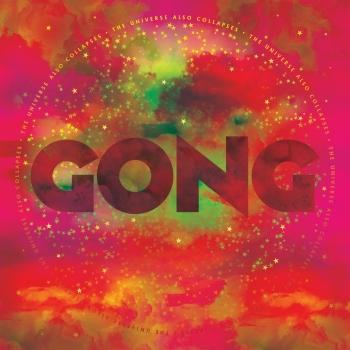
Bright Spirit marks the third instalment in a trilogy that began with The Universe Also Collapses (2019) and continued with Unending Ascending (2023). Recorded with long-time collaborator Frank Byng in his South London studio, Bright Spirit sees Gong at their experimental best, more adventurous and more open to the dream than ever.
And dreams are central here. Not just as lyrical imagery, but as a way of thinking - where psychedelia, love, and the thin membrane between worlds feed into the music. The opener, ‘Dream Of Mine’, unfurls like a transmission from the in between, its mid-section blooming into harmonies and an angular melody that feels like a key turning in a long-awaited lock. Frontman Kavus Torabi describes it as a moment everything has been pointing toward, a flash of clarity inside the swirl.
Elsewhere, there’s tenderness - unexpected perhaps, but unmistakably Gong, ‘Fragrance Of Paradise’ being Torabi’s first-ever love song. ‘The Wonderment’ finds Gong in deeply meditative form, a mystical and explorative journey both inwards and outwards, timeless and expansive, another piece of the kaleidoscopic puzzle that makes up Bright Spirit.
Gong continue to carry the torch first lit by founder Daevid Allen in the late ’60s, having recently completed extensive US and European tours, as well as a UK run with psychedelic legends Henge in late 2025, which will continue in 2026.
Bright Spirit is Gong now: still glowing from the furnace of Daevid Allen’s vision, still mischievous, still tuned to the frequencies between the waking world and whatever sings behind it.
“Cosmic rock of the highest order.” (PROG)
Gong
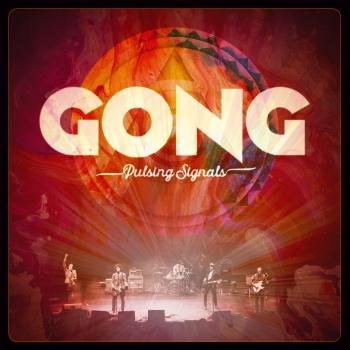
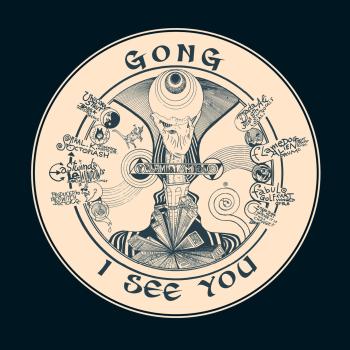
Gong
The ever metamorphosing entity that is Gong launches, as ever, into unknown – and unknowing – territory with a new album and tour, destined to be talked about, discussed, and argued over, up and down the land.
From its beginnings in a French commune in 1967, through the Virgin Records years, mismanagement, court cases, break-ups and rejoinings, deaths and rebirths – there has always been a continuous thread of beautiful, dangerous and extraordinary music.
The current holders of the flame have come together over the last seven years; sinuous bass player Dave Sturt joined just as the album 2032 was shown to the world; Ian ‘Eastwinds’ East was the next to blow in through the portal; Fabio Golfetti brought his guitars from Brazil (after working with Daevid for many years); Kavus Torabi appeared to Daevid in a vision; Cheb Nettles just sort of turned up.
Gong’s musically diverse world includes shades of psychedelia, space rock, jazz, avant-garde, krautrock and surreal soundscapes.
Signed-up members of the precariat, Gong have never played it safe.
GONG : the legendary psychedelic space rock collective formed in 1969
Australian beatnik poet Daevid Allen (ex-Soft Machine) began making music with his partner Gilli Smyth in the late 1960s, along with a constantly evolving community of creative musicians. Albums from this period include Magick Brother, Mystic Sister (1969) and the influential Bananamoon (1971) – one of David Bowie’s favourite 20 albums.
A stable line-up of the band, now named Gong, eventually materialised featuring Didier Malherbe (sax and reeds), Christian Tritsch (bass), and Pip Pyle (drums), along with Allen (glissando guitar, vocals) and Smyth (space whisper, vocals). This band released the album Camembert Electrique in late 1971, as well as providing the soundtrack to the iconic biker film Continental Circus and music for the album Obsolete by French poet Dashiel Hedayat.
Gong’s next three albums, released on Virgin Records, became known as the known as the Radio Gnome Trilogy, consisting of Flying Teapot (1973), Angel’s Egg (1974), and You (1975). Over the course of the Trilogy, Tritsch and Pyle left and were replaced by Mike Howlett (bass) and Pierre Moerlen (drums). New members Steve Hillage (guitar) and Tim Blake (synthesizers) also joined.
After You, Allen, Hillage, Blake and Smyth left the group, guitarist Allan Holdsworth joined, and the band moved into a virtuosic jazz fusion style. Nevertheless the trilogy lineup reunited for a few one-off concerts including a 1977 French concert, documented on the Gong Est Mort, Vive Gong album. Allen also reunited with Malherbe and Pyle for 1992’s Shapeshifter album and the Gong 25th Birthday Party in 1994.
A great gathering of the Gong family took place in Amsterdam at the Unconvention in 2006 featuring many previous members and related bands. This event reinvigorated the band, leading to the release of the album 2032 in 2009 and the subsequent tour saw the arrival of Dave Sturt (bass) and Ian East (saxophone).
In 2012, Daevid Allen also enlisted Fabio Golfetti (guitar) and Orlando Allen (drums) for a tour of Europe, UK, Japan and Brazil. By 2013 Kavus Torabi (guitar) had also joined the group and the line-up of Allen, Sturt, East, Golfetti, Allen and Torabi then recorded the album I See You (2014). That year, Daevid Allen was diagnosed with cancer and was unable to perform whilst undergoing treatment. Fulfilling his wishes, the band continued the Gong tradition without him and toured to promote the album, bringing in Cheb Nettles (drums).
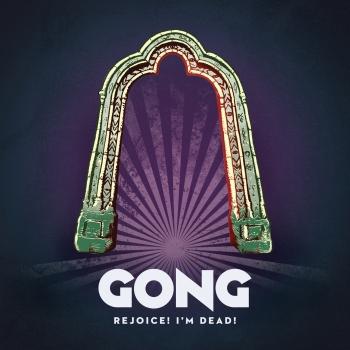
In 2015, Daevid Allen passed away. His influence and legacy were honoured on the band’s subsequent album, Rejoice! I’m Dead! (2016).
The band have continued to tour internationally since that time including visits to China, Scandinavia, Brasil, Japan and Canada. They recorded their new album The Universe Also Collapses, scheduled for release on Kscope music in May 2019.
This album contains no booklet.