


Album info
Album-Release:
2026
HRA-Release:
23.10.2026
Album including Album cover Booklet (PDF)
Coming soon!
Thank you for your interest in this album. This album is currently not available for sale but you can already pre-listen.
Tip: Make use of our Short List function.
- 1 Nüüd hingvad inimesed 03:55
- 2 Bred dina vida vingar 03:05
- 3 Mitt hjerte alltid vanker 04:47
- 4 Hátíð fer af höndum ein 02:49
- 5 There Is No Rose Of Such Virtue 03:53
- 6 Gjendines bådnlåt 03:40
- 7 In the Bleak Midwinter 03:36
- 8 Nú kemur heimsins hjálparráð 03:25
- 9 Nüüd südant, inimene 05:07
- 10 Jeesus kõige ülem hää 03:04
- 11 Kes Jumalat nii laseb teha 03:54
- 12 Oh Jeesus, Sinu valu 03:21
- 13 Ma vaatan üles mäele 04:01
- 14 Kas sureb nii mu kõige armsam elu 05:05
- 15 Su hooleks ennast annan ma 03:10
- 16 Nú er á himni og jörð 02:30
- 17 The Snow it Melts the Soonest 03:36
Info for Layers
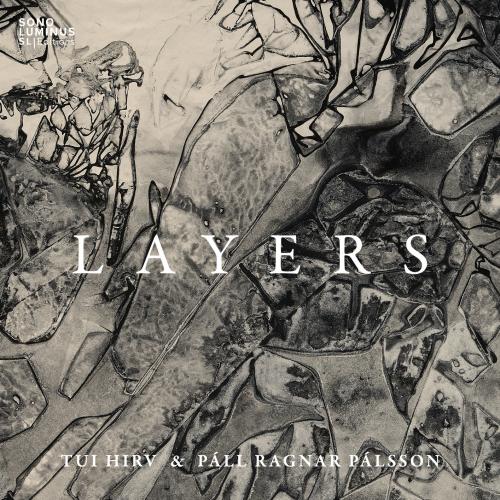
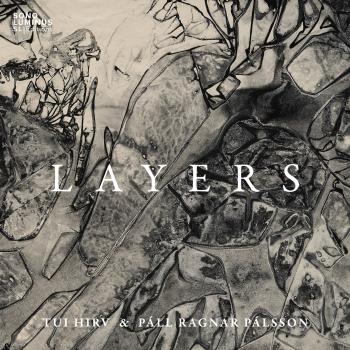
For centuries, spiritual singing was an inseparable part of everyday life of mankind. It accompanied the course of day, course of life and course of year and acted as a kind of measure to keep in touch with the flow of time. There were songs to sleep and wake by, pray for God‘s mercy in all situations possible and maintain a harmonious and modest life. These songs travelled through Europe mostly with the help of protestant pastors and songbooks, but blended into local folk heritage in every parish. Different versions of well-known chorales create a unifying web across Western culture while maintaining a distinct, irreplicable voice of the isolated communities. These songs, either straight from songbooks or transcribed during field trips by scholars of early 20th century, are the core of this album.
Layers, so to speak, of spiritual singing reach seamlessly from Estonia, across the Swedish-speaking areas of Estonia to mainland Sweden and Norway, overseas to Iceland, making a stop at good old England where similar cultural processes took place a little earlier. Latin hymns translate into local languages, blend into folk tradition, get picked up again, make their way into art music directly or indirectly and become a source of inspiration once again. We encounter these songs in an environment where boundaries between social classes, styles of music, scenes and venues get blurred over and over, each time according to a whole different logic. We break a few canons, clichés and customs by approaching spiritual hymns with modern equipment, still making the vocals sound natural, timeless and unprocessed, vulnerable and enlightened. In our arrangements, we are aware of the tradition but treat the material with playfulness and a slight sense of irresponsibility. This is the layer we add to the heritage that has shaped our identities as individuals and nations, keeping the very core of human knowledge and spiritual existence alive and relevant.
Folk Hymns: Our arrangements are adding yet another layer to the hymn tradition. As melodic element we use notated transcriptions that educated musicians wrote down on their field trips to record the disappearing vocal heritage of Estonian villages. A big part of Estonian folklore is spiritual and has its roots in the Lutheran tradition. Going to church on Sundays and praising the Lord at home was a general practice. It was a natural part of existence equally in the ethnic Estonian and Swedish communities that lived side by side for many centuries. Estonian songbooks were compiled and translated into the peasants‘ mother tongue by German-speaking pastors while the Estonian Swedes sang from hymnals released in mainland Sweden. Nevertheless, the lutheran heritage was the same and the repertoire overlapped a lot. The smaller and more remote the settlement, the less likely it was to have an organ, a choir or notated music in the local church. Texts were written down in psalmbooks but the melodies were learned by ear and passed on within the family. Like this, every parish developed their own version of the original hymn, based on local ways of singing. Over time, the Lutheran church introduced professional cantors in most churches in order to unify the melodies and get the congregation to sing „properly“, so the local versions gradually disappeared.
In late 19th and early 20th century, during the wave of national awakening, the Estonian student fraternity of Tartu University organized a wide-spread expedition of folk-song gathering all over Estonia that lasted for a number of summers. Secular songs were considered more original and valuable at the time than the ones developed from Lutheran hymns. For Estonian professional music life later on, the folk hymns have proved an invaluable source of inspiration and tokens of identity at difficult times. They underline Estonia‘s connection to Western culture while maintaining an irreplicable, unifying voice.
Tui Hirv, vocals, piano (tracks 9, 15)
Pall Ragnar Palsson, guitar, electronics
Additional musicians:
Skúli Sverrisson, bass (track 10)
Kaktus Einarsson, trumpet (track 12)
Sóley Stefánsdóttir, accordion (track 17)
Páll Ragnar Pálsson
(born 1977) is an Icelandic composer. He holds a PhD in music from Estonian Academy of the Arts (2014) but lives in Reykjavík since graduation. Páll has worked with most contemporary music collectives in Iceland and establishes new collaborations with artists all over the world every year that passes. He has released two albums, Nostalgia and Atonement, with his own music and had works published on compilations along others. He has participated at the International Rostrum of Composers twice, once on behalf of Estonia (2013) and Iceland (2018) where he won the first prize for Quake, a concerto for cello and orchestra.
Páll‘s works have been selected composition of the year twice by the Icelandic Music Awards. In later years, Páll has widened his profile in the direction of film scores and his first work, music for the film Quake (2022), a collaboration with Edvarð Egilsson, was nominated both for Nordic Music Film Awards and Edda, the Icelandic Film Awards.
Páll Ragnar has worked with: soloists such as Martin Kuuskmann, Saeunn Thorsteinsdottir conductors such as Daniel Bjarnason, Olari Elts, Ilan Volkov, Rumon Gamba and Risto Joost. Orchestras such as Icelandic Symphony Orchestra, Estonian National Symphony Orchestra, BBC orchestra, Seattle Symphony Orchestra, LA Phil and NDR chamber orchestra.
His music has been played in halls such as Harpa in Reykjavík, Berlin Philharmonie, Elbphilharmonie in Hamburg, Walt Disney Hall in LA and Maide Vale Studios in London.
Páll has an active collaboration going on with the US indie label Sono Luminus.
Tui Hirv
is an Estonian soprano living in Reykjavík, Iceland. She graduated from Estonian Academy of Music and Theatre with a BA degree in singing in 2007 and MA in musicology in 2009. Tui Hirv has been active both in the vivid choir music scene of Estonia and as a soloist of contemporary chamber music. In 2008–2009 she worked with the Estonian Philharmonic Chamber Choir. With conductor Tõnu Kaljuste they recorded an album with the music of Arvo Pärt for ECM New Series, Adam’s Lament, which includes a piece named L’Abbé Agathon, where Tui performs as a soloist, and received the Grammy Award in 2014 for best choral performance. Tui Hirv has also been singing with early music vocal group Vox Clamantis under the guidance of Jaan-Eik Tulve. Their recording of Liszt's Via Crucis for the French record company Mirare was awarded Diapason d'Or in 2013. As a soloist, Tui Hirv has cooperated with various new music ensembles, premiering pieces and new arrangements by various Estonian composers. Over recent years Tui has had a fruitful cooperation with Icelandic composer Páll Ragnar Pálsson.
Booklet for Layers