






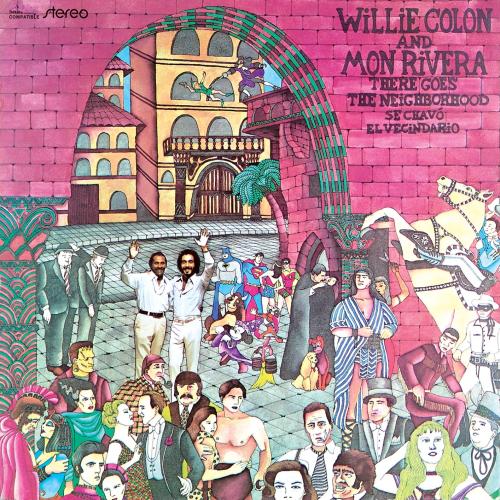
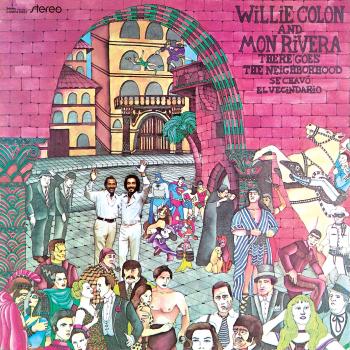
There Goes The Neighborhood (Remastered 2026) Willie Colón & Mon Rivera
Album info
Album-Release:
2026
HRA-Release:
06.03.2026
Album including Album cover
I`m sorry!
Dear HIGHRESAUDIO Visitor,
due to territorial constraints and also different releases dates in each country you currently can`t purchase this album. We are updating our release dates twice a week. So, please feel free to check from time-to-time, if the album is available for your country.
We suggest, that you bookmark the album and use our Short List function.
Thank you for your understanding and patience.
Yours sincerely, HIGHRESAUDIO
- 1 Pena de Amor (Remastered 2026) 04:31
- 2 Baila Mi Bomba (Remastered 2026) 03:15
- 3 Mosaico (Remastered 2026) 03:10
- 4 Se Te Quemó la Casa (Remastered 2026) 02:37
- 5 La Humanidad (Remastered 2026) 03:10
- 6 Ya Llegó (Remastered 2026) 03:51
- 7 Tinguilikitín (Remastered 2026) 03:32
- 8 Mosaico #2 (Remastered 2026) 02:19
- 9 Julia Lee (Remastered 2026) 03:01
- 10 Si Te Vas (Remastered 2026) 02:37
Info for There Goes The Neighborhood (Remastered 2026)
Mon Rivera gets a great revival here during the height of the 70s salsa era -- thanks to backings from Willie Colon, and a sound as solid as any of the best on Fania Records at the time! The album has Willie working with a tight combo that's heavy on trombone, piano, and percussion -- backing up Mon's lead vocals, and also featuring Rivera a bit on guiro. The tunes are mostly lively bombas or plenas -- romping around with a lot of joyous energy -- with arrangements from Mon, Willie, and Jorge Millet. Titles include "Mosaico", "Baila Mi Bomba", "Pena De Amor", "Ya Llego", "La Humanidad", and "Si Te Vas".
The music that the world now knows as salsa would probably not exist if not for the vision of Willie Colón. While Eddie Palmieri’s La Perfecta had been plying the two-trombone sound for years, Colón made the instrument central to his band, and the instrument’s ornery, sarcastic, yet often uplifting sound defined not only salsa’s break from the Cuban tradition, but the Nuyorican generation’s countercultural moment.
Colón, who died Saturday at 75, began his career leading a “kiddie band” playing bugaloo at clubs all over the South Bronx in New York City, but everything changed when Fania Records co-founder Johnny Pacheco suggested he take on Héctor Lavoe, a recent migrant from Puerto Rico, as his lead singer. The two bonded over their shared street roots, creating a gangster image for their album covers that predated hip-hop. But their musical impact derived from fusing Colón’s R&B and jazz-influenced style with Lavoe’s traditional jíbaro and bolero roots. Lavoe’s inability to sing well in English prompted Colón to abandon bugaloo, allowing his band to become an indispensable part of Fania’s 1970s salsa explosion.
Lavoe’s erratic lifestyle eventually resulted in a pseudo-breakup between the two, with Colón leaving his own band and producing their albums, and Lavoe remaining as lead singer. Colón’s production took center stage in his work with Cuban vocalist Celia Cruz, and finally, his collaboration with Rubén Blades. “Siembra,” the culmination of his Lennon-McCartney-like partnership with Blades and perhaps his own career, became salsa’s biggest selling and most critically appraised album.
Colón went on to a successful solo career, scoring a few significant hit singles, and playing internationally to throngs of devoted loyalists until his death. (Ed Morales)
Mon Rivera, vocals
Papo Lucca, piano
Eddie Rivera, bass
Ed Byrne, trombone
Jose Rodriguez, trombone
Lewis Kahn, trombone
Jose Mangual, bongos
Fe Ortiz, coro
Hector Lavoe, coro
Ruben Blades, coro
Milton Cardona, percussion, congas
Kako, timbales, bajo quinto
Digitally remastered
Willie Colón
Like many of his boricua compatriots, Willie Colón was born and raised in the heart of the Latin neighborhood of the Bronx. It was this very neighborhood where he drank from the fountain of teen angst, sharing with his compatriots his sorrows and aspirations. This inspired in him a profound devotion to his cultural roots.
Musician, composer, arranger, singer, producer, director, and community leader: Colón wore all of these hats, gaining recognition as both an artist and a human being.
He started out in the music business at such a young age that his mother had to sign his first contract for him. Ever since then his career has covered all facets of music, as proven by his prolific discography, which boasts more than 30 million records sold. Such sales earned him countless gold and silver-selling albums, as well as several Grammy nominations.
Colón is also known for his participation on albums with such names as Celia Cruz, Rubén Blades, Héctor Lavoe, and many others.
Willie Colón, known for his excellence, and well aware of the power and influence he held over the mass media, established himself as a civil- and community-rights leader. For his contributions, he won recognition and awards, such as the plaque that bears his name on the Bronx’s “Walk of Fame.” It was this very city that was birthplace and home to many of his compatriots who came to the United States in search of a better future.
This album contains no booklet.