



Polarities Olaf Taranczewski
Album info
Album-Release:
2026
HRA-Release:
28.04.2026
Album including Album cover
- 1 Öström, Berglund, Svensson, Taranczewski: Rebirth 05:22
- 2 Öström, Berglund, Svensson, Taranczewski: A Balance in the Unbalance 03:02
- 3 Öström, Berglund, Svensson, Taranczewski: From Gagarin's Point of View 02:40
- 4 Öström, Berglund, Svensson, Taranczewski: Coco (2025 Version) 03:23
- 5 Öström, Berglund, Svensson, Taranczewski: Polarities 04:50
- 6 Öström, Berglund, Svensson, Taranczewski: Sonia 02:06
- 7 Öström, Berglund, Svensson, Taranczewski: Radiance 05:28
- 8 Taranczewski: Clarity 04:44
- 9 Öström, Berglund, Svensson, Taranczewski: Night Train to Vienna 04:16
- 10 Öström, Berglund, Svensson, Taranczewski: Odessa 05:20
Info for Polarities
Olaf Taranczewski is an accomplished composer, music producer, and pianist known for his versatile work across film, television, and experimental music. In 2015, he received the German Film Music Award (Deutscher Filmmusikpreis) in the category „Best Music in a Film“ for the score of Dissonance (directed by Till Nowak), which also earned him the award for best film music at the Annecy International Animated Film Festival. Dissonance premiered at the Berlinale and garnered over 40 international awards.
His recent and notable film credits include the score for the HBO feature Mi America, the ZDF drama Schweigeminute, and the award-winning documentary Anne Perry – Interiors, for which he won Best Film Score at the Lünen Film Festival. Since 2011, Taranczewski has been a regular composer for major German television programs, including the Grimme-Preis nominated Frontal 21 and Satirischer Jahresrückblick (ZDF).
An innovative collaborator, Taranczewski re-arranged the orchestral works Materials and Lost for Academy-Award winner Volker Bertelmann (Hauschka), featuring performances at the Elbphilharmonie Hamburg and Volksbühne Berlin. His multidisciplinary work extends to large-scale visual installations, such as the facade projection Hommage Collage for the Genius Loci Festival, and theater productions ranging from the Theater Magdeburg to the Ludwigsburger Schlossfestspiele.
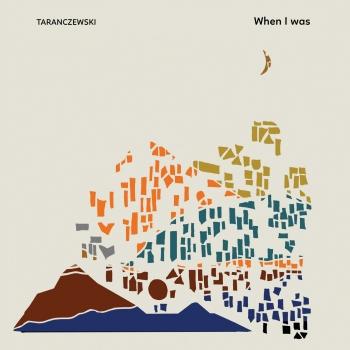
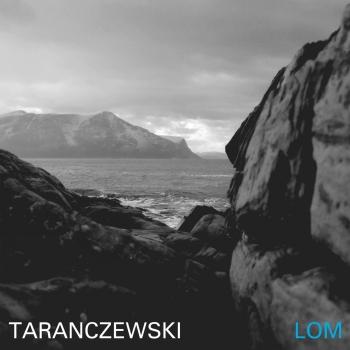
As a jazz pianist and recording artist, he has released a series of acclaimed albums, including Interiors (2019), When I Was (2021), and LOM (2024) via Hey!blau Records. In his trio FOC, alongside Frank Zerban and Chris Ross (Wolfmother), he explores the intersection of prepared piano and electronic ambient music. His commercial portfolio includes international campaigns for brands like Polaroid and Panasonic, earning a Gold Questar Award in New York.
Olaf Taranczewski currently serves as Tenured Professor of Producing at the University of Music Trossingen, specializing in Jazz and Pop. He leads seminars on analog synthesis and film scoring, while overseeing international collaborations such as the short film project with Nanyang Technological University, Singapore.
“Jazz, der zugleich absolut zeitlos ist und sehr modern.” - NDR, Play Jazz! (Ralf Dorschel)
“Ich kann mich kaum erinnern, wann ich das letzte Mal rein akustische Instrumente so fein abgemischt gehört habe.” - likehifi.de (Die besten Musik Alben des Jahres 2021, Thomas Kirsche)
“Das Debütalbum des Jazztrios TARANCZEWSKI beeindruckt mit musikalischer Leichtigkeit, Eleganz und Ausdruckstiefe. Das ist Jazz, der wohl tut.” - byte.fm (Kramladen, Volker Rebell)
“Wie kaum eine andere aktuelle Veröffentlichung atmet diese Produktion jenen Berliner Allzeitspirit, der sich nicht einfach weggentrifizieren lässt.” - Jazz thing 6/21 (Wolf Kampmann)
“Nicht nur der Pianist verfügt über eine herausragende Jazzkenntnis, die hier zu hören ist. Die Musik ist subtil, von raffinierter Eleganz und gleichzeitig nicht frei von Jazz-Feeling und Natürlichkeit.” - Jazz-Fun.de
Olaf Taranczewski, piano
Jean-Philippe Wadle, double bass
Paul Benedikt Stehle, drums
Please Note: We offer this album in its native sampling rate of 48kHz, 24-bit. The provided 96kHz version was up-sampled and offers no audible value!

Taranczewski Trio
Pianist Olaf Taranczewski has known bassist Jean-Philippe Wadle and drummer Benedikt Stehle for decades, yet they have never played together in this particular configuration.
While the pianist is the composer and namesake of the band, as is readily apparent on their debut album, *When I Was*, Taranczewski is a stable trio whose contributions and playing styles are evenly and—more importantly—equally distributed.
The three musicians are connected not only by their shared passion for making music, but also by their shared love of listening to music.
These formative experiences are evident on *When I Was*. In essence, they tell each other stories of this shared listening on the album, and the listener has the privilege of being able to hear these gentle narratives.
Olaf Taranczewski
(born 1977 in Hofheim am Taunus) comes from a German-Jewish-Polish family. He studied jazz piano at the Mainz University of Music and jazz arrangement at the Cologne University of Music. He has lived in Berlin since 2006.
He has composed music for the feature films and television movies "Mi America" (HBO), "Schweigeminute" (Movie/ZDF), and "Hier und Dort" (MDR), as well as regularly for television programs such as "Frontal 21" and "Satirischer Jahresrückblick" (ZDF), and TV documentaries since 2011.
For the score of “Dissonance” (directed by Till Nowak), he received the German Film Music Award in the main category “Best Music in a Film” in 2015, as well as the award for Best Film Music in Annecy, France. In 2009, he won the award for Best Film Music at the Lünen Film Festival.
With visual artist Phil Max Schöll (space graphics/pathfinding), Olaf Taranczewski created the facade projection “Homage Collage” in Weimar. He also appeared as a composer at the Magdeburg Theatre and for the operetta “Turnadot” with the musical comedy duo Carrington & Brown. For Oscar winner Volker Bertelmann (Hauschka), he arranged orchestral and string quartet versions for performances at the Elbphilharmonie and the Berlin Konzerthaus.
Olaf Taranczewski, together with visual artist Phil Max Schöll (space graphics/pathfinding), created the facade projection “Homage Collage” in Weimar.
Since 2017, Olaf Taranczewski has been Professor of Producing with a focus on Jazz & Pop at the Trossingen State University of Music.
Jean-Philippe Wadle
(born 1980 in Pirmasens) won first prize at the "Jugend jazzt" competition in 1998 and 2001 and studied double bass at the music academies of Mainz and Cologne between 2002 and 2006.
In 2003, he founded the Bassface Swing Trio, which continues to this day. Wadle has worked with musicians such as Tom Gaebel, Dee Dee Bridgewater, Lalo Schifrin, HR Big Band, Tony Lakatos, Axel Schlosser, Ralf Hesse, Scott Hamilton, Manfred Schoof, Ack van Rooyen, Hans Dekker, Bruno Müller, Wolfgang Haffner, as well as Katja Ebstein, Alexander Marshall, and Tony Marshall. From 2015 to 2022, he was a member of Emil Mangelsdorff's quartet.
Wadle can be heard on albums by Gee Hye Lee, Daniel Stelter, Andreas Gabalier, and Eugene Ruffulo. In addition to numerous concerts throughout Europe, he tours the USA and South Korea. Jean-Philippe Wadle lives in Ingelheim am Rhein.
Paul Benedikt Stehle (born 1984 in Sigmaringen) moved to Berlin at the age of 17 to become a professional musician. After auditions for Berklee College of Music and the Los Angeles College of Music, Benedikt Stehle received two scholarships and studied in the USA.
After graduating, he toured the USA and Indonesia for two years. During this time, he lived and worked in the New York music scene. Among other things, he toured as the regular drummer for Sammy Adams, a Boston-based rapper.
In 2008, Stehle returned to Berlin and worked live, in the studio, and on television, collaborating with artists such as Beth Hart, Mousse T., Barbara Tucker, Dendemann, Emma Lanford, Eugene Hütz (Gogol Bordello), Della Miles, Steve Lillywhite, Mo’ Blow, The Weather Girls, Aly Keïta, Joachim Deutschland, and Balbina.
In addition to working as a freelance session musician, he is a permanent band member of pop singer Alexander Knappe and the Romanian Balkan band Fanfare Ciocărlia. With this group, he contributed several tracks to Sacha Baron Cohen's internationally successful 2020 film "Borat Subsequent Moviefilm" (Borat 2). He can be heard not only as a drummer but also as the vocalist on the Balkan version of the classic "Just the Two of Us," which is featured in the film's end credits.
Paul Benedikt Stehle
(born 1984 in Sigmaringen) moved to Berlin at the age of 17 to become a professional musician. After auditions for Berklee College of Music and the Los Angeles College of Music, Benedikt Stehle received two scholarships and studied in the USA.
After graduating, he toured the USA and Indonesia for two years. During this time, he lived and worked in the New York music scene. Among other things, he toured as the regular drummer for Sammy Adams, a Boston-based rapper.
In 2008, Stehle returned to Berlin and worked live, in the studio, and on television, collaborating with artists such as Beth Hart, Mousse T., Barbara Tucker, Dendemann, Emma Lanford, Eugene Hütz (Gogol Bordello), Della Miles, Steve Lillywhite, Mo’ Blow, The Weather Girls, Aly Keïta, Joachim Deutschland, and Balbina.
Besides working as a freelance session musician, he is a permanent band member of pop singer Alexander Knappe and the Romanian Balkan band Fanfare Ciocărlia. With this group, he contributed several tracks to Sacha Baron Cohen's internationally successful 2020 film "Borat Subsequent Moviefilm" (Borat 2). He can be heard not only as a drummer but also as the vocalist on the Balkan version of the classic "Just the Two of Us," which is featured in the film's end credits.
This album contains no booklet.