


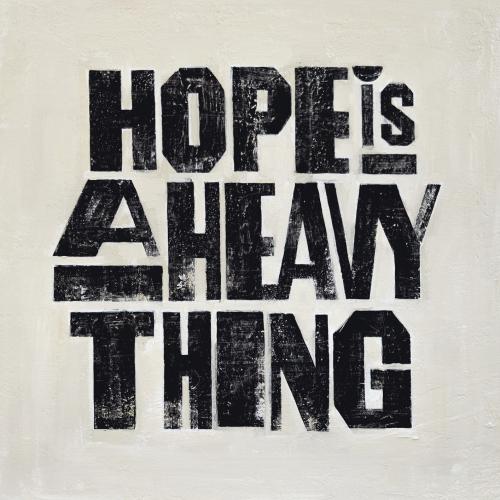
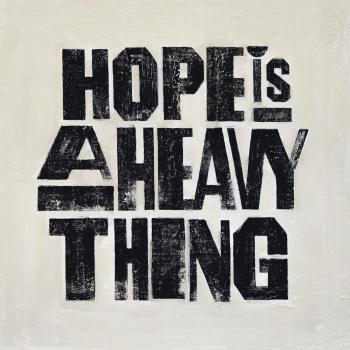
Hope Is A Heavy Thing Joy Oladokun
Album info
Album-Release:
2026
HRA-Release:
25.09.2026
Album including Album cover
I`m sorry!
Dear HIGHRESAUDIO Visitor,
due to territorial constraints and also different releases dates in each country you currently can`t purchase this album. We are updating our release dates twice a week. So, please feel free to check from time-to-time, if the album is available for your country.
We suggest, that you bookmark the album and use our Short List function.
Thank you for your understanding and patience.
Yours sincerely, HIGHRESAUDIO
- 1 Raised By The Radio (A Reintroduction) 02:02
- 2 Dear Maria 03:12
- 3 Easy Company 03:25
- 4 Kind 04:07
- 5 TOGIAIM 03:09
- 6 Sage 02:53
- 7 The End Of The World 03:26
- 8 Zombie 03:12
- 9 Toothache 03:30
- 10 Don’t Call Me Baby! 04:21
- 11 Die Young 03:34
- 12 Time Is A River 02:28
Info for Hope Is A Heavy Thing
Produced by Oladokun with additional contributions from Nigerian producer Spellz, the new 12-track project marks a bold new chapter, expanding Oladokun’s sound while continuing to prove her ability to not only bend genres but also to bridge cultures. Across the album, Oladokun explores identity, connection and self-discovery with the emotional honesty that has become a hallmark of her songwriting. In addition to “Kind” and the previously shared track “Zombie,” the album features a collaboration with Nigerian artist Adekunle Gold.
“‘To understand your future you have to confront your past.’ This is the driving theme behind Hope Is A Heavy Thing,” shares Oladokun. “It’s a collection of 12 songs that I wrote to help myself find my light again after burning out. Produced in Nashville, New York, and the back of a speeding tour bus, this album is sonically an homage to all of the music that inspires me. On this record you’ll find music that nods the brilliance of the Soulquarians, the rawness of Bob Dylan, the rhythms of afrobeats, and the sampling prowess of J Dilla. Not to mention a callback to the Ronettes and a few songs that find inspiration in rock and roll protest music of the 60’s and 70’s. You’ll also find me at the most authentic I’ve been able to be as an artist. It is a record I wrote for anyone who finds themselves wondering how to hope in these times. Sometimes it means looking back and digging through the muck to find what’s worth fighting for again.”
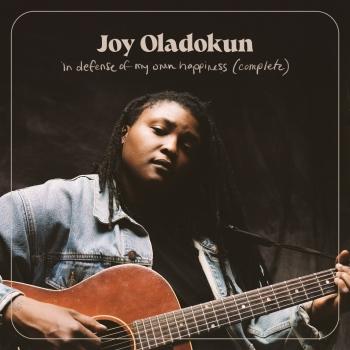
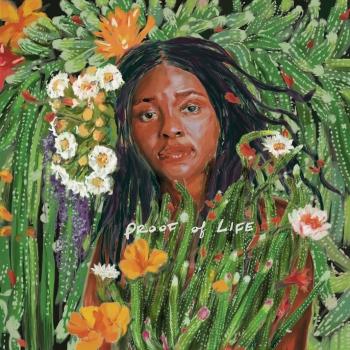
Hope Is A Heavy Thing follows Oladokun’s critically acclaimed albums in defense of my own happiness (2021), Proof of Life (2023) and Observations From A Crowded Room (2024), which led NPR Music to call Oladokun “one of the great singer-songwriters pushing beyond roots or conventional singer-songwriter music today.” Additionally, The New York Times praised, “her songs are conversational and confessional, and her hooky but profound melodies turn her lyrics into mantras,” while Consequence declared, “One of the most refreshing voices coming out of Nashville…there’s a deeply honest quality to her music that makes her hard to shake.”
Joy Oladokun
Joy Oladokun
With a guitar in hand, baseball cap over her eyes, and hooded sweatshirt loose, a woman sings with all of the poetry, pain, passion, and power her soul can muster. She is a new kind of American troubadour. She is Joy Oladokun. The Delaware-born, Arizona-raised, and Nashville-based Nigerian-American singer, songwriter, and producer projects unfiltered spirit over stark piano and delicate guitar. After attracting acclaim from Vogue, NPR, and American Songwriter, her words arrive at a time right when we need them the most.
"Words are such a powerful tool," she states. "I remember all of the best and worst things anyone has ever said to me. I love and respect the ability of words to touch on the physical realm. I'm very intentional with my words. I'm grateful and try to be as encouraging as I can, because I've been in situations where that has not been the case and it's hurt me or others. People are traumatized by words or uplifted and encouraged to change their lives and careers by them."
The daughter of Nigerian immigrants, she was the first in the family to be born in America. After some time in Delaware, they moved to Arizona. Dad's record collection included hundreds of titles, and he introduced Joy to everyone from Phil Collins, Peter Gabriel, and King Sunny Adé to Conway Twitty and Johnny Cash. As mom and dad stressed academics, she wasn't allowed to watch TV on weekdays. On Saturday, they would "either rent a movie from Blockbuster or watch the thousands of hours of concert and music video footage dad had recorded since coming to the States." One afternoon, she witnessed Tracy Chapman pay homage to Nelson Mandela during his 70th birthday tribute at Wembley Arena.
It changed everything...
"I grew up in Casa Grande, which is in the middle of nowhere in Arizona," she goes on. "I was surrounded by images of white dudes with guitars. I was programmed to believe people around me listened if somebody had a guitar. As a shy kid and one of the only black children in town, I had a lot of social anxiety. Seeing Tracy Chapman up there with a guitar in front of a full stadium was such an empowering moment. I ran into the next room and begged my parents to buy me a guitar for Christmas -- which was six months away," she laughs.
With her new Christmas gift, she went from crafting her first song about The Lord of The Rings to penning songs dedicated to her mother after rough days at work. Eventually, the local church needed a guitar player, and she ended up working there full-time for almost six years.
After college in Orange County, she relocated to Los Angeles where writing became a job...and she finally came out.
"I quit the church and came out of the closet," she recalls. "I got to a point where I was like, 'If God exists, he does not care that I'm gay. With all of the things happening, he cannot give a shit.' I feel like it's not an accident I'm a queer black woman writing and making music."
She wrote and recorded countless songs alone in her Los Angeles apartment, even playing six instruments. Her music and story galvanized a growing fan base as she completed a successful Kickstarter campaign to release her independent debut, Carry. Her song "No Turning Back" soundtracked a viral baby announcement by Ciara and Russell Wilson, opening up the floodgates. She landed a string of high-profile syncs, including NBC's This Is Us, ABC's Grey's Anatomy, and Showtime's The L Word: Generation Q. Around the same time, she settled in Nashville, TN and continued to create at a feverish pace. On the heels of in defense of my own happiness (the beginnings), she garnered unanimous critical praise. Billboard touted the album as one of the "Top 10 Best LGBTQ Albums of 2020," while NPR included "i see america" among the "100 Best Songs of 2020." Predicted as on the verge of a massive breakthrough, she emerged on various tastemaker lists, including Spotify's RADAR Artists to Watch 2021, YouTube "Black Voices Class of 2021," NPR's 2021 "Artists To Watch," and Amazon Music's "Artist To Watch 2021." Not to mention, Vogue crowned her #1 "LBTQ+ Musician To Listen To." She kicked off the new year by making her television debut on NBC's The Tonight Show Starring Jimmy Fallon with a stunning and stirring performance of "breathe again."
Ultimately as she releases new music, Joy's words might make you cry, and they might make you think, but they'll definitely make you smile.
"When you listen to me, I want you to feel like you've taken an emotional shower," she leaves off. "That's what I'm trying to accomplish for myself. To me, music is a vehicle of catharsis. I write a lot of sad songs, but I always push for a sliver of a silver lining or glimmer of hope it could be better. That's why I'm writing in the first place. I want you to be changed when you hear me, and not because I'm special, but because I make music with the intention to change myself."
This album contains no booklet.