
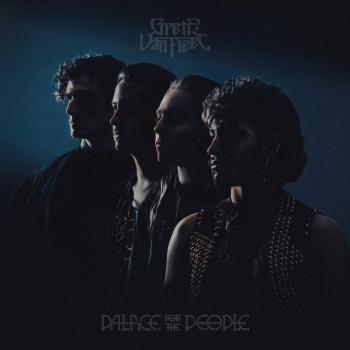


Flowers Too Dorian Pimpernel
Album info
Album-Release:
2026
HRA-Release:
01.05.2026
Album including Album cover
- 1 Chlorine Fumes 03:36
- 2 Twisted Charm Honey 04:15
- 3 Caravelle 03:30
- 4 Flor en la Sombra 02:50
- 5 Marching Clocks 03:09
- 6 Circular Rites 03:11
- 7 Oruga Encantada 03:19
- 8 Sur la Lune 02:02
- 9 Brücke 03:30
- 10 Photochromic Gaze 03:41
- 11 A Rising Year 03:43
Info for Flowers Too
Second full-length album from French psychedelic pop ensemble Dorian Pimpernel.
In March 2014, the Parisian quintet Dorian Pimpernel released Allombon, a splendid pop manifesto: a collection of graceful and erudite pocket symphonies drawing from the wellsprings of sophisticated 1960s pop (Beach Boys, Zombies, White Noise), krautrock (Cluster, Harmonia, Kraftwerk), and the Canterbury scene (Kevin Ayers, Robert Wyatt). From these influences they derived—somewhat in the “hauntological” spirit of Broadcast, another major inspiration—their own singular aesthetic: at once nostalgic and modern, melodic yet twisted, radiant and obscure, occult (gently esoteric, fond of hidden and mysterious things). They even coined a concept to describe it: “moonshine pop,” the nocturnal, lunatic, dreamlike flip side—the other side of the mirror—of sunshine pop.
Twelve years later, Dorian (inspired by the Dorian mode of Ancient Greece) Pimpernel (an English word for a flower: the scarlet pimpernel) returns with an unexpected second album that extends, develops, and enriches the quintet’s modernist pop aesthetic. Twelve years—and many twists and turns. For Johan Girard, the project’s composer and driving force, Dorian Pimpernel has always been a long-term story, a creation freed from the material constraints of a professional rock band, while the other members pursued their own paths. Hadrien Grange (drums) as the one-man band Speed 3, keyboardist for Tahiti 80 and drummer for Klub des Loosers; Laurent Talon, founder of the Morricone Pop Ensemble and musician for Boris Maurussane; Benjamin Esdraffo (keyboards), composing film scores; and Jérémie Orsel with The Gentle Spring.
Dorian Pimpernel enjoys false leads, hidden traps, and songs with multiple layers. While these new tracks more readily follow the classic pop format—verses that establish atmosphere and narrative, choruses that burst open and carry the listener away—they constantly open perpendicular or vertical pathways: in the intros (such as Oruga Encantada, whose synthesizer sequence recalls Zuckerzeit by Cluster), the bridges (a slowed-down dub-exotica break on Twisted Charm Honey), or the outros (the kraut-funk groove of Chlorine Fumes in the spirit of Stereolab, or the almost prog-like Circular Rites with its solemn, hammered piano notes). And when Jérémie Orsel’s high, clear voice is not floating over irresistibly catchy pop songs, instrumental pieces allow the quintet’s exploratory impulses to roam free: into space with Sur la lune, written for a soundtrack to Georges Méliès’ A Trip to the Moon, or building a bridge between Düsseldorf and Canterbury on Brücke (a pedal steel adding an unexpected touch of Nashville).
Composed from sequences, sketches, beginnings, and fragments of songs—spliced together, re-recorded in different ways, enriched by each member’s contributions or by Beach Boys-style vocal harmonies (with friendly guest appearances by Mehdi Zannad and Ela Orleans)—the songs on Flowers Too document twelve years of versatile experimentation and free associations. The lyrics play as much with the sounds of words as with their meanings, ranging from a song originally written for a popular French singer (Twist à Chamonix, later transformed through an amusing Oulipian exercise of “traducson” into Twisted Charm Honey) to the twilight-tinged Caravelle, initially composed by Benjamin Esdraffo for the English singer Robbi Curtice. Stéphane Laporte (Domotic), who mixed and mastered these scattered recordings to bring them cohesion, brightness, and a wealth of psychedelic effects, stands in many ways as a sixth member of the band.
Across eleven tracks, Johan Girard deploys an expansive instrumentation (Wurlitzer piano, tape echo, analog synthesizers, organ layers, and antique drum machines), enabling a rich palette of colors and textures, even simulating brass and strings. The result is a sequel to Allombon (the cover by Silvia Idili, the same illustrator as their debut, reinforcing the sense of continuity) that is more than a mere extension: it is a renewal of their aesthetic in light of the contemporary moment. In reaction to short formats, monophony, and the minimalism of new commercial standards, Dorian Pimpernel revives the symphonic pop gesture—the beauty of simulacra and the ideal carried by melody, however dissonant and unsettling the noises of the world may be.
Dorian Pimpernel

No biography found.
This album contains no booklet.