

Wiener Sängerknaben
Biography Wiener Sängerknaben
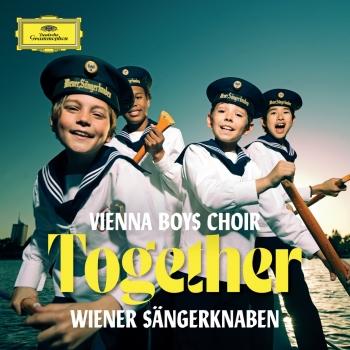
The Vienna Boys' Choir
is one of the oldest and most famous choirs in the world: Boys have sung at the Habsburg courts since at least the 14th century; the earliest record of a boys' choir in the Vienna Hofburg dates back to the year 1296.
In 1498—more than half a millennium ago—the future Emperor Maximilian I relocated his court and his court music ensemble from various residences to Vienna. In doing so, he laid the cornerstone for the Vienna Court Music Chapel and, ultimately, for the Vienna Boys' Choir.
Over the centuries, the Viennese court attracted famous musicians such as Heinrich Isaac, Jacob Vaet, Philippe de Monte, Christoph Willibald Gluck, Wolfgang Amadeus Mozart, Antonio Salieri, and Anton Bruckner. Joseph Haydn, Michael Haydn, and Franz Schubert themselves sang in the choir as children. Until 1918, the choir performed exclusively at the behest of the court. In 1924, the Vienna Boys' Choir was reorganized as a private association. Since 1926, 2,800 choirboys have undertaken more than 1,000 tours to 100 different countries.
Today, there are 90 active choirboys between the ages of nine and fourteen, divided into four concert choirs. Each of the choirs spends nine to eleven weeks of the school year—one trimester—on tour. The Vienna Boys' Choir travels to nearly every country in Europe, as well as Asia, Australia, South and Central America, the USA, and Canada. Together, the choirs perform approximately 300 concerts annually before an audience of nearly half a million people.
In Vienna, together with members of the Vienna Philharmonic and the Vienna State Opera Chorus, they uphold an imperial tradition as the Court Music Chapel: since 1498, they have performed regularly in the Hofburg Chapel.
Since 2012, the Vienna Boys' Choir has had its own small concert hall: at the MuTh, audiences can regularly experience the choirs performing their latest programs (the "Friday Afternoon" series).
The Vienna Boys' Choir’s repertoire spans from the Middle Ages to contemporary music. Motets and songs for treble choir form the core of their repertoire, alongside their own arrangements of folk songs and Viennese music. Benjamin Britten, Petr Eben, Raoul Gehringer, Ola Gjeilo, Elena Kats-Chernin, Heinz Kratochwil, Balduin Sulzer, Wolfram Wagner, and Gerald Wirth have all composed works for the choir.
Every year, the choir participates in performances of oratorios, Passion settings, and symphonic works—collaborating with the Vienna Philharmonic, the Vienna Symphony Orchestra, the London and Oslo Philharmonic Orchestras, the Staatskapelle Berlin, and the Pittsburgh Symphony Orchestra—under the baton of conductors such as Christian Arming, Ivor Bolton, Philippe Jordan, Klaus Mäkelä, Joana Mallwitz, Zubin Mehta, Riccardo Muti, Kent Nagano, Christian Thielemann, Lorenzo Viotti, and Simone Young. Particular highlights include their appearances at the Vienna Philharmonic’s New Year’s Concert—most recently in 2012 and 2016 under the direction of Mariss Jansons, and in 2023 under Franz Welser-Möst.
The Vienna Boys' Choir frequently appears in productions at Vienna’s opera houses and at the Salzburg Festival—most notably in Mozart’s *The Magic Flute*. Occasionally, they can also be seen in spoken-word theater productions—most recently in a staging of Thomas Bernhard’s *Jagdgesellschaft* at Vienna’s Akademietheater.