


[].
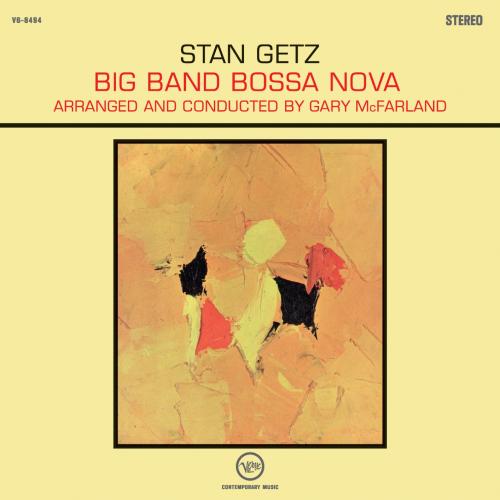
Big Band Bossa Nova (Remastered) Stan Getz
Album info
Album-Release:
1962
HRA-Release:
31.07.2026
Album including Album cover
I`m sorry!
Dear HIGHRESAUDIO Visitor,
due to territorial constraints and also different releases dates in each country you currently can`t purchase this album. We are updating our release dates twice a week. So, please feel free to check from time-to-time, if the album is available for your country.
We suggest, that you bookmark the album and use our Short List function.
Thank you for your understanding and patience.
Yours sincerely, HIGHRESAUDIO
- 1 Manha De Carnaval (Morning of Carnaval) (Remastered) 05:46
- 2 Balanco No Samba (Street Dance) (Remastered) 02:59
- 3 Melancolico (Melancholy) (Remastered) 04:42
- 4 Entre Amigos (Sympathy Between Friends) (Remastered) 02:58
- 5 Chega De Saudade (Too Much Longing) (Remastered) 04:10
- 6 Noite Triste (Night Sadness) (Remastered) 04:56
- 7 Samba De Uma Nota So (One Note Samba) (Remastered) 03:26
- 8 Bim Bom (Remastered) 04:31
Info for Big Band Bossa Nova (Remastered)
Released in 1962, the album continued Stan Getz’s early-1960s engagement with Brazilian music in a large-ensemble format.
Released in 1962 on Verve, Big Band Bossa Nova continued Stan Getz’s early-1960s engagement with Brazilian music in a large-ensemble format. Produced by Creed Taylor and arranged and conducted by Gary McFarland, the album places Getz’s tenor saxophone within orchestrated settings that combine brass and woodwind writing with the rhythmic qualities of samba and bossa nova. Recorded in August 1962 at Columbia’s 30th Street Studio in New York, the session featured studio musicians including guitarist Jim Hall, trumpeter Doc Severinsen, bassist Tommy Williams, and drummer Johnny Rae.
The repertoire draws on Brazilian compositions, like Luiz Bonfá’s “Manhã de Carnaval” (“Morning of the Carnival”) and Antônio Carlos Jobim and Vinícius de Moraes’ “Chega de Saudade” (“No More Blues”) alongside material by McFarland (“Balanço no Samba,” or “Street Dance”), and more. Issued in the period following Jazz Samba (1962) and preceding Jazz Samba Encore! (1963) and Getz/Gilberto (1964), the album forms part of Getz’s landmark sequence of Verve releases which played a key role in introducing North American audiences to boss nova.
In recent Getz news, it was announced that Jazz Samba Encore would also join Verve’s Acoustic Sounds series. That album’s understated elegance and careful balance of personalities have helped the album endure as one of the catalog’s most nuanced and atmospheric recordings of the era.
„Fresh from the sudden success of Jazz Samba and "Desafinado," Stan Getz asked the 28-year-old, strikingly gifted Gary McFarland to arrange a bossa nova album for big band as a follow-up. Getz is always his debonair, wistful, freely-floating self, completely at home in the Brazilian idiom that he'd adopted only a few months before.“ (Richard Ginell, All Music)
„Getz’s melodic gift was never more evident; even the way he plays "straight" melody is masterful. Few jazzmen have had this gift - Lester Young did - and it has to do with singing by means of an instrument, for Getz doesn't just play a solo, he sings it,…“ (Don DeMichael, JazzMonthly)
Stan Getz, tenor saxophone
Doc Severinsen, trumpet
Bernie Glow, trumpet
Joe Ferrante, trumpet
Clark Terry, trumpet
Nick Travis, trumpet
Ray Alonge, French horn
Bob Brookmeyer, trombone
Tony Studd, bass trombone
Gerald Sanfino, flute
Ed Caine, alto flute
Ray Beckenstein, clarinet
Romeo Penque, bass clarinet
Jim Hall, guitar
Hank Jones, piano
Tommy Williams, bass
Johnny Rae, drums
José Paulo, tambourine
Carmen Costa, cabasa
Gary McFarland, arranger, conductor
Recorded August 27–28, 1962 at CBS 30th Street Studio, New York City
Engineered by George Kneurr and Frank Laico
Produced by Creed Taylor
Digitally remastered
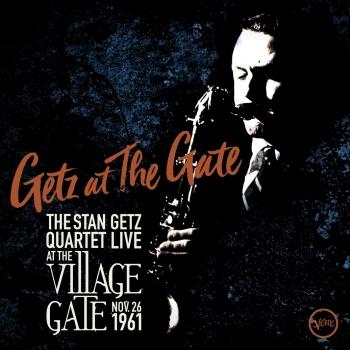

Stan Getz
was a tenor saxophonist of the first rank who, while exploring and pursuing a purity of musical expression, maintained a large following. He attracted it early in his career with his recording of "Early Autumn" with the Woody Herman band in 1948, more or less sustained it during the Fifties (which were not always tranquil times for him), and then, in the early Sixties, expanded it as he helped introduce Brazilian bossa nova rhythms to jazz. With "Desafinado" and other tunes, Getz established a sound and a beat that appeared and soared on the charts that rank recordings by the number sold.
When he died in 1991, he was one of the most esteemed jazz figures among musicians, critics, and general listeners. He gianed this acceptance despite never having compromised his art.
Although Getz played attractive compositions tastefully with harmonic and melodic sophistication, so too did many substantial musicians who never received much critical and popular acclaim. The primary reason for his greatness and his popularity lies elsewhere, in his tone. It is uniquely his. Big and pure and rich and definite, it possesses such an intrinsic appeal that master saxophonist and innovator John Coltrane proclaimed his envy of it — and Roost Records released a Getz album in the Fifties called, simply and accurately, The Sound.
Getz recorded his most sublime creations during his long affiliation with first the Clef and Norgran labels and then Verve Records, from 1952 to 1971.
This album contains no booklet.