


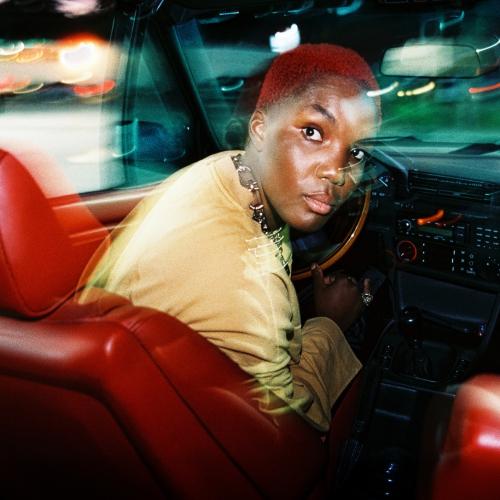
Ambiguous Desire Arlo Parks
Album info
Album-Release:
2026
HRA-Release:
03.04.2026
Album including Album cover
- 1 Blue Disco 03:00
- 2 Jetta 02:48
- 3 Get Go 03:22
- 4 Senses ft. Sampha 04:02
- 5 Heaven 04:26
- 6 Beams 03:39
- 7 South Seconds 01:48
- 8 Nightswimming 03:51
- 9 2SIDED 02:57
- 10 Luck Of Life 03:34
- 11 What If I Say It? 03:15
- 12 Floette 03:10
Info for Ambiguous Desire
Sweating under the strobes at Midnight Lovers in LA, dancing to the bass beneath the K Bridge in Greenpoint, finding new faces at Venue MOT in London – these are the dark, enveloping spaces giving life to Arlo Parks’ powerful third album, Ambiguous Desire.
“I fell in love with nocturnal spaces over the past two years of writing this album,” Parks says. “These were places where I could be whoever I wanted to be on that night, from staying on the fringes to throwing myself into it completely and escaping for hours on the dancefloor. It was so playful, being able to lose yourself and then reemerge into the world. Every time I came out into the daylight, I felt so inspired.”
The result is 12 tracks of the British singer-songwriter’s most vulnerable, self-affirming and euphoric music to date. Songs like “Get Go” play through pirate radio breakbeats as Parks employs her signature lyricism to recount a tale of someone surrendering to the thrill of the night, while “Beams” builds shimmering chords over tender lyrics on healing from a damaging former love and “Senses” features one of Parks’ friends and musical inspirations, South London’s Sampha, in an introspective and soulful examination of destructive relationships. “He’s created an entire sound of his own, which has been so influential,” she says. “I wrote him a letter about the song and he held it so gently and completely understood what I was trying to say.” “Floette” meanwhile blossoms into a soaring melody of queer bliss, “Heaven” hammers through a cathartic, earth-shaking bass frequency and “Nightswimming” plays a UK Garage two-stepping rhythm under Parks’ luscious harmonies that recount the comfort of falling in love.
Referencing everything from the queer hedonism of legendary NYC DJ Larry Levan’s Paradise Garage club to the moody nocturnal British beats of The Streets and Burial, the glittering synth catharsis of LCD Soundsystem and rooted house grooves of Theo Parrish, Ambiguous Desire is 25-year-old Parks at her most confident and experimental.
“I feel most myself in my body when I’m dancing and being in those expressive spaces gave me the confidence to explore the artists that I’ve loved forever but haven’t been able to showcase in my music before,” she says. “The record is me learning to have more fun – embracing the light as well as the shade.”
Bursting onto the scene with her distinct blend of raw lyrical self-expression and vivid vocal melody on 2019’s debut EP Super Sad Generation, London-born Parks has since won the Mercury Music Prize for her 2021 Gold-certified debut album Collapsed in Sunbeams, been named a Breakthrough Artist at the 2021 Brit Awards, and been nominated at the Grammy Awards and Ivor Novello Awards. She has performed at Glastonbury and Coachella, opened for Billie Eilish and Harry Styles and headlined a global tour in support of 2023’s UK Top 10 and Brit-nominated follow-up album My Soft Machine. A poet as much as a performer, Parks also published her debut book, The Magic Border in 2023 and was a featured writer on Beyoncé’s Grammy-winning Cowboy Carter.
Since 2021, Parks has been living in the sun-dappled neighbourhoods of Los Angeles but it wasn’t until finishing her tour in New York at the start of 2024 that she found a new locus of inspiration. “I had this blissful experience there meeting friends, going out and running through the streets,” she says. “I was so enamoured with these clubs and nightlife spaces and the people that populated them. I fell in love with the city and with someone who lived there too.”
Spending more time in New York to pursue her new loves, Parks linked up with producer Baird (Brockhampton, Kevin Abstract) and immediately began work on what would become Ambiguous Desire. Gathering inspiration at night in vibrant, community-focused spaces in the city, Parks’ daytimes were alternatively spent holed up in Baird’s downtown loft, supplanting live band sessions for modular synths, Ableton plugins and samplers to process the sounds buzzing through her mind.
“I would show up pretty much every day and we would talk about the same books, films and music to build this crazy telepathy between us,” she says. “It was amazing to be seen by someone in that way and by being so consistent with creating every day, it allowed me to get into a flow state where I felt really unselfconscious and confident in what I was doing.”
That freewheeling process resonates through songs like “Heaven”, which was inspired by Parks dancing to her friend DJ Kelly Lee Owens and channelling her techno bass through a tale of someone longing for the night to not end. “Get Go”, meanwhile, imagines the stories of those characters you only ever see at night in the club, picturing a perpetually heartbroken reveller dancing as the music pulses, and “2SIDED” recounts an intimate story of hope that a new lover feels as intently as you do over a thick buzz of synths rattling drum machines.
“My writing is instinctual and music has always been the place I go to when I need to work things out with myself,” Park explains. “It’s scary to be true to yourself as an artist but every time I get braver and it’s made every track on this album essential.”
Nowhere is that clearer than on album closer “Floette”, where Parks sings softly over a slowed breakbeat and riffs through an earworming melodic motif to celebrate her queerness. “It’s the first song I made for the record and it’s a really joyful testament to queerness and blossoming into yourself,” she says. “Healing isn’t linear and the entire album is a documentation of that growing process.”
With additional production from longtime collaborator Paul Epworth (Adele, Florence and the Machine, Rihanna), Buddy Ross (Frank Ocean, Vampire Weekend) and Andrew Sarlo (Big Thief, Dijon), Ambiguous Desire sees Parks poised to embrace a newly intuitive, vibrant chapter of her artistry. She will be touring the record extensively from Autumn 2026, while several smaller, more intimate shows are planned for the end of 2025, as well as forthcoming club-focused remixes from the likes of producer Jacques Greene and vocalist John Glacier.
“I’m gonna pop my head up all over the place so that this record can accompany people wherever they are,” Parks says. “I want it to be music that people experience in motion – on the bus or at golden hour with your friends, on your way to the club or coming back from it, these are songs that allow you to return to yourself.”
Like descending into the thrill of close-knit new bodies or emerging from the bass into blistering daylight, Ambiguous Desire is a soundtrack to unguarded self-expression. A life-affirming new work from one of music’s most irrepressible voices.
Arlo Parks
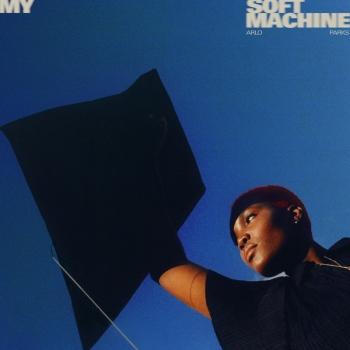
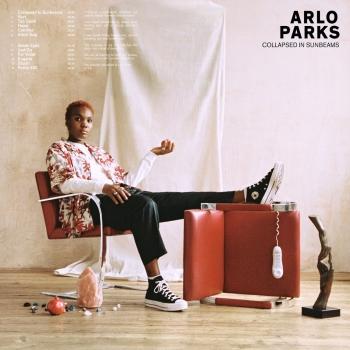

Arlo Parks
On a personal level, Parks struggled with her identity growing up; a self-confessed tom boy who was super sensitive and "uncool", she says it was like "I'm a black kid who can't dance for shit, listens to emo music and currently has a crush on some girl in my Spanish class." By the time she reached 17, she shaved her head, figured out she was bisexual and produced/wrote an album's worth of material.
Growing up in South West London, half Nigerian, a quarter Chadian and a quarter French, Arlo Parks learned to speak French before English. A quiet child, she'd write short stories and create fantasy worlds, later journalling and then obsessing over spoken word poetry, reading American poets such as Ginsberg and Jim Morrison and watching old Chet Baker performances on YouTube. These days she references Nayyirah Waheed, Hanif Abdurraqib and Iain S. Thomas as her favourite modern poets, and it is clear that their works are as influential on her songwriting as any musician. Books too, such as The Bell Jar by Sylvia Plath and Norwegian Wood by Haruki Murakami. Parks says, "the way Murakami writes in that book is how I aspire to write my songs; gritty and sensitive and human."
Fela Kuti's 'Water' and Otis Redding's 'Sittin On The Dock Of The Bay' soundtracked Arlo Parks' childhood, but it was aged around 13 that she discovered King Krule; an artist who would heavily influence the music she writes today. Later listening to more hip-hop (from Kendrick Lamar and Earl Sweatshirt to the more confessional sounds of Loyle Carner) and rock (Jimi Hendrix, Shilpa Ray and David Bowie), as well as the subdued, pained sounds of Keaton Henson, Sufjan Stevens and Julien Baker, Parks explains, "I would write stories so detailed you could taste them, while maintaining the energy and life of the hip-hop I loved." There's a visual, almost cinematic quality to her writing too, which is born from her love of horror films, streetwear and abstract art.
This album contains no booklet.