



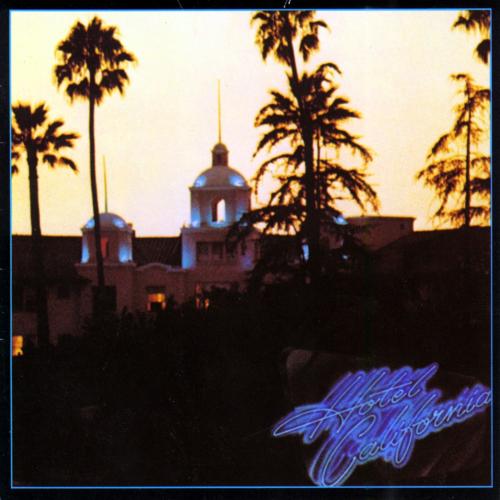
Hotel California (Remastered) Eagles
Album info
Album-Release:
1976
HRA-Release:
28.06.2013
Label: Warner Music Group
Genre: Rock
Subgenre: Classic Rock
Artist: Eagles
Composer: Don Henley (geb. 1947)
Album including Album cover
I`m sorry!
Dear HIGHRESAUDIO Visitor,
due to territorial constraints and also different releases dates in each country you currently can`t purchase this album. We are updating our release dates twice a week. So, please feel free to check from time-to-time, if the album is available for your country.
We suggest, that you bookmark the album and use our Short List function.
Thank you for your understanding and patience.
Yours sincerely, HIGHRESAUDIO
- 1 Hotel California 06:30
- 2 New Kid In Town 05:04
- 3 Life In The Fast Lane 04:45
- 4 Wasted Time 04:55
- 5 Wasted Time Reprise 01:23
- 6 Victim Of Love 04:10
- 7 Pretty Maids All In A Row 03:58
- 8 Try And Love Again 05:10
- 9 The Last Resort 07:31
Info for Hotel California (Remastered)
Hotel California was arguably the band's best single album - it was certainly the Eagles' biggest original disc - and it also underscored the band's need to make a big statement. The title tune reflected the album's theme of paradise lost in California, painting this picture with a musical arrangement that punctuated strumming guitars with dramatic drums, and perhaps the band's most famous lyric: You can check out any time you like, but you can never leave. New Kid in Town was an equally fine albeit much more traditional Eagles ballad. Life in the Fast Lane aspired to hard rock but largely gunned its engine without taking off. The rest is okay, but nothing more than secondary Eagles songs that happened to be nestled into the album that came to define the `70s supergroup.
In pursuit of note-perfect Hollywood-cowboy ennui, the Eagles spent eight months in the studio polishing take after take after take. As Don Henley recalled, 'We just locked ourselves in. We had a refrigerator, a ping-pong table, roller skates and a couple of cots. We would go in and stay for two or three days at a time.' With guitarist Joe Walsh replacing Bernie Leadon, the band backed off from straight country rock in favor of the harder sound of 'Life in the Fast Lane.' The somber 'New Kid in Town' ponders the fleeting nature of fame, and the title track is a monument to the rock-aristocrat decadence of the day and a feast of triple-guitar interplay. 'Every band has their peak,' Henley said. 'That was ours.' (Rolling Stone Magazine)
The Eagles took 18 months between their fourth and fifth albums, reportedly spending eight months in the studio recording Hotel California. The album was also their first to be made without Bernie Leadon, who had given the band much of its country flavor, and with rock guitarist Joe Walsh. As a result, the album marks a major leap for The Eagles from their earlier work, as well as a stylistic shift toward mainstream rock. An even more important aspect, however, is the emergence of Don Henley as the band's dominant voice, both as a singer and a lyricist. On the six songs to which he contributes, Henley sketches a thematic statement that begins by using California as a metaphor for a dark, surreal world of dissipation; comments on the ephemeral nature of success and the attraction of excess; branches out into romantic disappointment; and finally sketches a broad, pessimistic history of America that borders on nihilism. Of course, the lyrics kick in some time after one has appreciated the album's music, which marks a peak in The Eagles' playing. Early on, the group couldn't rock convincingly, but the rhythm section of Henley and Meisner has finally solidified, and the electric guitar work of Don Felder and Joe Walsh has arena-rock heft. In the early part of their career, The Eagles never seemed to get a sound big enough for their ambitions; after changes in producer and personnel, as well as a noticeable growth in creativity, Hotel California unveiled what seemed almost like a whole new band. It was a band that could be bombastic, but also one that made music worthy of the later tag of 'classic rock,' music appropriate for the arenas and stadiums the band was playing. The result was The Eagles' biggest-selling regular album release, and one of the most successful rock albums ever.
Don Henley, vocal & drums
Don Felder, guitar & vocals
Glenn Frey, guitar, vocals & keyboards
Joe Walsh, guitar, vocals & keyboards
Randy Meisner, bass & vocals
Producer: Bill Szymczyk
Recorded at Criteria Studios, Miami & The Record Plant, Los Angeles.
Mixed in Miami.
Engineers: Allan Blazek, Bill Szymczyk, Bruce Hensal, Ed Mashal
CCD Mastering by WCI Record Group.
Digitally remastered 2011.
Rolling Stone 500 Greatest Albums of All Time - Rated 37/500!
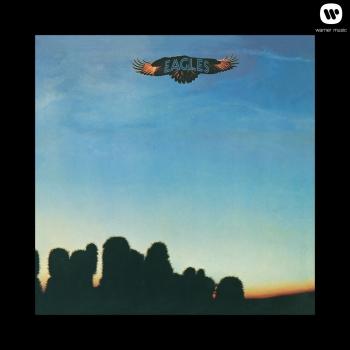
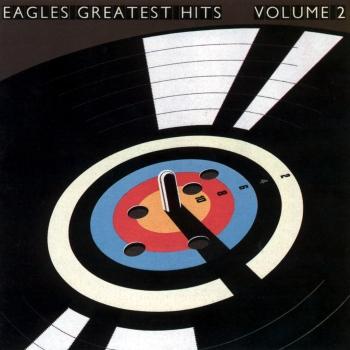
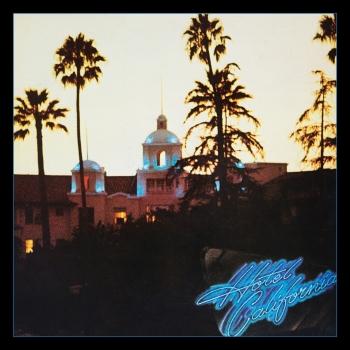
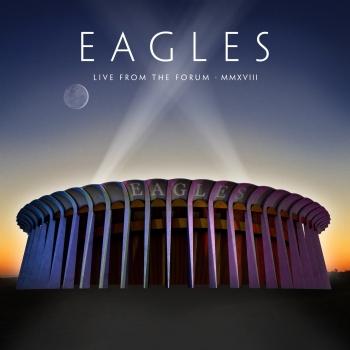
Eagles
were among the most successful American bands for almost a decade. They rose from obscurity to become the leading band of country-rock (a synthesis of pop/rock and country music, initially aimed at a return to bluegrass) and of "California rock of the 70s" (Rolling Stone). For Musik Express, the band became "synonymous with America." They polished the Western image, writing songs about tequila, outlaws, and James Dean. Behind this project were musicians who skillfully handled elements such as melancholy, dream worlds, and a pioneering spirit.
Don Henley, Glenn Frey, Bernie Leadon, and Randy Meisner first played together in 1971 in the backing band of the well-known singer Linda Ronstadt. The four experienced professional musicians decided to stay together, and the Eagles were born. Glenn Frey had played with Ry Cooder and J.D. Souther, who later wrote several songs with the Eagles. Don Henley debuted in 1970 with the Texas group Shiloh, Bernie Leadon had already played with Doug Dillard and Gene Clark and had been a member of the Flying Burrito Brothers. Randy Meisner had briefly been with Poco and then with Ricky Nelson's band.
In 1971, the band recorded their self-titled debut album in England under the direction of Glyn Johns. It featured the summer hit "Take It Easy" (US #12). The singles "Witchy Woman" (US #9) and "Peaceful Easy Feeling" (US #22) were also successful: The relaxed country/West Coast sound, with its distinctive guitar riffs, catchy rhythms, and clear vocals, resonated with audiences.
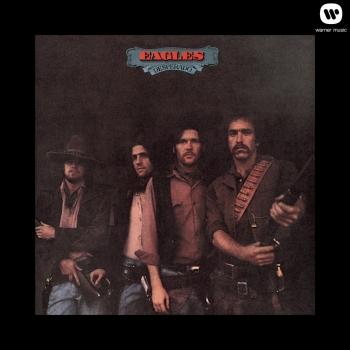
The Eagles embarked on their first US tour and, after its completion in 1973, dedicated themselves to the concept album Desperado. This album drew romantic parallels between the Doolin-Dalton Gang, a criminal organization that wreaked havoc in the Kansas area around 1890, and the outlaw existence of a rock rebel. The Eagles depicted the rise, euphoria, hubris, and fall of a superstar in Western mythology, seemingly capturing the American spirit perfectly. Commercially, however, the album wasn't yet a major breakthrough; the singles "Desperado," "Tequila Sunrise," and "Outlaw Man" received little attention.
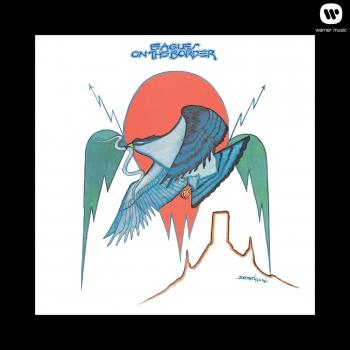
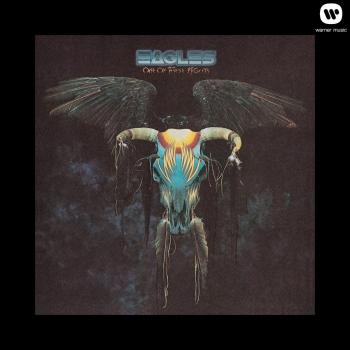
For the recording of their third album, On the Border, the Eagles added Don Felder, who had previously played with Flow. Bill Szymczyk replaced Glyn Johns as the new producer. These two changes inspired the Eagles to achieve a "fuller, less rough sound and an exciting freshness in the guitar solos" (Melody Maker). "Soft guitar tones and beautiful vocal passages" (Sounds magazine) resulted in the not-so-successful singles "Already Gone" (US charts #32) and "James Dean" (#77), two down-to-earth rock songs. The band supported their record sales with constant touring commitments, so that On the Border eventually surpassed the million-seller mark. The third single from this album brought the Eagles their breakthrough: "The Best of My Love" reached number one on the US charts and was nominated for a Grammy Award.
This album contains no booklet.