



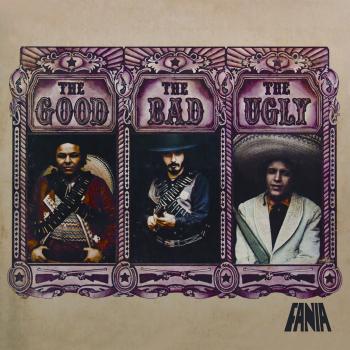
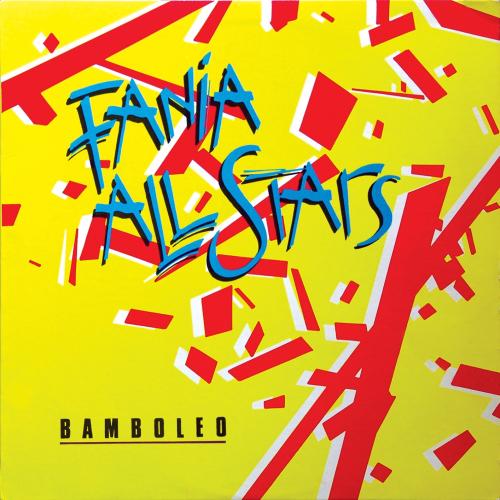
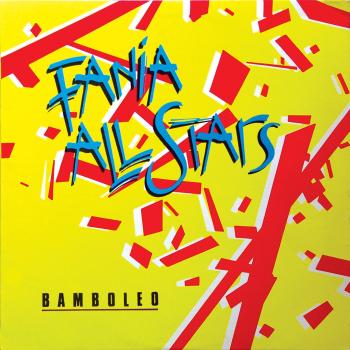
Bamboleo (Remastered 2026) Fania All Stars
Album Info
Album Veröffentlichung:
1988
HRA-Veröffentlichung:
07.08.2026
Das Album enthält Albumcover
Entschuldigen Sie bitte!
Sehr geehrter HIGHRESAUDIO Besucher,
leider kann das Album zurzeit aufgrund von Länder- und Lizenzbeschränkungen nicht gekauft werden oder uns liegt der offizielle Veröffentlichungstermin für Ihr Land noch nicht vor. Wir aktualisieren unsere Veröffentlichungstermine ein- bis zweimal die Woche. Bitte schauen Sie ab und zu mal wieder rein.
Wir empfehlen Ihnen das Album auf Ihre Merkliste zu setzen.
Wir bedanken uns für Ihr Verständnis und Ihre Geduld.
Ihr, HIGHRESAUDIO
- 1 Bamboléo (Remastered 2026) 05:27
- 2 Siento (Remastered 2026) 06:31
- 3 Smooth Operator (Remastered 2026) 04:37
- 4 Quiero Saber (Remastered 2026) 06:29
- 5 Djobi Djoba (Remastered 2026) 04:55
- 6 Don't You Worry About A Thing (Remastered 2026) 04:36
Info zu Bamboleo (Remastered 2026)
In 1988, the year in which Héctor Lavoe tried to kill himself by jumping from the nineth floor of the Hotel Regency in Condado, Puerto Rico, the Fania All Stars faced a wave of sensual and cosmetic salsa with the production “Bamboleo”.
In plain ‘boom’ of erotic salsa, representatives of the ‘old school’ like Héctor Lavoe, Cheo Feliciano and Ismael Miranda weren’t drawing the masses anymore as they once did in their glory days with Fania. The night before Lavoe’s suicide attempt, the poor attendance at the Coliseo Rubén Rodríguez in Bayamón (Puerto Rico) led to the cancellation of a concert in which Lavoe was to share the stage with Ray Barretto, Perico Ortiz and el Tumbao de Johnny Pacheco with El Conde.
Since the middle of the 1980s, the new salsa idols were singers like Eddie Santiago and Frankie Ruiz, catapulted to fame by the record label TH-Rodven, with it bases of operation in Venezuela, Puerto Rico and Miami. Nevertheless, in spite of its sporadic launches, the key to musical preference continued in the hands of Fania. TH-Rodven and its recording director Julio César Delgado, invoiced millions of dollars in sales of their records, but their Achilles’ heel was the repetition of arrangements, musicians and consequently, of the same sound that in a couple of years would end up saturating the genre, giving way, in the beginning of the ‘90s, to the New York style created by Sergio George based on a combination of the Afro-Caribbean clave and hip-hop.
Although “Bamboleo” was one of the most discreet records made by the Fania All Stars, in 1988 and faced with the musical monotony that TH-Rodven transmitted to the world, it turned out to be a refreshing oasis in the midst of a salsa desert. From an ambiguous concept, in four of the six tracks that make up the song list of “Bamboleo”, Fania’s president Jerry Masucci paid tribute to the Gipsy Kings.
This band, from the south of France, was responsible for globally revitalizing the rumba flamenca. But the concept was not limited to the salsa adaptations of the Gipsy Kings’ hits, rather with the songs “Smooth Operator” and “Don’t Worry About A Thing” they recalled the four pop rock albums (Delicate & Jumpy, Rhythm Machine, Spanish Fever and Crossover) that the Fania All Stars recorded with Columbia Records during the 1970s, in a failed and ineffective initiative to enter the Anglo-Saxon market of the music industry. Here, their version of the hit “Smooth Operator” by the singer Sade, is really just a filler, so much so that in the “Bamboleo” credits, not even the names of the female chorus singers or those who played tenor saxophone and electric guitar are mentioned. The accompaniment of “Don’t You Worry About A Thing”, that appears as part of a tribute to Santana, changes to a charango, another detail that suggests that Masucci did not know exactly what to do on “Bamboleo”.
Hence, the most outstanding song of this recording is the interpretation of “Bamboleo” performed by Celia Cruz, which is based on some of the lyrics from the Venezuelan classic Caballo Viejo by Simón Díaz. The solo by guitarist Francisco Navarro is the perfect complement and his virtuosity can also be appreciated in “Siento”, the last studio recording made by a declining Héctor Lavoe. In “Quiero Saber” sung by Willie Colón and in “Djobi, Djoba”, a track performed by El Conde that moves between the charm of the flamenco and the cadence of the Brazilian samba, jazzed up at the end with a solo by trumpeter Piro Rodríguez.
Even though in 1988 the solo singers demanded attention in the salsa world, with “Bamboleo” the Fania All Stars were consistent with their greatest estimation: musicians are also important and without their contribution, salsa would lose its flavor. In spite of the romantic nuances of the Gipsy Kings’ tracks, Fania’s rumba flamenca was flavored with the seasoned expertise of Pacheco, Papo Lucca, Ray Barretto, Roberto Roena, Nicky Marreto, Bobby Valentín and the rest of the Fania All Stars who took the salsa flag on a trip around the world. (Written by Jaime Torres Torres)
Johnny Pacheco, flute, percussion
Güiro Ray Barretto, conga
Bobby Valentín, bass
Papo Lucca, piano
Roberto Roena, bongo
Nicky Marrero, timbales
Jimmy Delgado, timbales
Héctor “Bomberito” Zarzuela, trumpet
Tony Barrero, trumpet
Pedro Boulong, trumpet
Leopoldo Pineda, trombone
Reinaldo Jorge, trombone
Lewis Kahn, trombone
Eddie Drennon, strings
Johnny Pacheco, harmony vocals
Adalberto Santiago, harmony vocals
Yayo El Indio, harmony vocals
Roberto Rodríguez, harmony vocals
Felo Barrios, harmony vocals
Special Guests:
Francisco Navarro, guitar
David Rodríguez, trumpet
Digitally remastered
Please Note: we do not offer the 192kHz version of this album, because our analysis clearly showed, that the 192kHz does not reach a frequency spectrum, that would justify to offer 192kHz. Hence we offer the 96kHz version.

Fania All Stars
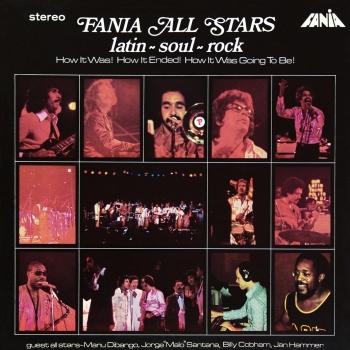
Right from start, Fania Records and its subsidiaries exceeded everybody’s expectations. The label was created in 1964. It penetrated the market so successfully and became so popular at the international level that its executives decided to broaden its talent in order to reach an even wider audience. The result? The wildly successful Fania All Stars, a group that brought together several of the label’s most popular artists. This move would further solidify the label’s standing in the international music scene.
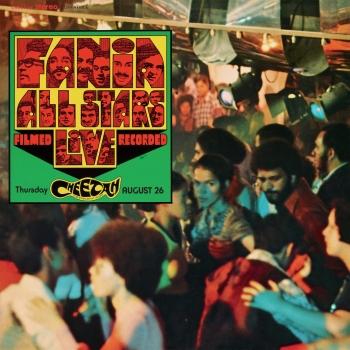
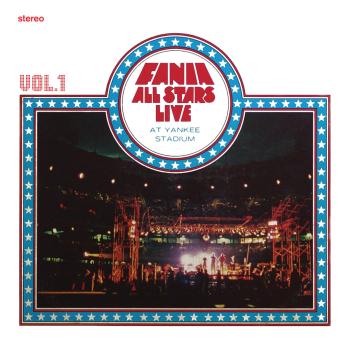
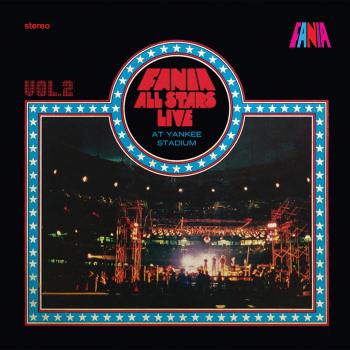
The Fania All Stars’ first concert, “Live at the Red Garter,” was a promotional experiment designed solely to test the waters. The all-star cast included Tito Puente, Eddie Palmieri, Ricardo Ray, and Bobby Cruz, and resulted in a live double album. The experiment couldn’t have been more successful. In 1971, the band revolutionized salsa as a genre with “Fania All Stars at the Cheetah,” a concert that was filmed and recorded live. In 1973, following a successful tour, the band made its first appearance at Yankee Stadium in New York. The stars performed before countless fans that had caught the fever and were swooning in the presence of consecrated performers of the genre such as Willie Colón, Johnny Pacheco, Bobby Valentín, Ray Barreto, and Mongo Santamaría.This concert, too, was filmed and recorded live, and set the standard in the music industry.
The All Stars were on fertile soil, and they wasted no time in reaping the benefits. In 1974, they appeared live at the Statu Hai stadium in Kinshasa, Zaire, which was the scene of the movie “Fania All Stars Live in Africa.” In 1975, the band returned to Yankee Stadium, this time with such famous names as Celia Cruz, Héctor Lavoe, Justo Betancourt, Ismael Quintana, Cheo Feliciano, Ismael Mirando, Pete “El Conde” Rodríguez, Bobby Cruz, and Santos Colón. One after the other, the band continued performing in concerts that were just as successful and multitudinous: “Salsa,” “Live,” “Best Of,” “Live in Japan” (1976), and “Tribute to Tito Rodríguez,” which marked Rubén Blades’ first performance with the All Stars.
To properly celebrate the Fania All Stars’ 20th birthday and Fania Records’ 30th, the label has re-released two concerts: “Live in Africa” and “Live in Japan,” which propelled a successful tour across five continents and showed the identity of a created family that has spread its social, musical, and cultural message throughout the world.
Dieses Album enthält kein Booklet