


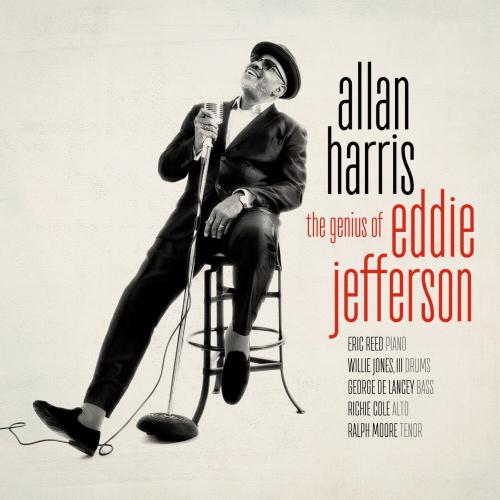
The Genius of Eddie Jefferson Allan Harris
Album Info
Album Veröffentlichung:
2018
HRA-Veröffentlichung:
28.07.2026
Das Album enthält Albumcover
- 1 So What 03:59
- 2 Sister Sadie 04:09
- 3 Dexter Digs In 03:31
- 4 Billy's Bounce 03:53
- 5 Body and Soul 04:30
- 6 Jeannine 04:18
- 7 Filthy McNasty 03:29
- 8 Lester's Trip to the Moon 03:51
- 9 Memphis 03:53
- 10 Waltz for a Rainy Bebop Evening 05:17
Info zu The Genius of Eddie Jefferson
Eddie Jefferson war ein melodiöser, sanft singender Poet dessen, was Jack Kerouac als „Bop-Prosodie“ bezeichnete – ein dem Bebop verschriebener Dichter und Interpret, der über eine lyrische Begabung für dialogorientierte Erzählkunst und hochfliegende Erzählungen verfügte, die im Jazzleben und Jazz-Jargon seiner Zeit verwurzelt waren. Charlie Parker sagte bekanntlich: „Musik ist deine eigene Erfahrung, deine Gedanken, deine Weisheit. Wenn du sie nicht lebst, kommt sie nicht aus deinem Instrument.“
Jeffersons große Innovation aus kreativer literarischer Sicht bestand darin, hippe, nachvollziehbare Erzählungen aus Jazz-Heads und Horn-Soli zu extrahieren und weiterzuentwickeln – um aus der swingenden Abstraktion rhythmischer Improvisationen und Melodien virtuose Monologe zu konstruieren.
Die einprägsamsten und einfallsreichsten Hip-Hop-Texter – Rakim, Big Daddy Kane, KRS One, Chuck D, De La Soul, A Tribe Called Quest kommen diesem Fan der goldenen Ära der Rap-Textkunst sofort in den Sinn – besitzen ein ähnliches Talent dafür, sicherzustellen, dass jeder Versabschnitt eine einzigartige Sichtweise vermittelt, die in der afroamerikanischen Umgangssprache und der Musikkultur ihrer Zeit verwurzelt ist. Und der größte kommerzielle Hit des Texter (im Gegensatz zum Sänger) Jefferson, „Moody’s Mood For Love“ aus dem Jahr 1949 – eine geniale Adaption von James Moodys feuriger und sehnsüchtiger Tenorsaxophon-Antwort auf den Ruf dieses melancholischen Standards –, ist vielen in Rap-Kreisen, die sich mit Vinyl-Jazz auskennen, als bekannter Vorläufer des Rap bekannt – insbesondere den vielen, deren Väter Jazzplatten sammelten.
Allan Harris und sein hochgeschätztes Team verdienen Beifall dafür, dass sie die Aufmerksamkeit der Jazzwelt wieder auf diesen vielseitigen Pionier des Vocalese gelenkt und Jeffersons Gesamtwerk an Interpretationen als eigenständigen klassischen Kanon gewürdigt haben.
Zu den ausgewählten Stücken gehören unverzichtbare Meisterleistungen wie Jeffersons Interpretation von Miles’ epischer Trompeten-Exposition in „So What“ sowie die mitreißenden Melodien von Horace Silvers „Filthy McNasty“ und „Sister Sadie“, an die sich die meisten Fans über 50 sicherlich noch aus den goldenen Jazzradio-Jahren ihrer 20er und 30er erinnern werden. Doch die Aufnahme von Jeffersons Zusammenarbeit mit Dexter Gordon ermöglicht es uns auch, einen Einblick zu gewinnen, wie Jefferson wirklich zum Rock im Vergleich zum Bop stand – was auf die beste Art und Weise konkurrierend war und bereit, den Kampf auf die Tanzfläche zu tragen.
Harris ist ein würdevollerer und geerdeterer Sänger als der überschwängliche, ekstatisch-exzentrische Jefferson, doch die natürliche Zurückhaltung und die makellose Lebendigkeit des Bandleaders lassen das Genie von Jeffersons Wahl der Texte und Melodien bemerkenswert deutlich werden. Harris bringt die Selbstsicherheit und Reife eines Veteranen in die introspektiven Balladen ein, die „Body and Soul“ erfordert, sowie in die kniffligen und akrobatischen Uptempo-Wendungen, die „Filthy“ verlangt.
Dass zur Band der Altsaxophonist Richie Cole gehört, der jahrelang mit Jefferson auf der Bühne stand (bis buchstäblich in die Nacht vor dem tragischen Tod des Sängers hinein), ist ein zusätzlicher, mitreißender Coup. Lob gebührt auch dem Tenorsaxophonisten Ralph Moore, dem stets eleganten und treibenden Klavierspiel von Eric Reed sowie der mitreißenden Rhythmusgruppe, die das kraftvolle Duo aus Schlagzeuger Willie Jones und Bassist George Delancey bildet.
„Harris liebt diese Musik sichtlich und interpretiert sie mit Aufrichtigkeit und handwerklichem Können. Seine Stimme, die sich so sehr von der von EJ unterscheidet, führt diese Songs zwangsläufig in eine neue Richtung. Manchmal taucht EJs Stimme im Hintergrund auf und zieht einen in ihren Bann, doch mit seiner kristallklaren Artikulation und der wohlüberlegten Wahl von Tempi und Arrangements macht Harris EJs Musik zu seiner eigenen.“ (Steve Provizer, artsfuse.org)
Allan Harris, Gesang, Gitarre
Richie Cole, Altsaxophon
George De Lancey, Kontrabass
Willie Jones III, Schlagzeug
Eric Reed, Klavier
Ralph Moore, Tenorsaxophon
Allan Harris
is a world-class singer, guitarist and songwriter. Perhaps best known for his interpretations of jazz standards, Allan’s smooth vocals and guitar-styling easily cross genres, from jazz to rock to blues. He is unquestionably one of the most versatile talents in contemporary jazz and blues music. “Harris is a velvet-voiced jazz singer, with a savvy manner and music in his veins.” (Variety) Very few vocalists in the industry have his charismatic combination of soulful yet elegant phrasing, exciting musicianship, and dynamic stage presence.
Tony Bennett has called Allan “my favorite singer” and The New York Times’ Stephen Holden raves about “the protean talent that is Allan Harris.” Allan has cultivated a global following, playing for packed audiences and receiving outstanding reviews throughout the United States, Europe, Russia and the Far East. A three-time winner of the New York Nightlife Award for “Outstanding Jazz Vocalist,” Allan is regularly featured at the world’s great music festivals. The Miami Herald wrote that Harris’ voice and demeanor “project the warmth of Tony Bennett, the bite and rhythmic sense of Sinatra, and the sly elegance of Nat ‘King’ Cole.”
Growing up in Brooklyn, Harris was meant to be a musician. His mother was a classical pianist, and his Aunt was an opera singer, who turned to the blues. Because Aunt Theodosia attracted the attention of famed music producer Clarence Williams, he became a regular dinner guest and often brought along other performers such as Louis Armstrong. Once Armstrong even baby-sat and terrified young Allan with his “frog like voice.” Sunday afternoons were spent at the Apollo matinees, which was across the street from his Aunt Kate’s Soul Food restaurant, where he got to meet many of the artists who played the Apollo during his formative years.
As a teenager, Harris moved to Pittsburgh where he learned from some of the masters like Harold Betters and Roger Humphries. He worked with bands around the area and learned to play many different styles of guitar from country to soul music, and ultimately found his niche in jazz. Early on in his career he was known as a guitar player who sang, but as audiences began hearing his voice he became more focused on singing. While his guitar style was influenced by rock musicians of the day, his voice always was most comfortable singing the American Songbook. Harris moved to Atlanta and then to Miami where he continued developing his voice and stage presence. It was in Miami that he first met Tony Bennett who encouraged him to return to New York in 1991.
Since then Harris has been a featured soloist and producer of a three-year jazz series at Sotheby’s where he first teamed up with Tommy Flanagan. He has paid tribute to Nat “King” Cole at the Kennedy Center where he recorded, Long Live the King (Love Productions Records, 2007) and continues to tour around the world. In 2007, Mr. Harris was awarded the Chamber Music of America Residency Grant for his “Cross That River” project which toured 12 schools in Harlem. Since then, the Cross That River Band has been invited to perform in schools across the country from Savannah, GA, to San Angelo, TX. In addition to touring schools, The Kennedy Center chose to broadcast the performance to children across the country via satellite, as part of their Distance Learning Program.
“Cross That River,” is now a full-scale musical celebrating the Old West as told through the words and music of a black cowboy, and played to rave reviews during the 2009 New York Musical Theater Festival and is currently in pre-production for a long-term run in early 2014. Several original songs from “Cross That River” are also frequently featured in The Allan Harris Band’s concert performances.
In addition to music, Allan is passionate about giving back. He is a long-time supporter of the St. Mary’s Children’s Hospital, Guitars in the Classroom, and Challenge Aspen/America where he donates a performance every year, along with Vince Gill and Amy Grant. As a Gibson Guitar featured artist, Allan and Ruby (his constant 6 lb. canine companion and the first dog music critic) can frequently be found rehearsing at the Gibson Hit Factory, and along with The Allan Harris Band, enjoy playing the top music clubs in his hometown of New York City.
Dieses Album enthält kein Booklet