


[].
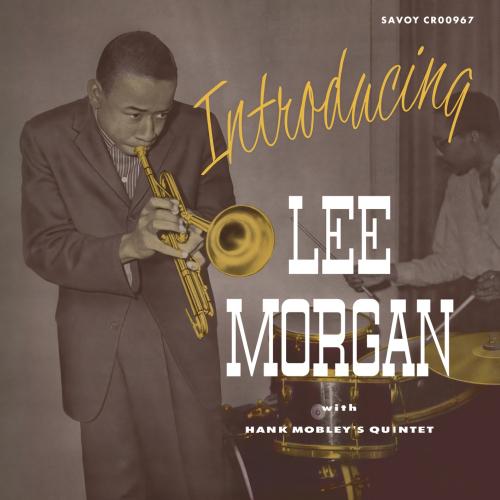
Introducing Lee Morgan (Mono Remastered 2026) Lee Morgan
Album Info
Album Veröffentlichung:
1957
HRA-Veröffentlichung:
24.04.2026
Das Album enthält Albumcover
Entschuldigen Sie bitte!
Sehr geehrter HIGHRESAUDIO Besucher,
leider kann das Album zurzeit aufgrund von Länder- und Lizenzbeschränkungen nicht gekauft werden oder uns liegt der offizielle Veröffentlichungstermin für Ihr Land noch nicht vor. Wir aktualisieren unsere Veröffentlichungstermine ein- bis zweimal die Woche. Bitte schauen Sie ab und zu mal wieder rein.
Wir empfehlen Ihnen das Album auf Ihre Merkliste zu setzen.
Wir bedanken uns für Ihr Verständnis und Ihre Geduld.
Ihr, HIGHRESAUDIO
- 1 Hank's Shout (Remastered 2026) 07:00
- 2 Nostalgia (Remastered 2026) 08:53
- 3 Bet (Remastered 2026) 07:56
- 4 Softly, As In A Morning Sunrise (Remastered 2026) 02:29
- 5 P.S. I Love You (Remastered 2026) 04:22
- 6 Easy Living (Remastered 2026) 02:49
- 7 That's All (Remastered 2026) 02:44
Info zu Introducing Lee Morgan (Mono Remastered 2026)
„Introducing Lee Morgan“ ist ein Hard-Bop-Album des gefeierten Jazztrompeters Lee Morgan aus dem Jahr 1956, das ursprünglich beim Label Savoy erschien. Das Album wurde aufgenommen, als Morgan erst 17 Jahre alt war, und enthält Gastbeiträge von Hank Mobley, Hank Jones, Doug Watkins und Art Taylor. Es umfasst sieben Titel, darunter „Hank’s Shout“, komponiert von Mobley.
"Tatsächlich wurde Morgan von Blue Note zunächst mit einer LP als Bandleader „eingeführt“. Dieses Album stammt aber eigentlich von Mobley, und die Geschichte, die ich gehört habe, besagt, dass Lee kurzfristig eingesprungen ist. Wie dem auch sei, Lee ist auf dem Cover und wird auch im Titel als Hauptname genannt.
Dieses Album ist besser als Lees Blue-Note-Set, vor allem weil Hank ein souveränerer und reiferer Solist ist als der Altsaxophonist bei Lee auf Blue Note. Hank beeindruckt mich mit jeder Platte mehr, da sein Ton voller und seine Interpretation persönlicher wird.
Lee, der durch seine aktuelle Arbeit in der Dizzy Gillespie Band auch außerhalb von Philadelphia bekannt geworden ist, ist ein Genuss. Sein Stil entwickelt sich noch, aber was er bisher aufgenommen hat, hat er zu einer logischen, mitreißenden und anregenden Stimme integriert, die sich im Wesentlichen durch eine wachsende Spielfreude und spontanen, unkonventionellen Selbstausdruck auszeichnet. Er singt kraftvoll, manchmal brüllt er, aber nie nuschelt er.
Die Rhythmusgruppe ist exzellent. Taylor, ein weiterer Musiker, der sich stetig weiterentwickelt hat, setzt und hält einen lebendigen, aber nicht aufdringlichen Rhythmus. Watkins ist in dieser Sektion klanglich und rhythmisch souverän und brilliert zudem mit fantasievollen Soli. Hank Jones ist einfach Hank Jones – ein großes Kompliment. Die letzten vier Titel präsentieren Watkins, Morgan, Jones und Mobley in der Reihenfolge ihrer Mitwirkung." (H. Alan Stein)
Lee Morgan, Trompete
Hank Mobley, Tenorsaxophon
Hank Jones, Klavier
Doug Watkins, Bass
Art Taylor, Schlagzeug
Aufgenommen am 5. und 7. November 1956 im Van Gelder Studio, Hackensack, NJ
Produziert von Ozzie Cadena
Digital remastert
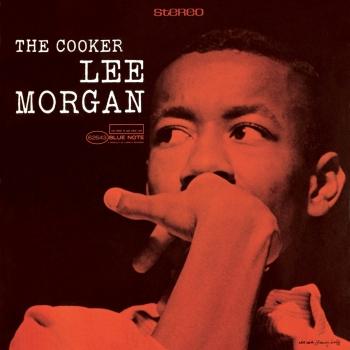
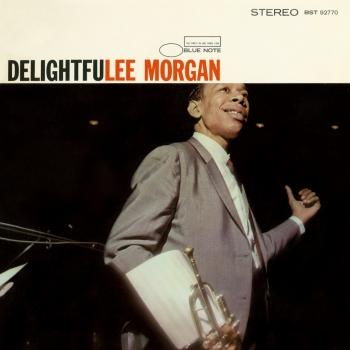
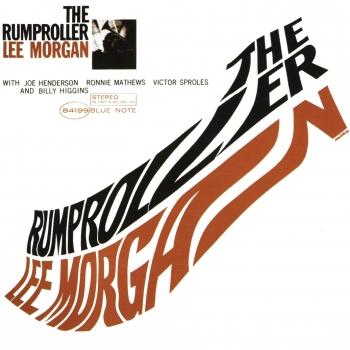
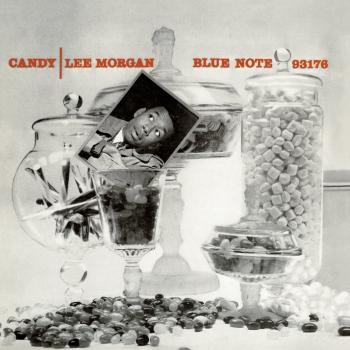
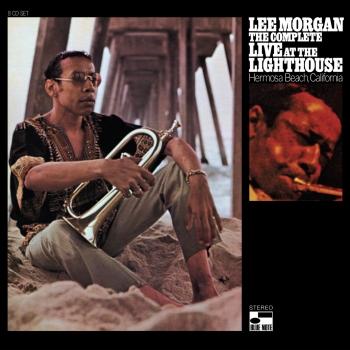

Lee Morgan
A cornerstone of the Blue Note label roster prior to his tragic demise, Lee Morgan was one of hard bop's greatest trumpeters, and indeed one of the finest of the '60s. An all-around master of his instrument modeled after Clifford Brown, Morgan boasted an effortless, virtuosic technique and a full, supple, muscular tone that was just as powerful in the high register. His playing was always emotionally charged, regardless of the specific mood: cocky and exuberant on up-tempo groovers, blistering on bop-oriented technical showcases, sweet and sensitive on ballads. In his early days as a teen prodigy, Morgan was a busy soloist with a taste for long, graceful lines, and honed his personal style while serving an apprenticeship in Art Blakey's Jazz Messengers. As his original compositions began to take in elements of blues and R&B, he made greater use of space and developed an infectiously funky rhythmic sense. He also found ways to mimic human vocal inflections by stuttering, slurring his articulations, and employing half-valved sound effects. Toward the end of his career, Morgan was increasingly moving into modal music and free bop, hinting at the avant-garde but remaining grounded in tradition. He had already overcome a severe drug addiction, but sadly, he would not live to continue his musical growth; he was shot to death by his common-law wife in 1972.
Edward Lee Morgan was born in Philadelphia on July 10, 1938. He grew up a jazz lover, and his sister apparently gave him his first trumpet at age 14. He took private lessons, developing rapidly, and continued his studies at Mastbaum High School. By the time he was 15, he was already performing professionally on the weekends, co-leading a group with bassist Spanky DeBrest. Morgan also participated in weekly workshops that gave him the chance to meet the likes of Miles Davis, Dizzy Gillespie, and his idol Clifford Brown. After graduating from high school in 1956, Morgan -- along with DeBrest -- got the chance to perform with Art Blakey's Jazz Messengers when they swung through Philadelphia. Not long after, Dizzy Gillespie hired Morgan to replace Joe Gordon in his big band, and afforded the talented youngster plenty of opportunities to solo, often spotlighting him on the Gillespie signature piece "A Night in Tunisia." Clifford Brown's death in a car crash in June 1956 sparked a search for his heir apparent, and the precocious Morgan seemed a likely candidate to many; accordingly, he soon found himself in great demand as a recording artist. His first session as a leader was cut for Blue Note in November 1956, and over the next few months he recorded for Savoy and Specialty as well, often working closely with Hank Mobley or Benny Golson. Later in 1957, he performed as a sideman on John Coltrane's classic Blue Train, as well as with Jimmy Smith.
Morgan's early sessions showed him to be a gifted technician who had his influences down pat, but subsequent dates found him coming into his own as a distinctive, original stylist. That was most apparent on the Blue Note classic Candy, a warm standards album completed in 1958 and released to great acclaim. Still only 19, Morgan's playing was still imbued with youthful enthusiasm, but he was also synthesizing his influences into an original sound of his own. Also in 1958, Gillespie's big band broke up, and Morgan soon joined the third version of Art Blakey's Jazz Messengers, which debuted on the classic Moanin' album later that year. As a leader, Morgan recorded a pair of albums for Vee Jay in 1960, Here's Lee Morgan and Expoobident, and cut another for Blue Note that year, Leeway, with backing by many of the Jazz Messengers. None managed to measure up to Candy, and Morgan, grappling with heroin addiction, wound up leaving the Jazz Messengers in 1961. He returned to his hometown of Philadelphia to kick the habit, and spent most of the next two years away from music, working occasionally with saxophonist Jimmy Heath on a local basis. His replacement in the Jazz Messengers was Freddie Hubbard, who would also become one of the top hard bop trumpeters of the '60s.
Morgan returned to New York in late 1963, and recorded with Blue Note avant-gardist Grachan Moncur on the trombonist's debut Evolution. He then recorded a comeback LP for Blue Note called The Sidewinder, prominently featuring the up-and-coming Joe Henderson. The Morgan-composed title track was a funky, danceable groover that drew from soul-jazz, Latin boogaloo, blues, and R&B in addition to Morgan's trademark hard bop. It was rather unlike anything else he'd cut, and it became a left-field hit in 1964; edited down to a 45 rpm single, it inched onto the lower reaches of the pop charts, and was licensed for use in a high-profile automobile ad campaign. Its success helped push The Sidewinder into the Top 25 of the pop LP charts, and the Top Ten on the R&B listing. Sales were brisk enough to revive the financially struggling Blue Note label, and likely kept it from bankruptcy; it also led to numerous "Sidewinder"-style grooves popping up on other Blue Note artists' albums. By the time "The Sidewinder" became a phenomenon, Morgan had rejoined the Jazz Messengers, where he would remain until 1965; there he solidified a long-standing partnership with saxophonist Wayne Shorter.
Morgan followed the most crucial recording of his career with the excellent, more abstract Search for the New Land, which was cut in early 1964, before "The Sidewinder" hit. An advanced modal bop session called Tom Cat was also recorded shortly thereafter, but both were shelved in hopes of scoring another "Sidewinder." Accordingly, Morgan re-entered the studio in early 1965 to cut The Rumproller, whose Andrew Hill-penned title cut worked territory that was highly similar to Morgan's breakout hit. Commercial lightning didn't strike twice, but Morgan continued to record prolifically through 1965, cutting excellent sessions like The Gigolo, Cornbread, and the unissued Infinity. The Gigolo introduced one of Morgan's best-known originals, the bluesy "Speedball," while the classic Cornbread featured his ballad masterpiece "Ceora." Search for the New Land was finally issued in 1966, and it achieved highly respectable sales, reaching the Top 20 of the R&B album charts; both Cornbread and The Gigolo would sell well among jazz audiences when they were released in 1967 and 1968, respectively.
By the time Morgan completed those albums, he had left the Jazz Messengers to begin leading his own groups outside the studio. He was also appearing frequently as a sideman on other Blue Note releases, working most often with tenorman Hank Mobley. Morgan was extraordinarily prolific over 1966-1968, cutting around eight albums' worth of material (though not all of it was released at the time). Highlights included Delightfulee, The Procrastinator, and the decent-selling Caramba!, which nearly made the Top 40 of the R&B album chart. His compositions were increasingly modal and free-form, stretching the boundaries of hard bop; however, his funkier instincts were still evident as well, shifting gradually from boogaloo to early electrified fusion. Morgan's recording pace tailed off at the end of the '60s, but he continued to tour with a regular working group that prominently featured saxophonist Bennie Maupin. This band's lengthy modal explorations were documented on the double LP Live at the Lighthouse, recorded in Los Angeles in July 1970; it was later reissued as a three-CD set with a generous amount of extra material.
Morgan led what turned out to be the last session of his life in September 1971. On February 19, 1972, Morgan was performing at the New York club Slug's when he was shot and killed by his common-law wife, Helen More. Accounts of exactly what happened vary; whether they argued over drugs or Morgan's fidelity, whether she shot him outside the club or up on the bandstand in front of the audience, jazz lost a major talent. Despite his extensive recorded legacy, Morgan was only 33 years old. Many of his unreleased Blue Note sessions began to appear in the early '80s, and his critical standing has hardly diminished a whit. (Steve Huey). Source: Blue Note Records)
Dieses Album enthält kein Booklet