




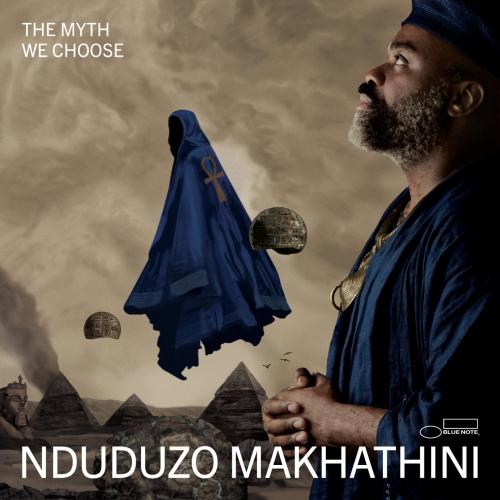
The Myth We Choose Nduduzo Makhathini
Album Info
Album Veröffentlichung:
2026
HRA-Veröffentlichung:
26.06.2026
Label: Blue Note Records
Genre: Jazz
Subgenre: Contemporary Jazz
Interpret: Nduduzo Makhathini
Komponist: Nduduzo Makhathini (1982)
Das Album enthält Albumcover
Entschuldigen Sie bitte!
Sehr geehrter HIGHRESAUDIO Besucher,
leider kann das Album zurzeit aufgrund von Länder- und Lizenzbeschränkungen nicht gekauft werden oder uns liegt der offizielle Veröffentlichungstermin für Ihr Land noch nicht vor. Wir aktualisieren unsere Veröffentlichungstermine ein- bis zweimal die Woche. Bitte schauen Sie ab und zu mal wieder rein.
Wir empfehlen Ihnen das Album auf Ihre Merkliste zu setzen.
Wir bedanken uns für Ihr Verständnis und Ihre Geduld.
Ihr, HIGHRESAUDIO
- 1 Kuzodlula 04:43
- 2 Imvunge KaNtu 03:01
- 3 Kwamabili 03:10
- 4 Unembeza 04:24
- 5 Liyoze Line Nangakithi 04:26
- 6 What People Say 03:05
- 7 Primordial Egg 02:31
- 8 Ekuqaleni 02:15
- 9 Ḽiṅwalo ḽa Mubebi 06:22
- 10 Umbono 05:02
- 11 Ḽiṅwalo ḽa Mubebi (reprise) 02:40
- 12 Tethered 05:37
- 13 Ongaphesheya 02:48
- 14 What People Say (reprise) 06:24
- 15 Kuzodlula (reprise) 02:26
- 16 Zimthilili 05:09
Info zu The Myth We Choose
Mit seinem vierten Album für Blue Note, “The Myth We Choose”, erkundet der brillante südafrikanische Pianist, Komponist, Heiler und Philosoph Nduduzo Makhathini, wie verschiedene Kulturen ihre eigenen Mythen durch Lieder erzählen. Das Album, produziert in Zusammenarbeit mit seinem Sohn Thingo Makhathini, bricht Makhathinis unverwechselbaren Sound mit einem breiten Spektrum klanglicher Arrangements des Bassisten Dalisu Ndlazi, des Schlagzeugers Lukmil Perez und weiteren Mitwirkenden wie Black Coffee, Shabaka, Omagugu, Thando Zide oder Muneyi.
Auf diesem Album erweitert Makhathini seine Klangwelt, was zum großen Teil Thingo zu verdanken ist, der seinem Vater dabei half, das Album in die richtige Richtung zu lenken. Als Produzent, Songwriter und Musiker hat Thingo ein tiefes und umfassendes Verständnis für alte und auffallend neue Musik entwickelt, was sich auf dem gesamten Album „The Myth We Choose“ als prägend erweist. „Jedes Mal, wenn man einen Bezug zur Elektronik oder verschiedene Arten von Grooves hört, die man normalerweise nicht so oft mit mir in Verbindung bringt, sind das seine Ideen“, sagt Makhathini.
Nduduzo Makhathini, Klavier, Gesang, Vocoder, Synthesizer
Dalisu Ndlazi, Kontrabass
Lukmil Perez, Schlagzeug
Gäste:
Robin Fassie, Trompete (Titel 1)
Shabaka, Flöte (Titel 5)
Omagugu, Gesang (Titel 6, 14)
Ayanda Sikade, Schlagzeug (Titel 7, 16)
Muneyi, Gesang (Titel 9, 11)
Keenan Ahrends, Gitarre (Titel 10)
Black Coffee, Drum-Programmierung (Titel 14)
Thando Zide, Gesang (Titel 12)
Zur Info: wir bieten dieses Album in der nativen Abtastrate von 48kHz, 24-Bit an. Die uns zur Verfügung gestellte 96kHz-Version wurde hochgerechnet und bietet keinen hörbaren Mehrwert!
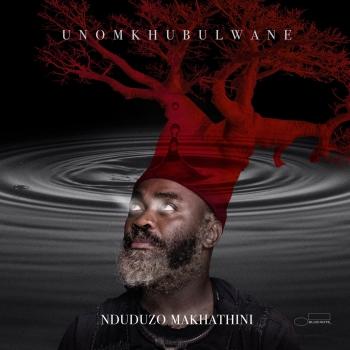
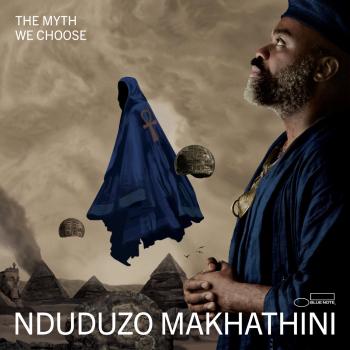
Nduduzo Makhathini
grew up in the lush and rugged hillscapes of umGungundlovu in South Africa, a peri-urban landscape in which music and ritual practices were symbiotically linked. The area is significant historically as the site of the Zulu king Dingane kingdom between 1828 and 1840. It’s important to note that the Zulu, in fact the African warrior code, is deeply reliant on music for motivation and healing. This deeply embedded symbiosis is key to understanding Makhathini’s vision.
The church also played a role in Makhathini’s musical understanding, as he hopped from church to church in his younger days in search of only the music. The legends of South African jazz are deep influences as well, in particular Bheki Mseleku, Moses Molelekwa, and Abdullah Ibrahim. “The earlier musicians put a lot of emotions in the music they played,” he says. “I think it may also be linked to the political climate of those days. I also feel there is a uniqueness about South African jazz that created an interest all around the world and we are slowly losing that too in our music today. I personally feel that our generation has to be very conscious about retaining these nuances in the music we play today.”
Through his mentor Mseleku, Makhathini was also introduced to the music of John Coltrane’s classic quartet with McCoy Tyner. “I came to understand my voice as a pianist through John Coltrane’s A Love Supreme,” he says. “As someone who started playing jazz very late, I had always been looking for a kind of playing that could mirror or evoke the way my people danced, sung, and spoke. Tyner provided that and still does in meaningful ways.” Makhathini also cites American jazz pianists including Andrew Hill, Randy Weston, and Don Pullen as significant influences.
Active as an educator and researcher, Makhathini is the head of the music department at Fort Hare University in the Eastern Cape. He has performed at renowned festivals including the Cape Town International Jazz Festival and the Essence Festival (in both New Orleans and South Africa), and in 2019 made his debut appearances the Blue Note Jazz Club in New York City, as well as Jazz at Lincoln Center where he was a featured guest with Wynton Marsalis and the Jazz at Lincoln Center Orchestra on their 3-night musical celebration The South African Songbook in Rose Theater. He is a member of Shabaka Hutchings’ band Shabaka and the Ancestors appearing on their 2016 album Wisdom of Elders, and has also collaborated with artists including Logan Richardson, Nasheet Waits, Tarus Mateen, Stefon Harris, Billy Harper, Azar Lawrence, and Ernest Dawkins.
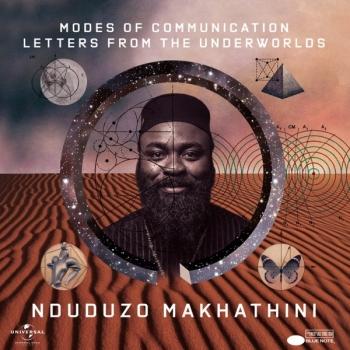
In addition to producing albums for his peers (such as Thandiswa Mazwai’s Belede and Tumi Mogorosi’s Project Elo), Makhathini has released eight albums of his own since 2014 when he founded the label Gundu Entertainment in partnership with his wife and vocalist Omagugu Makhathini. Those albums earned him multiple awards and include Sketches of Tomorrow (2014), Mother Tongue (2014), Listening to the Ground (2015), Matunda Ya Kwanza (2015); Icilongo: The African Peace Suite (2016), Inner Dimensions (2016), and Reflections (2016). His 2017 album Ikhambi was the first to be released on Universal Music South Africa and won Best Jazz Album at the South African Music Awards (SAMA) in 2018. His Blue Note debut Modes of Communication: Letters from the Underworlds will be released in 2020.
Dieses Album enthält kein Booklet