





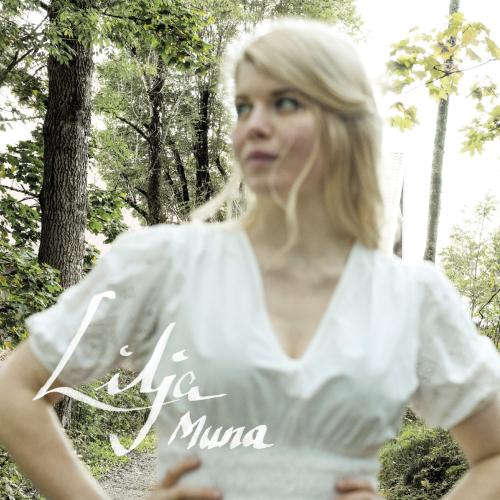
Muna LILJA
Album Info
Album Veröffentlichung:
2026
HRA-Veröffentlichung:
14.08.2026
Das Album enthält Albumcover
- 1 Stillhetsveldet 07:32
- 2 Slowly, Gently 04:14
- 3 Groruddalen 04:22
- 4 Lilja 06:52
- 5 Beloved One 04:10
- 6 Nobody Knows 03:57
- 7 Muna 04:42
- 8 Golden Hour 04:17
Info zu Muna
‘Muna’ means ‘to remember’ in Icelandic, and ‘mother’ in Elfdalian, a language spoken by around 3000 people in central Sweden. The working title of this music was ‘I’. The three last letters of Muna point to ‘one’ in Romance languages, and it is also a Scandinavian name, carried by the Lilja’s sister.
The music is composed as a non-dualistic autobiography — a paradoxical work about life from before beginning to end.
It draws inspiration from the Icelandic skaldic poem Lilja, a devotional poem of one hundred stanzas written by the monk Eysteinn Ásgrimsson in the 14th century AD.
Muna began life as I, Oddrun Lilja’s commissioned work for the 50th anniversary of Vossa Jazz. Premiered in 2023 as the festival’s 42nd Tingingsverket, the piece was praised for its boldness, breadth and personal vision, with Ballade writing that Lilja had not merely invited music into her own world, but invited the musicians to create a new world together.
Now reshaped as an album, Muna becomes an existential journey through origin, memory, place, love, parenthood, longing, impermanence and release. The title means “to remember” in Icelandic and “mother” in Elfdalian, while also carrying echoes of “one” through its final syllable. The music draws inspiration from Lilja, the 14th-century Icelandic devotional poem by Eysteinn Ásgrímsson, but its roots are also intimate and lived: childhood landscapes, family history, motherhood, mortality and the question of how a self is made, remembered and transformed.
Lilja describes the work as a non-dualistic autobiography, a paradox that opens the music rather than closing it. Scandinavian folk materials, jazz harmony, blues-rock force, soul vocals and non-Western melodic inflections meet without being reduced to simple fusion. Many of the melodies seem to begin in Nordic modal shapes before stretching toward Middle Eastern or Carnatic contours; familiar forms are gently displaced until they sound both ancient and newly made.
That balance is held by an ensemble with unusually strong individual characters. Beate Lech brings soulful vocals, spoken recitation and synth; Anders Røine contributes vocals, langeleik, Jew’s harp and guitar, grounding the music in earthy Nordic weight; Jo Skaansar’s electric and double basses give the songs warmth and architecture; Helge Norbakken’s percussion moves with ritual precision and restless invention; Bugge Wesseltoft’s keyboards open further spaces, from organ glow and ambient colour to darker pulses and electronic atmosphere.
The album moves between darkly lit extended pieces and more direct melodic songs. Its longer forms unfold in linked micro-movements, shifting scene and texture while holding to melodic phrases that wander unexpectedly and still lodge in the ear. Lilja’s guitar is rarely one thing for long: it can glow with rounded jazz warmth, roughen into growling rock, or trace searching lines that seem to improvise their way toward song. Around it, voices gather, separate and return; folk instruments become both roots and electricity; keyboards expand the field from intimate song-space to something stranger and more cinematic.
If Muna is autobiographical, it is not autobiography as diary or confession. It is autobiography as composition: a life heard through inherited language, remembered places, musical encounters, family bonds and the awareness of impermanence. The medieval poem is not a historical ornament, and the folk elements are not decorative heritage. They are part of the album’s deeper inquiry into continuity: what we receive, what we carry, what we alter, what we must finally let go.
The result is perhaps Lilja’s most personal and quietly experimental music to date. Its experimentation is not announced through rupture, but through reshaping: old songs that never quite existed, folk materials from places without fixed folk traditions, devotional poetry turned inward, memory made sound. Muna is an album about life from beginning to end, but also about the strange and necessary work of remembering oneself into being.
Oddrun Lilja, guitar, vocals
Beady Belle, vocals, synthesizer
Bugge Wesseltoft, piano, synthesizer
Jo Skaansar, bass, vocals
Anders Røine, vocals, mouth harp, langeleik, guitar
Helge Norbakken, percussion
LILJA
(Oddrun Lilja Jonsdottir) is a guitarist, singer and composer from Oslo, Norway.
She has performed at various venues in Asia, Africa, the Middle East, New York and throughout Europe, and has collaborated with major names in the world of jazz and traditional music from around the world.
She currently plays with her group Moksha who released their debut album "The Beauty of an Arbitrary Moment" at Jazzland records in 2016. and also with New Conception of Jazz by Bugge Wesseltoft. In addition, she collaborates on several projects, one with the Pakistani sitar virtuoso Ustad Ashraf Sharif Khan and one in trio, with the Norwegian saxophonist Marthe Lea and the Moroccan gnawa master Zakaria Houaouara. In her solo project LILJA she collected her favourite musicians and made one piece of music to 10 of the cities she has visited the past years.
Dieses Album enthält kein Booklet