


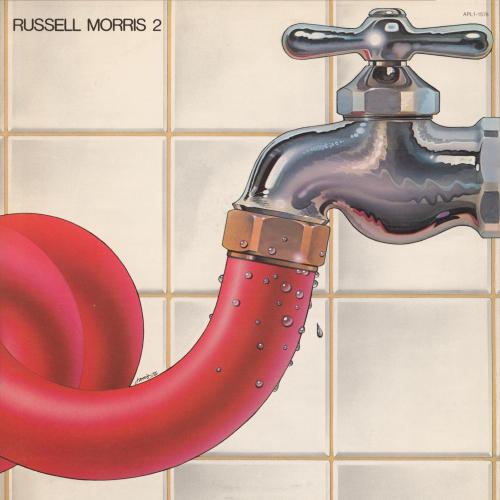
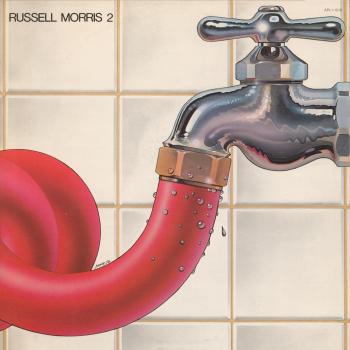
Russell Morris II (Remastered) Russell Morris
Album Info
Album Veröffentlichung:
1976
HRA-Veröffentlichung:
11.09.2026
Das Album enthält Albumcover
Entschuldigen Sie bitte!
Sehr geehrter HIGHRESAUDIO Besucher,
leider kann das Album zurzeit aufgrund von Länder- und Lizenzbeschränkungen nicht gekauft werden oder uns liegt der offizielle Veröffentlichungstermin für Ihr Land noch nicht vor. Wir aktualisieren unsere Veröffentlichungstermine ein- bis zweimal die Woche. Bitte schauen Sie ab und zu mal wieder rein.
Wir empfehlen Ihnen das Album auf Ihre Merkliste zu setzen.
Wir bedanken uns für Ihr Verständnis und Ihre Geduld.
Ihr, HIGHRESAUDIO
- 1 Broken Egg Shells 04:13
- 2 R.J.S.S. 03:27
- 3 Superman 03:19
- 4 Cloudy Day 03:04
- 5 So Good To See It 05:32
- 6 Wolves In White 04:11
- 7 Get The One You Want 03:18
- 8 Ever Lovin Woman 03:33
- 9 Two Wheel Flyer 02:53
- 10 Winter Song 02:24
Info zu Russell Morris II (Remastered)
With a career spanning more than fifty years, singer/songwriter Russell Morris’ experience pursuing a career in music exemplifies the unpredictable nature of the industry, while also reinforcing the importance of remaining positive and motivated in one’s career, and the importance of building a strong network of industry contacts.
Singer of the original version of the Johnny Young-written and Ian “Molly” Meldrum produced Australian rock classic, The Real Thing, Russell’s career is one which has experienced a range of highs and lows. The Real Thing, released in 1969 has been recognised as one of the top 30 Australian songs of all time. Despite experiencing such success, Russell has experienced hardship over the ensuing decades in being able to continue pursuing music. As he recalls:
“For a while there, I couldn’t make any money. I would probably do 15 shows a year at the most, and the rest of the time I was trying to write television ads, commercials and things to make money so I could survive, and that was really, really hard.”
While being recognised for his contribution to the Australian music landscape would see him be inducted into the ARIA [Australian Record Industry Association] Hall of Fame in 2008, it was a bittersweet moment for Russell, but also the catalyst for him to re-commit to music:
“It was like, go and sit on the porch, you’ve done your bit, just move out the way, this is your contribution to music; now you’ve got it, there’s the door. So I thought, wow, is that it? That’s it; I’ve got my gold watch and I thought, damn it; so that’s when I started to galvanise myself and thought, right, I’m going to do another album.”
A resurgence would occur for Russell in 2012 with the release of the ARIA Award winning album Sharkmouth:
“ABC [radio] picked it up and the album just went straight through the roof. All the community [radio] stations picked it up as well. It was like a juggernaut. But that album, as I said, won an ARIA, it was a platinum album, it was top 10, it was the biggest Australian selling album of that year.”
Russell credits his positivity and the strong support network of industry connections he has developed over the life of his career with being able to sustain himself through difficult periods. While he recognises that networking is a skill to learn (“some people are good at it and some people aren’t”), he says:
“Connections are really, really important. It becomes very important not to become a diva and not to treat people in a way that you think that you’re better than they are… You have to show respect for people and I think that helps your connections. Holding grudges doesn’t help either.”
Valuing the contribution of his backing band, one of the key challenges Russell experiences is being able to have a regular stream of live performances in place in so as to support the members financially. Being able to do this, however, is impacted by the relatively small music market in Australia (“you can’t work every single week”). Making his living primarily from live performances means that Russell spends considerable time traveling, and therefore is often away from home. He recognises that while he is fortunate – and enjoys traveling – this can take its toll, particularly when performing in regional areas of the country.
“I tried for 30 years and nothing happened. I couldn’t get anything, any air play, and then all of a sudden, out of the blue I produced something which became bigger than all the earlier stuff.”
David Spinozza, guitar
Don Thomas, guitar
Hugh McCracken, guitar
Russell Morris, guitar
Vinnie Bell, guitar
George Opalsky, horns
Michael Brecker, horns
Randy Brecker, horns
Jim Wisner, keyboards
Ken Archer, keyboards
Will Lee, bass
Rick Marotta, drums
Arthur Jenkins, percussion
The Al Brown String Section
Barbara Massey, backing vocals
Carl Hall, backing vocals
Tasha Thomas, backing vocals
Digitally remastered
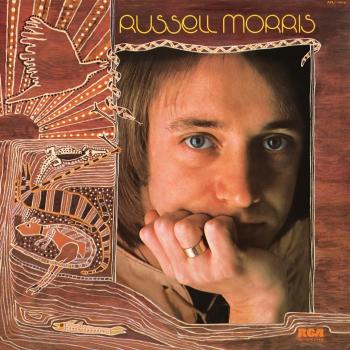
Russell Morris
one of Australia’s most enduring singers. A major pop star in the late ’60s, he went on to become one of the country’s first singer/songwriters. Both ends of his career feature predominantly in the soundtrack to the movie The Dish. Russell Morris’ career started in September 1966 with the formation of the Melbourne group Somebody’s Image, which rose to prominence with a local hit version of the Joe South song “Hush.” Morris was convinced to leave Somebody’s Image for a solo career. His manager/producer, local music identity Ian Meldrum, spent unprecedented hours and money to create a seven-minute production extravaganza around a song called “The Real Thing.” Once the result was released to shocked radio programmers who had never been asked to play such a long Australian single before, it was up to Morris’ personality, singing, and performing talents to make the record work. It reached Australia’s number one spot in June 1969. Without any promotional support from Morris, “The Real Thing” reached number one in Chicago, Houston, and New York. The second single — “Part Three Into Paper Walls” (“The Real Thing” revisited) and “The Girl That I Love” (a pop ballad more indicative of what was to come) — became a double-sided number one hit, the first time an Australian artist had scored consecutive number ones with their first two singles. Morris, in the meantime, had travelled to the U.K. to help promote the release of “The Real Thing.” Russell Morris had now decided to concentrate on his own song writing and with the cream of Australian musicians, spent almost a year painstakingly recording and re-recording what became the Bloodstone album. It was one of the first Australian albums of its kind, the first from an Australian singer/songwriter, and a whole world away from the extravagant “The Real Thing.” The hit single from Bloodstone was the resonant, romantic “Sweet Sweet Love.”
Dieses Album enthält kein Booklet