


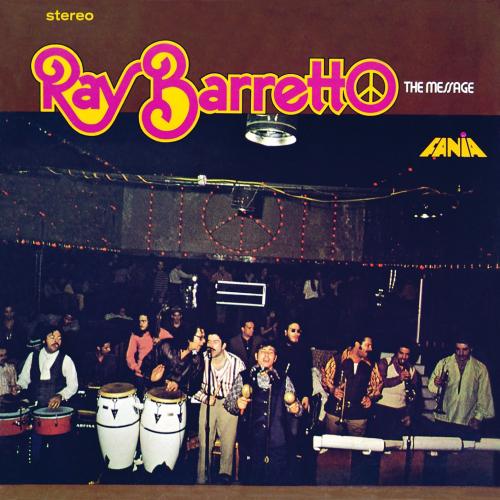
The Message (Remastered 2026) Ray Barretto
Album Info
Album Veröffentlichung:
1972
HRA-Veröffentlichung:
17.04.2026
Das Album enthält Albumcover
Entschuldigen Sie bitte!
Sehr geehrter HIGHRESAUDIO Besucher,
leider kann das Album zurzeit aufgrund von Länder- und Lizenzbeschränkungen nicht gekauft werden oder uns liegt der offizielle Veröffentlichungstermin für Ihr Land noch nicht vor. Wir aktualisieren unsere Veröffentlichungstermine ein- bis zweimal die Woche. Bitte schauen Sie ab und zu mal wieder rein.
Wir empfehlen Ihnen das Album auf Ihre Merkliste zu setzen.
Wir bedanken uns für Ihr Verständnis und Ihre Geduld.
Ihr, HIGHRESAUDIO
- 1 Se Traba (Remastered 2026) 03:56
- 2 Con el Cimarrón (Remastered 2026) 06:10
- 3 Alma con Alma (Remastered 2026) 04:13
- 4 Flor de los Lindos Campos (Remastered 2026) 03:52
- 5 Arrepiéntete (Remastered 2026) 05:15
- 6 Te Traigo Mi Son (Remastered 2026) 04:59
- 7 O Elefante (Remastered 2026) 03:11
- 8 Seguiré Sin Soñar (Remastered 2026) 04:40
Info zu The Message (Remastered 2026)
One of Ray Barretto's hardest-hitting salsa albums of the 70s -- a raw set of grooves that's got Ray moving away from the playfulness of the Latin Soul years, into a more righteous mode that's easily guessed at from the title of the set! The vibe here is very straightforward -- with Ray coming down hard on conga, and working with a group that features Adalberto Santiago on lead vocals, plus Orestes Vilato on timbales, Andy Gonzalez on bass, and Luis Cruz on piano. The sound is spare and raw -- and titles include the wonderfully echoey tune "O Elefante", with some great elephant-like work on trumpet -- plus "Con El Cimarron", "Se Traba", "Arrepientete", and "Te Traigo Mi Son".
"Bandleader/conga player Ray Barretto continued to assert himself as one of the premier mainstream salsa catalysts of the early '70s with one of his most celebrated albums. Barretto, bass player Andy Gonzalez, pianist/arranger Louis Cruz, timbales master Orestes Vilató, and bongo player Johnny Rodríguez contribute to the band's tough rhythm section; of course, vocalist Adalberto Santiago is a knockout on tunes like the hilarious "Se Traba" and the memorable "Alma Con Alma." One of Barretto's top albums of the 1970s and another example of what made New York salsa so special." (José A. Estévez, Jr., AMG)
Adalberto Santiago, vocals (tracks 1-8)
Louis Cruz, piano
Orestes Vilato, timbales
"Papy" Roman, trumpet
Roberto Rodriguez, trumpet
Andy Gonzalez, bass
Johnny Rodríguez, bongos
Ray Barretto, congas
Produced by Jerry Masucci, Ray Barretto
Digitally remastered
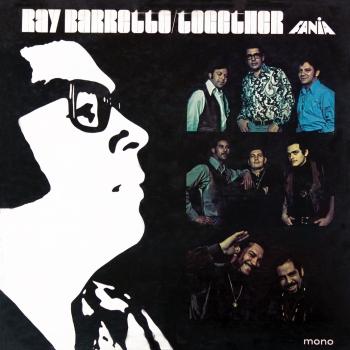
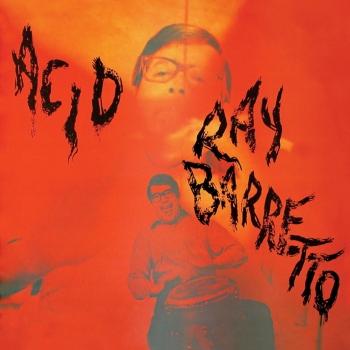
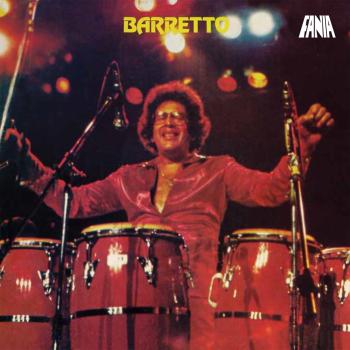

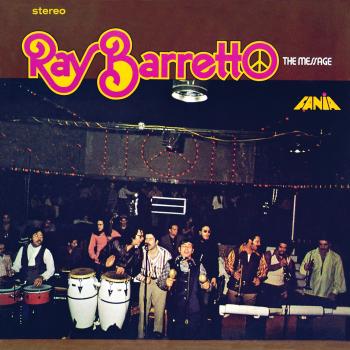
The most widely recorded conguero in jazz, Ray Barretto grew up listening to the music of Puerto Rico and the swing bands of Duke Ellington, Count Basie, and Benny Goodman. Barretto credited Dizzy Gillespie's recording of "Manteca," featuring conguero Chano Pozo, with his decision to become a professional musician.
He first sat in on jam sessions at the Orlando, a G.I. jazz club in Munich. In 1949, after military service, he returned to Harlem and taught himself to play the drums, getting his first regular job with Eddie Bonnemere's Latin Jazz Combo. Barretto then played for four years with Cuban bandleader/pianist José Curbelo. In 1957, he replaced Mongo Santamaria in Tito Puente's band, with which he recorded his first album, Dance Mania. After four years with Puente, he was one of the most sought-after percussionists in New York,attending jam sessions with artists including Max Roach and Art Blakey and recording with Sonny Stitt, Lou Donaldson, Red Garland, Gene Ammons, Eddie "Lockjaw" Davis, Cannonball Adderley, Freddie Hubbard, Cal Tjader, and Dizzy Gillespie. Barretto was so much in demand that in 1960 he was a house musician for the Prestige, Blue Note, and Riverside record labels.
Barretto's first job as a bandleader came in 1961, when Riverside producer Orrin Keepnews asked him to form a charanga for a recording, Pachanga With Barretto. His next album, Charanga Moderna, featured "El Watusi," which became the first Latin number to penetrate Billboard's Top-20 chart. In 1963, "El Watusi" went gold. In 1975 and 1976, Barretto earned back-to-back Grammy nominations for his albums Barretto (with the prize-winning hit "Guarere") and Barretto Live…Tomorrow. His 1979 album for Fania, Rican/Struction, considered a classic of salsa, was named Best Album (1980) by Latin N.Y. magazine, and Barretto was named Conga Player of the Year. He won a Grammy Award in 1990 for the song "Ritmo en el Corazon" with Celia Cruz.
Barretto was inducted into the International Latin Music Hall of Fame in 1999. He was voted Jazz Percussionist of 2004 by the Jazz Journalists Association and won the DownBeat critics' poll for percussion in 2005. His recording Time Was, Time Is was nominated for a 2005 Grammy Award.
Dieses Album enthält kein Booklet