



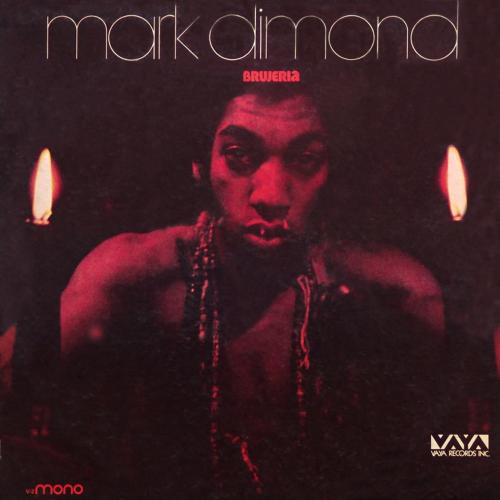
Brujería (Remastered 2026) Markolino Dimond
Album Info
Album Veröffentlichung:
1971
HRA-Veröffentlichung:
10.04.2026
Das Album enthält Albumcover
Entschuldigen Sie bitte!
Sehr geehrter HIGHRESAUDIO Besucher,
leider kann das Album zurzeit aufgrund von Länder- und Lizenzbeschränkungen nicht gekauft werden oder uns liegt der offizielle Veröffentlichungstermin für Ihr Land noch nicht vor. Wir aktualisieren unsere Veröffentlichungstermine ein- bis zweimal die Woche. Bitte schauen Sie ab und zu mal wieder rein.
Wir empfehlen Ihnen das Album auf Ihre Merkliste zu setzen.
Wir bedanken uns für Ihr Verständnis und Ihre Geduld.
Ihr, HIGHRESAUDIO
- 1 Brujería (Remastered 2026) 04:53
- 2 Mi Irmita (Remastered 2026) 05:25
- 3 Aguardiente (Remastered 2026) 05:40
- 4 Tiene Sabor (Remastered 2026) 05:25
- 5 Mariquita (Remastered 2026) 07:19
- 6 Yo No Tengo Pena (Remastered 2026) 06:10
- 7 El Barrio (Remastered 2026) 05:47
Info zu Brujería (Remastered 2026)
If you look up the word “Brujería” in a Spanish/English dictionary the definition in English translates to witchcraft, sorcery and magic. Indeed, magic is the ideal word to describe the enchanting music of Markolino (Mark) Dimond.
Just listen to his incredible solos on “Mi Irmita”, “Aguardiente”, “Tiene Sabor”, “Mariquita”, “Yo No Tengo Pena” and “El Barrio”. In the tune, “Tiene Sabor” the singer crows about the essence of the band and shows off the talents of the bassist and timbalero as well as Dimond’s inimitable work. In “Brujeria”, “Mariquita”, “Yo No Tengo Pena” and “El Barrio” the trumpeter also steps out to show off his skills.
The talented Markolino wrote and arranged all of the selections on this album. His work on the keyboards serves as the driving force behind his orchestra. The musical arrangements here tend to move the listener (in particular his or her feet) due to the flow of musical prowess that gushes from the instruments of this group of fine musicians. All in all, this is an album you’ll truly enjoy. (Bobby Marín)
"When you first listen to the 1971 Fania release titled Brujeria you are treated to extraordinary musical arrangements and keyboard mastery superbly performed by Mark (Markolino) Dimond, a young man who grew up on Manhattan’s Lower East Side with a single mother and sister. His father, who was from Cuba, left the family when Mark was just a child. So, he learned his trade, on his own, while growing up in a challenging environment. You will also be treated to a fine performance by well-known vocalist Angel Canales, in his first recording. But it’s not until you hear Mark’s outstanding piano solos on “El Barrio” and “Aguardiente” that you can appreciate the talents of this, then, blossoming star.
As you listen to additional tracks on this album, you’ll begin to appreciate the swing that his band gets into under Mark’s direction. With the backing of an excellent horn section that includes Juan Torres and Richie Montanez on trombone; Danny Reyes on trumpet; and a fine ensemble of percussionists like Louis Rivera on bongos and Antonio Tapia on congas, the band takes us on a trip of enjoyable, danceable music. With Andy Gonzalez on stand-up bass, Eddie (Gua Gua) Rivera on electric bass, you are treated to a band that truly plays with a New York / 1960’s-era foundation. Besides the typically outstanding job done by Canales on vocals, he is backed by an excellent coro that includes Ismael Quintana, Hector Lavoe and Justo Betancourt.
In the mid-60s, Dimond joined Willie Colon’s band and appeared on the albums, The Hustler (1968) and Guisando (1969). He played on Willie Colon’s first album, El Malo in 1968, but he was kid who struggled with a drug addiction. Fania artist, Larry Harlow has said, “His piano playing is a cross between typical Cuban and Progressive jazz.” In 1974, Mark was invited to record on Hector Lavoe’s debut album titled La Voz (released in 1975) as a soloist. On the tune, “Rompe Saraguey,” Dimond performs one of his most popular solos. Also, in 1974 he participated in Ismael Quintana’s first album as a soloist. In 1975, Mark produced his second solo LP, Beethoven’s V, with Frankie Dante. But he was never given the opportunity to head another session. Sadly, Markolino Dimond reportedly succumbed to his addiction and died of cerebral syphilis in 1986 at the young age of 36." (Bobby Marín)
The title "Brujeria" is first with a translation to English meaning witchcraft which it is with its percussion intro and calls from Angel and when that groove comes in, the piano of Mark's is just applied beautifully with a superb solo on trumpet by Danny Reyes and he hits those latin heights with the coros singing "si senor brujeria" throughout and is the only song from the seven within the album that Mark does not solo but he sure makes up for that with the following "Mi Irmita" with an outstanding improvised contribution. Better get a brandy for "Aguardiente" as the title translates too because one of the most amazing little piano solos is within this tune where Mark inserts "Three Blind Mice" when his turn comes to solo and yes it is jazz at its purest with stunning improvision and you do not want him to finish but when he does those trombones kick right in. The vocal tone that Angel Canales possess's is perfect as with the following "Tiene Sabor" which is Son based and that groove is back and as I mentioned above concering the talent of the coros you really have the added benefit within the album of stunning vocals applied to the music with another fab solo from Mark on piano and one great son flavoured trombone solo with this slow percussion Son groover just being another absolute delight on the song list. It just keeps the same high standard coming with "Mariquita" and those coros just make it with perhaps the best vocal effort from Angel as well, and sing you will with the coros "Mariquita Mariquita... Mariquita" with of course Mark coming in after the horns and Angel's vocals with even more jazz delight contained within that beautifully structured piano solo. "Yo No Tengo Pena" and "El Barrio" are just as good as the other selections with the first being another son slow groover and the more up tempo exquisite finisher "El Barrio" with a real blaster coming from the trombones and trumpet contributions. (jazzmusicarchives.com)
Mark (Markolino) Dimond, keyboards, piano
Andy Gonzalez, bass
Eddie "Gua Gua" Rivera, bass
Ismael Quintana, coro
Justo Betancourt, coro
Angel Canales, vocals
Digitally remastered
Please Note: we do not offer the 192kHz version of this album, because our analysis clearly showed, that the 192kHz does not reach a frequency spectrum, that would justify to offer 192kHz. Hence we offer the 96kHz version.

Mark Alexander Dimond
or Markolino as his colleagues at the time called him, was born in 1950. He was American and lived on the Lower East Side of New York City with his mother and older sister.
His mother was a social worker for the New York City Welfare Department, and his sister was a university student. Markolino always talked about his father. He said he was a Black Cuban man named Dimond, but none of his friends and colleagues from that time ever met him.
Mark studied some music as a child, but he was primarily self-taught. He could read music and write scores. It only took him to hear a song or touch the sheet music once to learn it forever. But from a young age, he was addicted to drugs, mainly heroin. When it came to drugs, Markolino couldn't control himself. This is according to Andy Harlow, one of his friends since they started playing together in Harlow's Sextet in 1966, thanks to the help of a neighbor and friend of Markolino's, Ismael Miranda.
Andy Harlow recounts that he was accompanying his brother Larry to a Brooklyn club called "The 3 in 1" where Larry was playing. He stepped outside for some fresh air when a young man approached him, introduced himself, and said, "I heard you're forming a band... I'm a singer, I play the congas, the maracas, and I also write songs... And I have a friend on my block in the Lower East Side who plays piano." This teenage boy was Ismael Miranda, and his friend, the pianist from the block, was Mark Dimond. Ismael was 17, Mark was 16, and Andy Harlow was around 20. Ismael helped Harlow finalize the band and even got them their first gig at the JJ Club on 80th Street and Broadway. This is how Markolino began to develop his talent professionally. Some time later, Ismael joined Timbalero Joey Pastrana's orchestra and achieved his first big hit, "Rumbón Melón." Dimond became the pianist for Willie Colón's Orchestra.
By the time of his first major recording, the album "The Hustler" with Colón's Orchestra in 1968, Markolino was already a brilliant pianist, as evidenced by the title track (where he showcases the independence of his playing) and "Guajirón," a guajira where Markolino constructs a montuno in opposition to the bass and also plays a solo, still a classic among salsa pianists today. But besides being a great pianist, he was also an addict. And all the baggage that came with it traveled with him: irresponsibility, unpunctuality, and problems managing money, among others.
Dieses Album enthält kein Booklet