




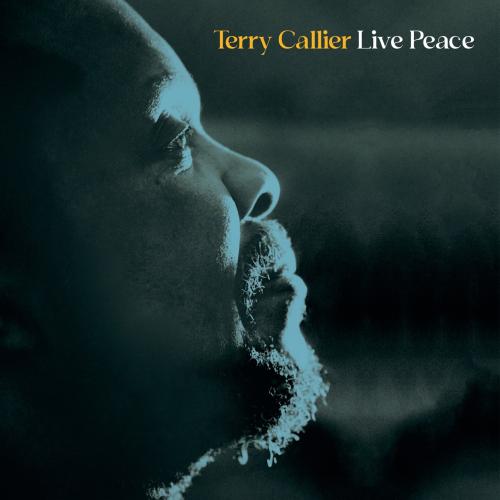
Live Peace (Live) (Remastered) Terry Callier
Album Info
Album Veröffentlichung:
2026
HRA-Veröffentlichung:
26.06.2026
Das Album enthält Albumcover
- 1 What About Me (What You Gonna Do About Me) (Live) 06:24
- 2 Interlude (Live) 01:38
- 3 Fix The Blame (Live) 08:35
- 4 If I Could Make You (Change Your Mind) (Live) 07:10
- 5 Band Intro (Live) 02:10
- 6 What Colour Is Love (Live) 05:51
- 7 Jazz My Rhythm & Blues (Live) 05:18
- 8 Nobody But Yourself To Blame (Live) 06:42
- 9 Lazarus Man (Live) 08:30
- 10 Love Theme From Spartacus (Live) 02:22
- 11 When My Lady Danced (Live) 06:24
- 12 Keep Your Heart Right (Live) 06:55
- 13 Midnite Mile (Live) 04:39
Info zu Live Peace (Live) (Remastered)
Aufgenommen live vom renommierten Toningenieur Martin Dixon in The Yardbird Suite / The Underground in Leeds in den Jahren 1998 und 2001, sind auf diesen Aufnahmen Terry und seine handverlesene „Family Band“ zu hören, zu der der legendäre Gitarrist Jim Mullen, Chris Kibble am Keyboard und der berühmte Percussionist Bosco D’Oliveira gehörten. Sorgfältig restauriert aus der einzigen erhaltenen Quelle mit modernen KI-gestützten Audio-Tools, war es nie das Ziel, die Rauheit zu glätten, sondern Terrys Stimme, Botschaft und Band wieder zum Strahlen zu bringen. Die Aufnahmen sind sparsam, gefühlvoll und zutiefst menschlich und bewahren die Unmittelbarkeit jener Nächte, in denen vollbesetzte Räume in gespannte Stille versanken und jedes Wort und jede Note mitverfolgt wurde. Von der schmerzlichen Schönheit von „What Colour Is Love“ bis zur filmischen Kraft von „Lazarus Man“ erinnert uns dieses Album daran, was für ein meisterhafter Geschichtenerzähler und spiritueller Mensch Terry Callier war. Live Peace ist eine eindrucksvolle Erinnerung daran, warum Terry Callier nach wie vor einer der angesehensten und einflussreichsten Musiker ist, dessen Lieder über Liebe, Gerechtigkeit und Menschlichkeit heute so aktuell sind wie eh und je. Dieses Projekt wird von Terry Calliers Tochter Sunny Callier voll und ganz unterstützt – und die Cover- und Sleeve-Fotos sind allesamt bisher unveröffentlichte visuelle Schätze.
"Terry Callier zuzuhören, ist immer ein Genuss. Allerdings könnten diese zwei Live-Aufnahmen des 2012 verstorbenen „Candyman des Folks“ kaum unterschiedlicher sein. Die eine, „At The Earl Of Old Town“, solo aus dem Jahre 1967, bietet leidenschaftlich bis verzweifelte Versionen von Folkklassikern wie „900 Miles“ oder dem „Work Song“ von Nat Adderley und Oscar Brown Jr. eines eben 22-Jährigen im Jahr vor der verbockten Veröffentlichung seines Debüts „The New Folk Sound Of“, das er schon drei Jahre zuvor aufgenommen hatte. Was die Liner Notes als „noisy crowd“ bezeichnen, könnte der Grund für die Verzweiflung im Vibrato sein – das laute Gerede und Geschirrklirren ist rücksichtslos und nervtötend. Die Liner Notes dagegen, etwa von Terrys Tochter Sundiata, sind so herzlich wie ausführlich, dass es fast schon über den Bootleg-Charakter hinwegtröstet. „Live Peace“ auf der anderen Seite, knapp 40 Jahre später aufgenommen, zeigt Callier nicht nur als gut gelaunten Leader seiner sechsköpfigen britischen Live-Band (mit unter anderen Jim Mullen an der Gitarre), es sind auch hochqualitative Versionen, etwa von Callier-Hits wie „What Colour Is Love“, „Love Theme From Spartacus“ oder „Keep Your Heart Right“. Fans brauchen sicher beide, am besten, um die neueren Aufnahmen zu hören und dabei die Begleittexte der älteren zu lesen." (Götz Bühler, Jazzthing)
Terry Callier, Gesang, Gitarre
Jim Mullen, Gitarre
Chris Kibble, Keyboards
Bosco D’Oliveira, Percussion


Terrence Orlando "Terry" Callier
was an American soul, folk and jazz guitarist and singer-songwriter.
Callier was born in the North Side of Chicago, Illinois, and was a childhood friend of Curtis Mayfield, Major Lance and Jerry Butler, and began singing in doo-wop groups in his teens. At the same time as attending college, he then began performing in folk clubs and coffee houses in Chicago, becoming strongly influenced by the music of John Coltrane. During this period, he briefly performed in a duo with David Crosby in Chicago and New York City.
He continued to perform in Chicago, and in 1970 joined the Chicago Songwriters Workshop set up by Jerry Butler. He and partner Larry Wade wrote material for Chess and its subsidiary Cadet label, including The Dells' 1972 hit "The Love We Had Stays on My Mind", as a result of which he was awarded his own recording contract with Cadet as a singer-songwriter. Three critically acclaimed but commercially unsuccessful albums followed, produced by Charles Stepney: Occasional Rain (1972), What Color Is Love (1972), and I Just Can't Help Myself (1973). These demonstrated that Callier's influences included soul, jazz, funk, psychedelia, and classical music.
Callier continued to perform and tour until 1983, when he gained custody of his daughter and retired from music to take classes in computer programming, landing a job at the University of Chicago and returning to college during the evenings to pursue a degree in sociology. He re-emerged from obscurity in the late 1980s, when British DJs discovered his old recordings and began to play his songs in clubs. Acid Jazz Records head Eddie Piller reissued a little-known Callier recording from 1983, "I Don't Want to See Myself (Without You)", and brought him to play clubs in Britain. From 1991 he began to make regular trips to play gigs during his vacation time from work.
In the late 1990s Callier began his comeback to recorded music, collaborating with Urban Species on their 1997 EP Religion and Politics and contributed to Beth Orton's Best Bit EP in 1997 before releasing the album Timepeace in 1998, which won the United Nations' Time For Peace award for outstanding artistic achievement contributing to world peace. His colleagues at the University of Chicago did not know of Callier's life as a musician, but after the award the news of his work as a musician became widely known and subsequently led to his dismissal by the University.
As well as touring internationally, Callier continued his recording career, releasing five albums after Timepeace, including Lifetime (1999), Alive (2001), Speak Your Peace (2002), featuring Paul Weller on the single "Brother to Brother", Golden Apples of the Sun (2003) and Lookin' Out (2004). May 2009 saw his album Hidden Conversations featuring Massive Attack released on Mr Bongo records.
He died from cancer on October 27, 2012, aged 67.
Dieses Album enthält kein Booklet