





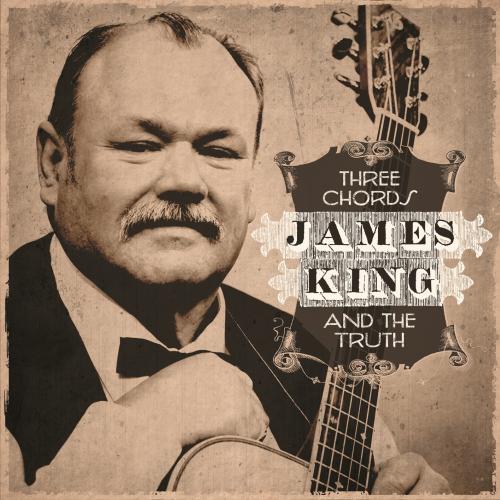
Three Chords And The Truth James King
Album Info
Album Veröffentlichung:
2013
HRA-Veröffentlichung:
18.08.2026
Das Album enthält Albumcover Booklet (PDF)
- 1 The Devil's Train 03:17
- 2 Jason's Farm 03:38
- 3 Chiseled In Stone 04:08
- 4 Highway to Nowhere 02:36
- 5 Talkin' to the Wall 02:49
- 6 He Stopped Loving Her Today 03:55
- 7 Blue Blue Day 02:04
- 8 Riding With Private Malone 04:32
- 9 Things Have Gone to Pieces 03:56
- 10 Sunday Morning Christian 03:00
- 11 Shadows of My Mind 03:17
- 12 Old Five and Dimers 03:13
Info zu Three Chords And The Truth
„Three Chords and the Truth“ ist das erfolgreiche und zugleich letzte Album des legendären Bluegrass-Sängers James King. Auf diesem Album präsentiert King, der als „der Bluegrass-Geschichtenerzähler“ bekannt ist, seine ganz eigene Interpretation von zwölf Songs aus dem Country-Repertoire, darunter Kompositionen von Hank Williams, Don Gibson, Vern Gosdin, Leon Payne, Bobby Braddock & Curly Putnam, Warner Mack, Billy Joe Shaver und Harlan Howard.
Ausnahmslos jeder einzelne profitiert von Kings großem Talent als Interpret. Die meisten dieser Songs waren zu ihrer Zeit Hits, einige sind zu Standards des Country-Repertoires geworden, andere sind fast in Vergessenheit geraten. King haucht ihnen allen neues Leben ein. Historisch gesehen reichen die zwölf Titel von den späten 1940er Jahren bis ins Jahr 2001; emotional sind sie dem Geist des Honkytonk entsprungen. Alle gehören in ihren Originalversionen in eine Vintage-Jukebox.
„Devil’s Train“, aus einer wenig bekannten Aufnahme von Hank Williams, ist der älteste Song auf dieser Sammlung, und „Riding With Private Malone“, der Hit von David Ball aus dem Jahr 2001, ist der jüngste. Dazwischen liegen „Jason’s Farm“, ein Hit von Cal Smith aus dem Jahr 1975; „Talking To The Wall“, ein Klassiker von Warner Mack aus dem Jahr 1966; „Blue Blue Day“, der 1958 für seinen Komponisten, den großen Don Gibson, ein Nummer-1-Country-Hit war; „Shadows Of My Mind“, ein mittelmäßiger Hit des traditionellen Country-Kultlieblings Vernon Oxford aus dem Jahr 1975; „Sunday Morning Christian“ von Harlan Howard, der sein Werk 1971 selbst vortrug; sowie „Old Five and Dimers“, Billy Joe Shavers fantasievolles, bluesgetöntes Meisterwerk.
Gerade in Kings Herangehensweise an drei herausragende Country-Klassiker kommt seine interpretatorische Brillanz am deutlichsten zum Vorschein: Vern Gosdins „Chiseled In Stone“ sowie die unsterblichen George-Jones-Klassiker „Things Have Gone To Pieces“ und „He Stopped Loving Her Today“. Das sind keine Songs für Zartbesaitete, doch James Kings Versionen lassen selbst diese Meisterwerke wieder aufleben; sein reduzierter, gefühlvoller Gesang, gepaart mit perfekt abgestimmten Harmonien und einfühlsamer instrumentaler Begleitung, sorgt für ein herausragendes Trio von Aufnahmen.
Der Titel des Albums sowie dessen ästhetische Grundlage stammen aus einem Zitat, das Harlan Howard zugeschrieben wird, dem vielleicht größten (und sicherlich erfolgreichsten) Songwriter in der Geschichte der Country-Musik. „Country-Musik“, so meinte er, „besteht aus drei Akkorden und der Wahrheit.“ Man muss kein ausgebildeter Musiker sein, um zu bemerken, dass in dieser Aufnahme gelegentlich mehr als drei Akkorde verwendet werden, doch Howards Aussage ist unmissverständlich: „Bleib ehrlich, bleib einfach, bleib authentisch, bleib echt. Lass es wahrhaftig klingen.“ Mit anderen Worten: Sing es so, wie James King es singt.
Die für das Album zusammengestellte Band umfasst fünf der besten jungen Profis der traditionellen Musik. Es sind der Fiddler Jimmy Mattingly, der Gitarrist Josh Williams, der Banjoist und Harmony-Fiddler Ronnie Stewart, der Mandolinist Jesse Brock und der Bassist Jason Moore. Es wäre schwierig, eine bessere Gruppe von Bluegrass-Musikern zusammenzustellen. Darüber hinaus tragen Kings Bandkollegen aus der Bluegrass-Supergroup Longview, Dudley Connell und Don Rigsby, mit ihren Gesangsharmonien wesentlich zum Erfolg bei.
In einer Zeit, in der die Mainstream-Country-Musik zunehmend zu ihren Wurzeln zurückkehrt, hat James King mit „Three Chords and The Truth“ einen anderen Weg eingeschlagen. Er erfüllt diese klassischen Songs mit der Ehrlichkeit, Direktheit und Einfachheit, die einst das Beste der Country-Musik ausmachten, und hat damit ein neues Meisterwerk geschaffen, das die besten Elemente sowohl des Bluegrass als auch der klassischen Country-Musik vereint.
„Wenn ich nicht wüsste, dass diese Songs aus dem klassischen Country-Repertoire stammen, hätte ich niemals vermutet, dass es sich um etwas anderes als das Beste des traditionellen Bluegrass handelt. Kings Arrangements, insbesondere bei Stücken wie ‚Highway to Nowhere‘ und ‚The Devil’s Train‘, sind purer Bluegrass. Sein charakteristischer Gesang ist durchweg perfekt, und er wird von einigen der besten Bluegrass-Musiker unterstützt. Neben Stewart am Banjo bringen auch Jesse Brock (Mandoline), Jason Moore (Bass), Jimmy Mattingly (Geige) und Josh Williams (Gitarre) ihr musikalisches Talent ein. Don Rigsby und Dudley Connell sorgen zudem für makellosen Harmoniegesang.“ (John Curtis Goad, bluegrasstoday.com)
James King, Gitarre, Leadgesang (Track 12)
Josh Williams, Gitarre
Jesse Brock, Mandoline
Jason Moore, Bass
Jimmy Mattingly, Geige
Ron Stewart, Banjo, Begleitgeige
Don Rigsby, Harmoniegesang
Dudley Connell, Harmoniegesang
Aufgenommen und abgemischt von Steve Chandler
Gemastert von Paul Blakemore
Produziert von Ken Irwin, Steve Chandler
James King
From the earliest days of his performing career, James King has been an advocate for and exponent of the traditional sound in bluegrass. His heartfelt lead vocals and robust delivery demonstrate both his familiarity with and love for traditional “old school” bluegrass, country, and gospel music. In performance, his bands have invariably been on the traditional end of the scale. He loves strong, honest lyrics, and is a master of finding what engineer Steve Chandler has referred to as “the James spot:” that stark, exposed nerve, where the emotional truth of the song lives. When it happens — and it happens often on Three Chords and the Truth — it is an amazing thing to hear.
King’s favorite vocalists and strongest influences have been those who, through their singing, have been able to elicit the most emotion: Jimmy Martin, Paul Williams, Hazel Dickens, and The Stanley Brothers. He recorded early on with both Ralph Stanley and Paul Williams. His recordings for Rounder (his label since 1993), have gained him appreciation throughout the world of bluegrass.
Those records have consistently showcased his traditional approach to his material, strong song choices, and his booming, powerful vocals. His affinity for songs with strong narrative lines have earned him the title “The Bluegrass Storyteller,” and he has frequently featured material derived from the world of classic country music.
Three Chords and the Truth, King’s latest album, takes his affinity for honkytonk, country music, and classic ‘grass a step further. It’s a landmark recording, and is likely to go a long way in solidifying King’s rightful place among the finest traditional bluegrass singers in the music’s history. Uniquely, this album renders classic mainstream country material in true, unadorned bluegrass fashion (no amplification or augmentation with pedal steel, electric bass, piano, or the like, no strings or vocal choruses).
The album’s title, as well as its aesthetic foundation, comes from a quote attributed to Harlan Howard, perhaps the greatest (and certainly the most successful) songwriter in the history of country music. “Country music,” he opined, “is three chords and the truth.” It doesn’t take a trained musician to notice that more than three chords are occasionally utilized in this recording, but Harlan’s meaning is not obscure. “Three Chords And The Truth” was perhaps Ol’ Harlan’s shorthand for “Keep it honest, keep it simple, keep it close to the bone, keep it real. Make it ring true.” In other words, sing it like James King sings it. Initially resistant to the notion when producer and Rounder founding partner Ken Irwin brought it to him, King eventually agreed, and is thrilled with the resulting album.
The band assembled for the album includes five of the finest young pros in traditional music. They are fiddler Jimmy Mattingly, guitarist Josh Williams, banjoist and harmony fiddler Ronnie Stewart, mandolinist Jesse Brock, and bassist Jason Moore. It would be difficult to assemble a finer group of bluegrass musicians, and their sympathetic backing has gone far in making this album the work of art it is. In addition, King’s old compadres in the bluegrass super group Longview, Dudley Connell and Don Rigsby, lend their vocal harmonies to great effect. Each is an acknowledged lead singer of great repute, but every note they sing here is in service of King’s vocals.
James King has long been justifiably renowned among bluegrass aficionados for his ability to find the essence of a song’s lyric and deliver it emotionally. Here, for the first time, he takes on twelve slices of the finest from mainstream country’s history together on one album. Without exception, each one benefits from King’s interpretations. Most were hits in their time, some have become standards of the country repertoire, and others are nearly forgotten. King breathes new life into them all. Historically, the twelve selections range from the late 1940s to 2001; emotionally, they are cut from the heart of honkytonk. All, in their original versions, belong on a vintage jukebox.
“Devil’s Train,” from an obscure Hank Williams recording, is the earliest song here, and “Riding With Private Malone,” the 2001 hit by David Ball, is the most recent. In between are “Jason’s Farm,” a 1975 hit for Cal Smith; “Talking To The Wall,” a classic Warner Mack number from 1966; “Blue Blue Day,” which was a #1 country hit for its composer, the great Don Gibson, in 1958; “Shadows Of My Mind,” a middling hit for traditional country cult favorite Vernon Oxford in 1975; “Sunday Morning Christian,” by Harlan Howard, who performed his composition in 1971; and “Old Five and Dimers,” Billy Joe Shaver’s imaginative, blues-tinged masterpiece.
It is in in King’s approach to three towering country classics that his interpretive brilliance shines most brightly: Vern Gosdin’s “Chiseled In Stone,” and the immortal George Jones classics “Things Have Gone To Pieces” and “He Stopped Loving Her Today.” All three were huge hits when originally released, and all three belong on the short list of the greatest country songs of all time, and they were originally recorded by two of the greatest singers country has ever produced. These are not songs to be interpreted by the faint of heart, yet James King’s versions of even these masterpieces make them live again; his stripped down, emotive vocals, together with perfectly attuned harmonies and sensitive instrumental back-up, make for a towering trio of recordings.
The late Vern Gosdin is referred to in Nashville even now as “The Voice.” He was among the very few who might be considered a fitting rival to George Jones himself. Yet James King’s reading of Gosdin’s masterpiece, “Chiseled In Stone,” is a compelling revisiting of the song, showcasing as it does King’s ability to distill a song to its naked, emotional core. It owes as much to King’s hero and spiritual forefather, Carter Stanley, as it does to Gosdin’s masterful original, with Don Rigsby and Dudley Connell’s vocal harmonies providing spine- chilling accompaniment.
“Things Have Gone To Pieces” is a song about a man who has hit rock bottom. The original is one of George Jones’ finest performances. On this recording, it becomes one of James King’s finest as well. “He Stopped Loving Her Today” is widely regarded as a masterpiece of country music: at least one book has been devoted to recounting the adventure behind the song’s original recording. Jones’ 1980 performance of the Bobby Braddock and Curly Putman composition is a textbook example of both producer Billy Sherrill’s style and what has become known as “The Nashville Sound.” James King’s version marries the startlingly honest lyrics to the classic bluegrass instrumental and vocal style. The result is jaw-dropping, stunning, and hauntingly evocative.
The once-reluctant James King is extremely satisfied with the finished recording, acknowledging that Ken Irwin has once again illustrated his “genius” (King’s word) for finding “James King material.” This time, he has found twelve gems of classic country, and James has made each one his very own.
At a time when mainstream country music is increasingly returning to its origins, and it seems that another country star decides to try his hand at bluegrass every day, James King has taken another path in Three Chords and The Truth. He imbues these classic songs with the honesty, directness, and simplicity that once embodied the best of country music, and in doing so, has fashioned a new masterpiece, one which incorporates the finest elements of both bluegrass and classic country music.
Booklet für Three Chords And The Truth