






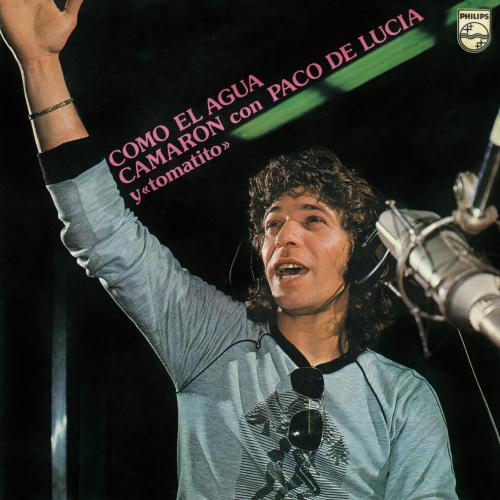
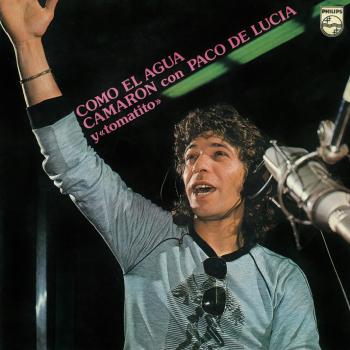
Como El Agua (Remastered) Camarón De La Isla, Paco de Lucía, Tomatito
Album Info
Album Veröffentlichung:
2018
HRA-Veröffentlichung:
28.10.2026
Label: Universal Music Spain S.L.
Genre: World Music
Subgenre: Flamenco
Interpret: Camarón De La Isla, Paco de Lucía, Tomatito
Das Album enthält Albumcover
Entschuldigen Sie bitte!
Sehr geehrter HIGHRESAUDIO Besucher,
leider kann das Album zurzeit aufgrund von Länder- und Lizenzbeschränkungen nicht gekauft werden oder uns liegt der offizielle Veröffentlichungstermin für Ihr Land noch nicht vor. Wir aktualisieren unsere Veröffentlichungstermine ein- bis zweimal die Woche. Bitte schauen Sie ab und zu mal wieder rein.
Wir empfehlen Ihnen das Album auf Ihre Merkliste zu setzen.
Wir bedanken uns für Ihr Verständnis und Ihre Geduld.
Ihr, HIGHRESAUDIO
- 1 Como El Agua (Tangos) 03:42
- 2 Gitana Te Quiero (Bulerías) 03:45
- 3 Pueblos De La Tierra Mía (Alegrías) 03:07
- 4 Quiero Quitarme Esta Pena (Bulerías) 03:43
- 5 Sentao En El Valle (Fandangos De Huelva) 02:17
- 6 Tu Amor Para Mí No Es Fantasía (Tangos) 04:17
- 7 En Tu Puerta Da La Luna (Taranto Y Taranta Malagueña) 04:24
- 8 La Luz De Aquella Farola (Bulerías) 03:22
Info zu Como El Agua (Remastered)
Following the revolutionary experiment Camarón undertook with his previous album, La leyenda del tiempo, without Paco de Lucía's collaboration, he returned to recording with his "brother" from Algeciras after a two-year absence from the studio. Tomatito joined the duo. On Como el agua, the singer's voice sounds sweeter and more poignant than ever, accompanied by colossal guitars. Paco, in his impeccable role as musical director, wanted his brother Pepe de Lucía to play a prominent part in the project. Pepe de Lucía wrote the title track, which can be considered the album's soul, as he composed most of it. The album's overall structure follows the evolutionary path established by the nine previous albums Paco and Camarón had recorded together. The separation between these two flamenco giants between 1978 and 1981 did not affect the stylistic definition that Camarón was shaping year after year. Paco's artistic direction is consistently meticulous. Ricardo Pachón will be the producer. The number of tracks, which in the first albums varied between ten and twelve per disc, is now reduced to eight, although the density of each one does not 'cut back' the quality of the album at all.
In this album, acoustic sounds dominate, contrasting with the more electric experiment of "La Leyenda". Here, we witness a display of melodic, harmonic, and rhythmic virtuosity, granting this record an unprecedented musical quality. Let's not forget that it coincides with the release of *Solo Quiero Caminar*, where Paco introduced the Sextet that would revolutionize flamenco sound forever. The work is replete with catchy choruses, "lolailos," and "lereles," which in Camarón's hands sound like pure bliss.
Camarón De La Isla, vocals
Paco de Lucía, guitar
Tomatito, guitar
Antonio Humanes, hand-clapping
Guadiana, hand-clapping
La Susi, hand-clapping
Antonio Sánchez Gómez, hand-clapping
Pepe de Lucía, hand-clapping
Carles Benavent, bass
Rubem Dantas, cajón
Pepe de Lucía, vocals
La Susi, vocals
Digitally remastered
Keine Biografie vorhanden.
Dieses Album enthält kein Booklet